Breaking Up with Billionaire-Owned Media
To save the media and our democracy, we need to do more than cancel subscriptions to The Washington Post

Until Wednesday, and for more than 20 years, I was a loyal subscriber to The Washington Post. Not anymore.
My vexations with and criticisms of the paper go back even further, but I kept paying for the Post out of a sense of civic obligation and because, even in a diminished form, it still had reporters all over the world and at my local city council meetings, too.
I didn’t join the 250,000 readers who jumped ship after owner Jeff Bezos spiked a planned endorsement of Kamala Harris or razed the Op-Ed pages. I rationalized that reading the Post was part of my job. Plus I relied on their gang of meteorologists, and there were so many good reporters still working in the newsroom. And they once ran a really cute photo of my dog.
But Bezos and his hatchet men are determined to destroy this flawed but essential institution. And while my tiny and belated protest won’t put a dent in Bezos’s next mega-yacht, it makes me slightly less complicit in what he’s doing to this newspaper, this community and this democracy.
Wednesday-morning massacre
On Wednesday, Post executives sacked a third of the Post’s staff, eliminating the Books section and slashing most of Metro, the staff photographers, the sports department and the team covering technology — including the reporter on the Amazon beat. They actually fired the Ukraine correspondent while she was risking her life in a war zone and dismissed the entire team covering the Middle East. The devastating cuts have been described inside and outside the newsroom as “murder,” “an absolute bloodbath” and “among the darkest days in the history of one of the world’s greatest news organizations.”
 Jeremy Barr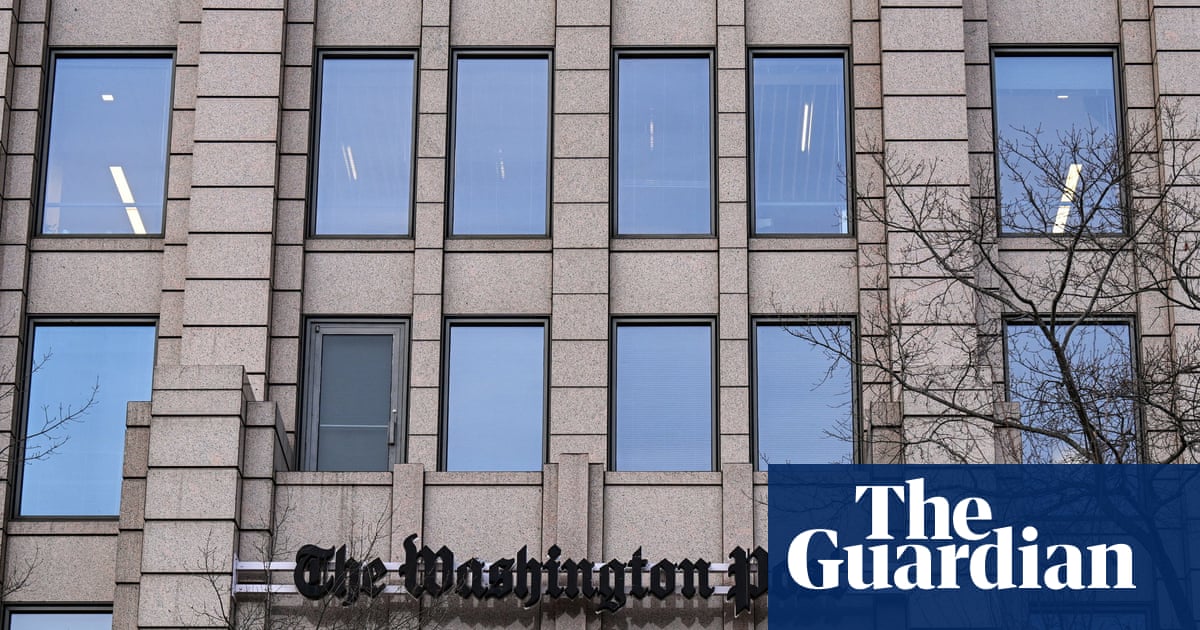
The cuts had been rumored for weeks, even as Post reporters repeatedly begged Bezos to intervene. But he said nothing, just as he said nothing when the FBI raided the home of the Post reporter covering fired federal workers. Neither Bezos nor Post publisher Will Lewis — a longtime Rupert Murdoch stooge — showed their faces at the mandatory Zoom webinar announcing the firings.
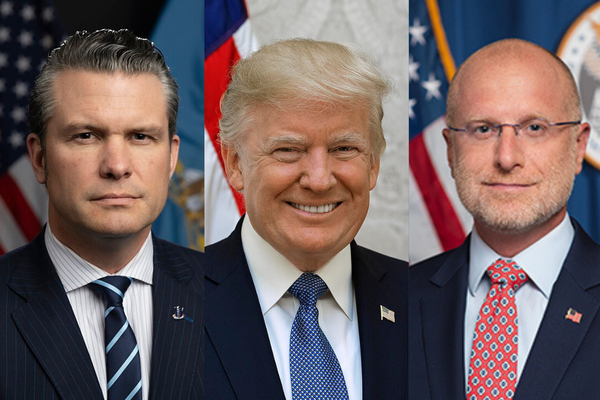
Bezos did have plenty of time this week, however, to warmly host “War Department” Secretary Pete Hegseth during his “Arsenal of Freedom Tour” to a Blue Origin facility at Cape Canaveral in Florida. Yes, the same Pete Hegseth who kicked out the Post’s reporters from the Pentagon for refusing to sign a pledge banning journalists from reporting “unauthorized” information.
It turns out democracy doesn’t die in darkness, per the Post’s increasingly hollow slogan. Democracy dies on flag-draped stages where journalism is sacrificed to the military-industrial complex.
Infrastructure weak
You don’t have to like the Post to appreciate the need for institutions like the Post. For all their flaws, major news organizations have experience in breaking news, publishing secret documents and withstanding government pressure. They even used to take pride in the latter.
Despite their beat-sweeteners and blind spots, major newsrooms like the Post, CBS and The New York Times have infrastructure — multiple reporters and editors, travel budgets and legal departments — that aren’t available to startups and Substacks.
“I suspect most Americans generally think that if CBS or the Post says, ‘Candidate X won this election,’ they believe them,” explains former Post staffer Perry Bacon Jr., writing in The New Republic. “By laying off foreign correspondents and other key staffers, the Post is directly eliminating this infrastructure. And this can’t easily be replaced.”
 Perry Bacon
He’s right. It won’t be easy to climb out of the wreckage of the Trump era. And it’s shocking how fast the president and his mega-rich enablers are dismantling storied media institutions or acting submissive toward the regime.
But it has also laid bare a truth about corporate media: As long as billionaires control the news, we’ll get only news that serves billionaires.
Pennsylvania’s new path forward
The same day that Bezos was trashing the Post, in a committee hearing room in Harrisburg, the Pennsylvania legislature took a small but significant step toward a brighter future for local news.


Pennsylvania’s House Committee on Communications & Technology passed two important journalism and civic-information bills introduced by State Rep. Chris Rabb and 12 co-sponsors. One would establish a state-backed fellowship program to place early- and mid-career journalists in community newsrooms across Pennsylvania. The other would create a Pennsylvania Civic Information Consortium modeled on the innovative program in neighboring New Jersey.
“This is filling a significant void in the Commonwealth of Pennsylvania, because there are a number of counties that have one or fewer local-media outlets,” Rabb told Pressing Issues after dropping the bills in December. “In a time of extraordinary media consolidation, fueled by Wall Street’s greed, it’s important that we have trusted hyperlocal and diverse media outlets if we’re going to sustain our democracy and strengthen it.”
 Vanessa Maria Graber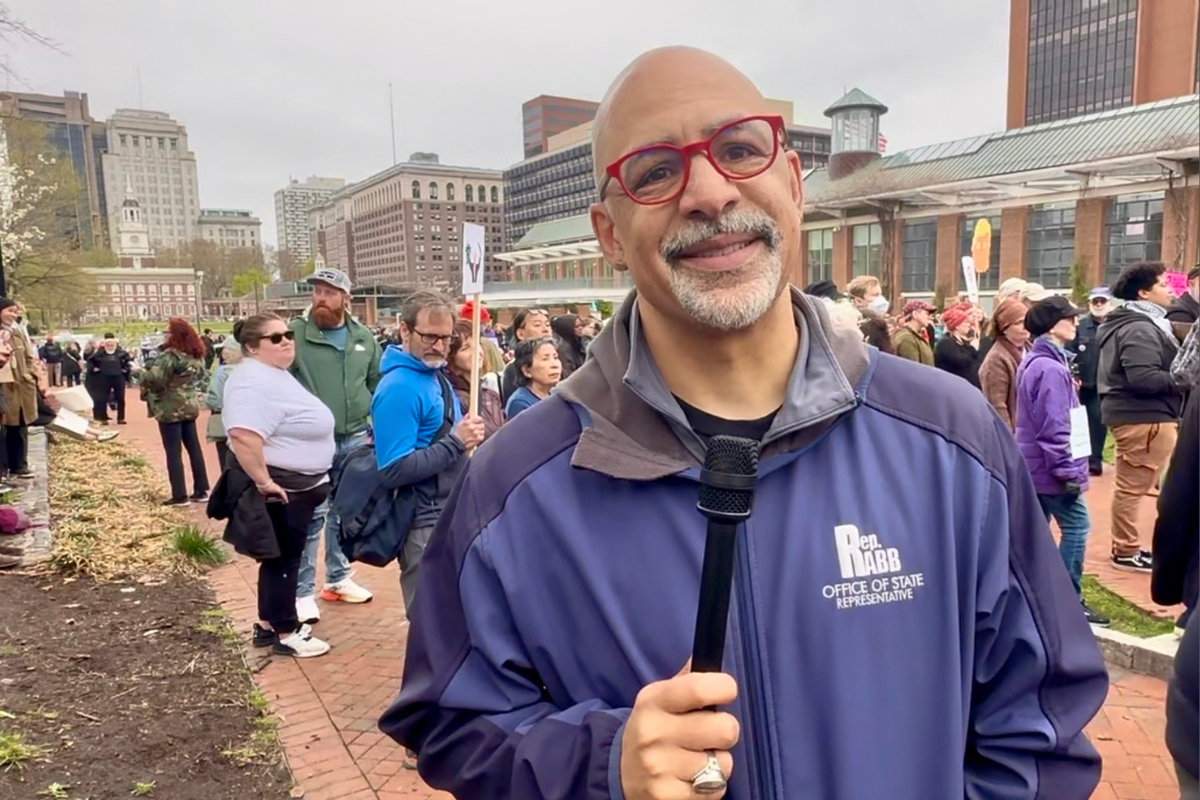
If passed into law and fully funded, these bills could be models for reviving local media, representing diverse communities, increasing accountability and, as my colleague Mike Rispli says, “treating local news and civic information as the public goods that they are.”
We need media that are accountable to the public — and that won’t happen without major public investment.
Solving $100 billion problems
In this new Gilded Age, the Musks, Zuckerbergs, Ellisons and Bezoses haven’t just wrecked the news industry while enabling tyrants. They’ve crushed our collective imagination that we can have and deserve something better. They’ve made alternatives feel impossible. But they aren’t.
For a tiny fraction of the tax breaks and public dollars we give to the billionaire class, we could have dynamic and diverse civic media in every state, a world-class public-media system that’s not begging for table scraps, and legions of reporters exposing corruption and demanding accountability from our leaders.
I’m not suggesting that journalism should be a higher priority than clean water, universal health care and community safety, —but I am suggesting that a public investment in our media system would help make all of those things higher on the priority list more likely to happen.
How do we pay for it? There are so many ways: At Free Press, we’re big on the idea of taxing corporate-media ad revenues to pay for public-grantmaking programs.


But that’s not the only potential source of funds: You could close corporate tax loopholes, buy far fewer fighter jets or — just spitballing here — abolish ICE.
Or here’s a fun thought experiment: There are 15 centibillionaires — individuals with a net worth north of $100 billion — in the United States. Together, just this tiny group is worth more than $3.13 trillion.
A one-time 1 percent tax on just the wealth of the very richest — almost all of whom made their fortunes in media and tech — would generate $30 billion.
You could build quite a local media system with that kind of money, maybe even one capable of asking why we allow centibillionaires to exist in the first place.
It’s time to get out
These are not the kinds of ideas you’ll see being discussed on the Washington Post opinion page anytime soon. (Though, to be fair, you wouldn’t find them in the pre-Bezos Post either.)
I’m old enough to have been a print-media guy. And a colleague of mine once said that people “love their magazines and hate their newspapers” (this was back when we still had racks full of magazines). Complaining about something in the newspaper — and there were plenty of times I fumed about what I read in the Post — was part of the social compact. It was a shared experience, and I miss it.
It’s been a long time since I awkwardly unfolded a broadsheet on a crowded train. But when I clicked the button to cancel my Post subscription, I felt melancholy, then anger. Sad about severing a community connection, mad that we kept letting the billionaires ruin everything.
My canceled subscription is largely symbolic. We desperately need a society-wide breakup with billionaire-controlled media. We need to get out of this abusive relationship.
And like any good divorce, we need to make them pay for what they’ve done to us.
Teamwork
Check out this great conversation I had with Sonali Kohlhatkar on her show Rising Up With Sonali, which also aired on Free Speech TV. Here’s a clip:
Sonali is a journalist who has been covering political movements and important stories the mainstream won’t touch for a long time at Pacifica Radio, YES! Magazine and other independent outlets. One thing we can all do now is support independent media, and subscribers to her site can see the whole thing.
Speaking of great conversations, don’t miss this interview Amy Kroin did with our colleague Ruth Livier about her new report on how the biggest media companies have abandoned diversity, equity and inclusion to appease Trump (and do a bunch of terrible things they probably wanted to do anyway).
 Amy Kroin
The kicker
“The @WashPost has now laid off its Asia editor, its New Delhi bureau chief, its Sydney bureau chief, its Cairo bureau chief, the entire Middle East reporting team, China correspondents, Iran correspondents, Turkey correspondents, and many more. The world is becoming less America-centric by the minute, while the United States is becoming more America-centric than ever. It is just a depressing yet somehow perfect summation of our current moment that one of the most important newspapers in the history of the country — one that has actually shaped the history of the United States — doesn't think reporting on the world is of any use anymore. What an utterly perfect encapsulation of where we have arrived.” — Evan A. Feigenbaum, Carnegie Endowment for International Peace, on X
We published a day early this week to account for breaking news. Pressing Issues will publish its next edition on Tuesday.
About the author
Craig Aaron is the co-CEO of Free Press and Free Press Action and a guy with two first names. Follow him on Bluesky.