Ed Markey Wants ICE Out of Your Face
The Massachusetts senator tells Pressing Issues: “Surveillance without limits becomes power without accountability. And power without accountability becomes tyranny.”

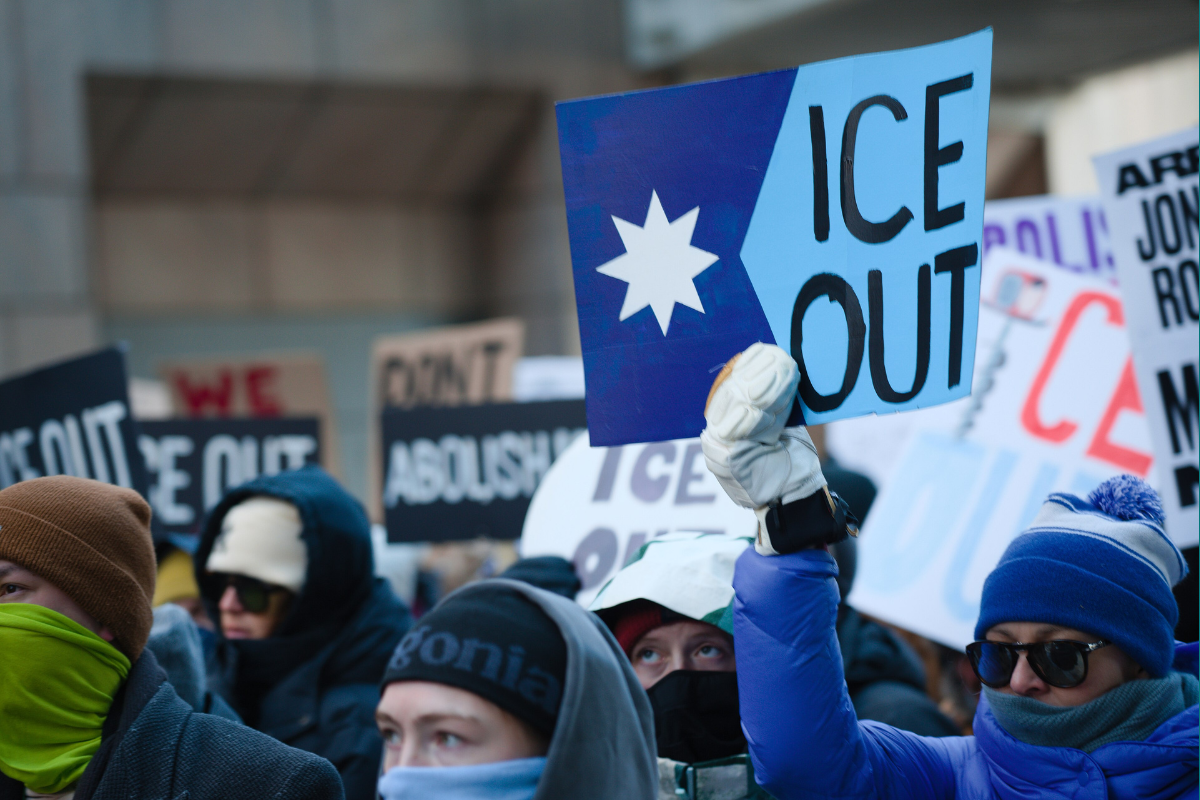
On Thursday, Trump administration officials announced the end of the two-month “surge” in Minnesota of armed and lawless agents that has terrorized and traumatized local communities. The federal government is on the verge of another shutdown over Republicans’ refusal to rein in these operations.
The violent and deadly operations of Customs and Border Protection (CBP) and Immigration and Customs Enforcement (ICE) have simultaneously expanded government-surveillance efforts targeting, tracking and threatening immigrants, as well as those trying to document and protest these operations.
With face-scanning technology and other forms of biometric surveillance, government agents are collecting unprecedented amounts of personal data on people in the United States with little-to-no oversight or accountability. Massachusetts Senator Ed Markey is trying to stop them.
Last week, Markey and several co-sponsors introduced the ICE Out of Our Faces Act, legislation that would ban ICE and CBP from using or acquiring biometric-surveillance technology, for them to delete data they have acquired with these technologies, and to allow state officials and individuals to sue for violations for their civil rights.


In an exclusive interview with Pressing Issues, Markey explained why restricting this technology and ending unlawful government surveillance is so important. Our exchange has been edited for length and clarity.
Craig Aaron: What is the ICE Out of Our Faces Act? What would it do?
Senator Ed Markey: The ICE Out of Our Faces Act does one simple thing: It stops Immigration and Customs Enforcement and Customs and Border Protection from using facial recognition and other biometric-surveillance technologies. Period. My bill bans ICE and CBP from using or buying facial-recognition tools, requires these agencies to delete the data they’ve already collected and gives people the power to hold these agencies accountable if they break the law. Our faces are not barcodes for ICE to scan and track. My bill ensures that the misuse of biometric technologies comes to an end.
CA: How are ICE and other federal-government agents abusing facial recognition and other forms of biometric surveillance?
EM: ICE and CBP are using these technologies to track and intimidate communities — specifically Black and Brown communities — under the guise of public safety. But it’s pretty clear that this isn’t about public safety at all. A tool that allows anyone to easily pull up loads of information on a person just by pointing a phone at their face is a tool that can easily be misused in the wrong hands. It’s terrifying.
I’ve been warning about the dangers of facial-recognition technology for years. In the past, supporters of the technology would say that no administration would abuse it, or that agencies would have safeguards in place to protect against abuse. But the Trump administration has unfortunately proved my fears right. ICE agents were even caught on video threatening to put protesters in a “domestic terrorist” database. This is the type of stuff you’d expect from an authoritarian country.
 C.J. Ciaramella
The Trump administration is weaponizing facial recognition by threatening protesters in an attempt to silence disagreement with its immigration practices. It’s unacceptable, and it’s unconstitutional. This is my point: This technology can be a powerful surveillance tool to intimidate protesters and silence critics. When an agency misuses a powerful surveillance tool, the answer is easy: They shouldn’t have it. Plain and simple.
CA: What does the public need to know about this technology? Does it even work?
EM: Facial-recognition technology is discriminatory by design. Though the accuracy of facial recognition has improved over the years, results are often biased and inaccurate — disproportionately affecting communities of color. The algorithms that power facial recognition are often trained on white faces, which means they're more likely to misidentify people of color.
But here’s the thing: Even if the technology worked perfectly, it would still be dangerous in the wrong hands. Perfect surveillance is perfectly terrifying. The question isn’t “does it work?”— it’s “should they have it?” And when DHS refuses to answer basic questions about how they’re using this technology, when they won’t be transparent with Congress, the answer is clear: No, they shouldn't.
CA: Who is this technology targeting? How is it being used against protesters and those observing and recording ICE activity in places like Minneapolis?
EM: We’re seeing the Trump administration use this technology against protesters, activists and community members who are simply exercising their First Amendment rights. In Minneapolis and other cities, people who are observing and documenting ICE activities — which is their constitutional right — are being scanned, tracked and threatened with inclusion in “domestic terrorist” databases.
This isn’t about catching violent criminals. This is about chilling dissent. This is about making people think twice before they show up to a protest or film ICE agents in their community. And it’s working. That’s the insidious nature of surveillance: You don't need to arrest everyone — you just need to make people afraid that Big Brother is watching.
CA: You have tried to get answers from DHS about the existence of this “domestic terrorists” database tracking individuals protesting ICE activities. What have you learned?
EM: Not much, and that should alarm everyone. DHS has been stonewalling Congress on all efforts to conduct oversight. This is unacceptable. I’ve written to them six times in the past six months to get more information about various invasive surveillance technologies. Their silence has been deafening. When a government agency won’t answer basic questions from Congress about how they’re surveilling American citizens, that’s not just concerning — it’s a violation of our system of checks and balances.
CA: It’s often hard for the public to understand the dangers of surveillance technology because they don’t know how it works, and they might assume that those being targeted must be doing something wrong. What do people need to understand about how this information is being collected and exploited?
EM: Here’s what people need to understand: There are no federal guardrails on this technology. No federal law that says facial recognition can only be used for serious crimes. No warrant requirements. No requirement to delete your biometric data after they’ve scanned your face. DHS is using these technologies on citizens and noncitizens alike, regardless of whether they have committed a crime.
And the scale is staggering. The app that ICE and CBP are using compares facial scans to a database of 1.2 billion faces. That’s nearly four times as many people as live in the United States!
Now, some people hear this and think, “Well, why should I care if the government has my data if I’m not doing anything wrong?” But over and over again, the Trump administration has targeted individuals who aren’t doing anything wrong. They have targeted protesters, students and other individuals simply for speaking out against Donald Trump. Everyone should be scared that the Trump administration is weaving an expansive web of surveillance technologies — from facial recognition to license-plate readers to social-media monitoring and predictive AI tools — to track people.
So think about it: Agencies using facial recognition have access to databases with over a billion faces, and they’re compiling lists of “domestic terrorists” based on who shows up to protests. Wouldn’t you think twice about going to a protest? Speaking out against an administration that knows everything about you?
This is why surveillance is such an issue. Surveillance without limits becomes power without accountability. And power without accountability becomes tyranny.
CA: Your legislation would allow states and individuals to sue over the use of biometric surveillance. Why is that important?
EM: I learned long ago that a right without a remedy is no right at all. People must have the ability to hold the government accountable for violating their rights. When the government won’t police itself, when DHS refuses to answer Congress’ questions, we need to empower everyday Americans to fight back in court.
This isn’t just about legal remedies — it’s about restoring balance. Right now, ICE and CBP face virtually no consequences for misusing this technology. My bill changes that. If they violate your rights, you can sue. If your state wants to protect its residents, it can sue. That’s how democracy is supposed to work.
We’re regressing back to the McCarthy era when the government targeted individuals because of their political views. We look back on that era with shame. We need guardrails, and we need them now.
CA: In the past, successful efforts to expose or limit unlawful government surveillance have united strange bedfellows on the left and the right. Have you heard from your more conservative colleagues who used to be very concerned about government spying?
EM: Good question. Where are my Republican colleagues? They’ve gone strangely silent on DHS surveillance overreach.
Not too long ago, Republicans professed a commitment to fighting back against government intrusion and the surveillance state. They talked about protecting civil liberties and limiting federal power. But now, when we have an administration using facial recognition to track protesters and possibly compiling “domestic terrorist” lists, suddenly they’re in a witness-protection program. They’re nowhere to be found.
This shouldn’t be a partisan issue. Whether you’re on the left or the right, you should be alarmed when the government can track your every movement without a warrant, without oversight and without accountability. The Fourth Amendment doesn’t have a party affiliation.
I’m still hopeful that we can build a coalition on this issue, because the threat is too serious to let partisanship get in the way. But right now, I need my colleagues across the aisle to show some courage on civil liberties. Principles shouldn’t change based on who’s in the White House.
Teamwork: Bad Bunny edition
Pressing Issues co-editor Julio Ricardo Varela wrote for MS NOW before the Super Bowl about why the NFL ignored MAGA’s Bad Bunny haters.
 Jarvis DeBerry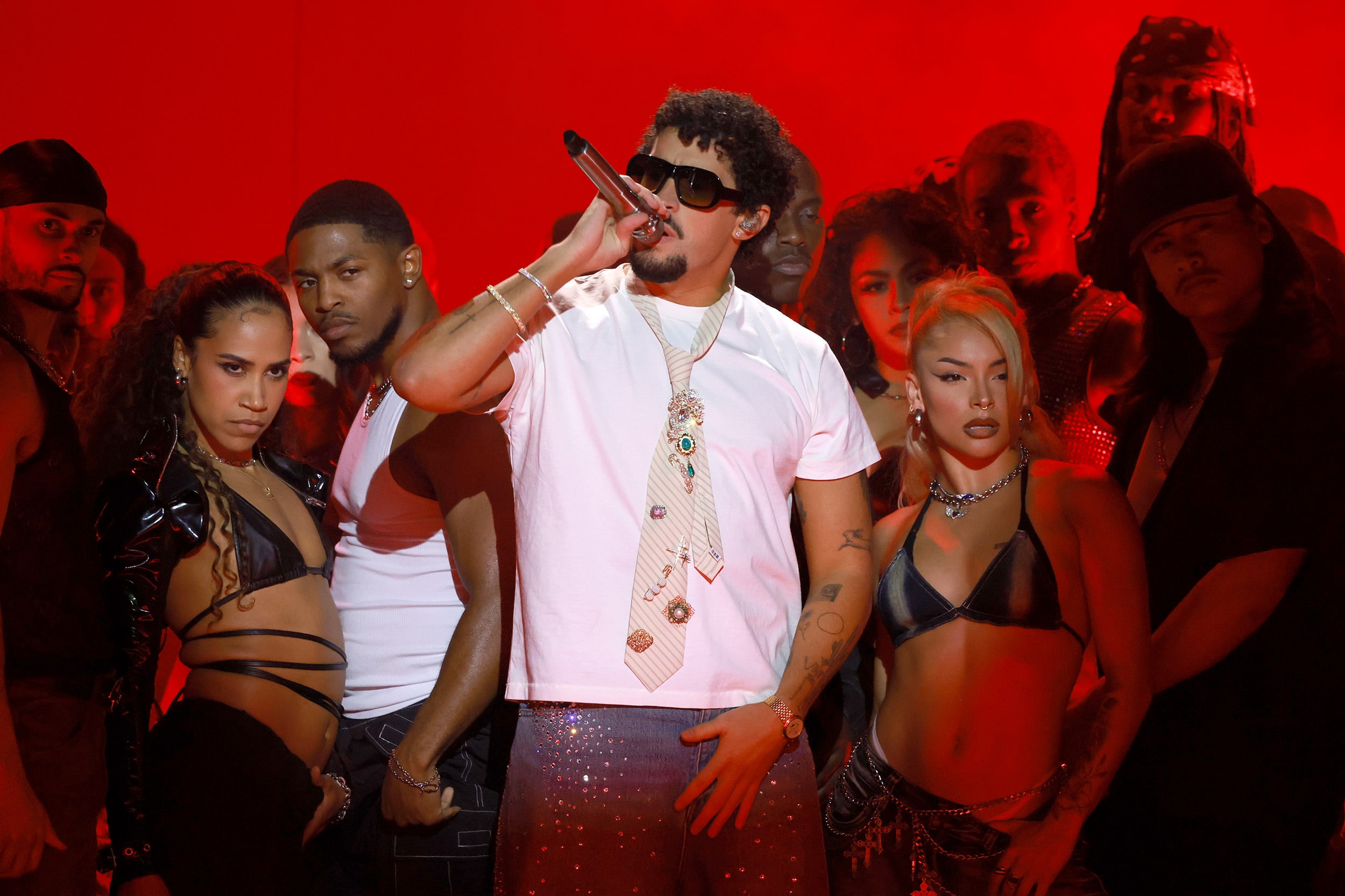
But now, perpetually angry “about everything from their own lack of Spanish fluency to the fact that Bad Bunny is sexier, more talented and more charismatic than them,” to quote Free Press Co-CEO Jessica J. González, some of these same blowhards — like Rep. Randy Fine (R–Florida) — are trying to get the Trump FCC to go after NBC for airing what they claim was indecent content. The law says otherwise.
“This real American thinks the only thing indecent about Bad Bunny’s Super Bowl performance is how mad the extreme right is about it,” writes González for the Free Press blog. “But legally speaking, Fine’s indecency allegations are nothing more than a thinly veiled attempt to demonize the multiracial joy that Bad Bunny showcased to a major international audience.”
 Jessica J. González
Meanwhile, Trump FTC Chairman Andrew Ferguson — who is generally more focused on an anti-trans agenda than actual antitrust — has developed a sudden interest in Apple, the main sponsor of the halftime extravaganza. Ferguson is targeting Apple News based on “research” from the apartheid-loving team at the far-right Media Research Center.
As I told Ars Technica yesterday: “This is what government censorship looks like. Ferguson’s claims aren’t based on any facts or evidence, just innuendo from discredited partisan operatives who think The Wall Street Journal is too woke. Just imagine if another administration had told Drudge or Fox News what stories they should feature on their apps or homepages.”
 Jon Brodkin
The kicker
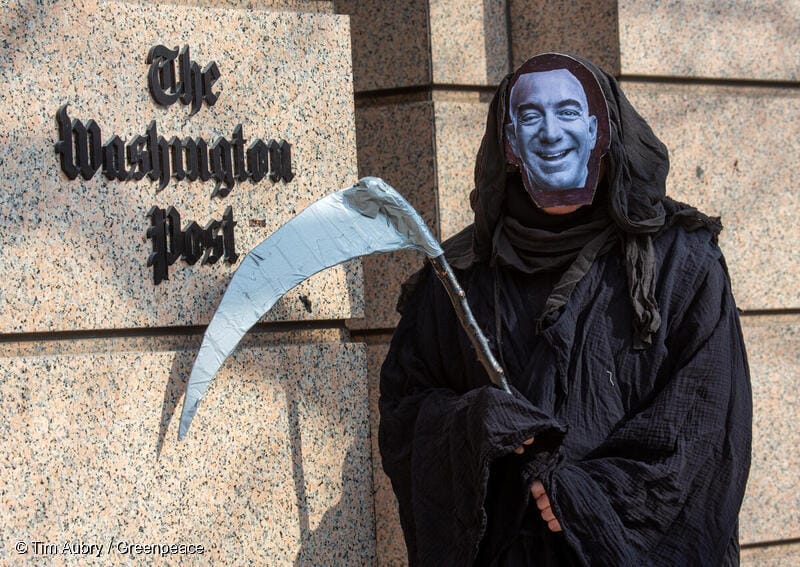
On Wednesday, our friends at Greenpeace protested Jeff Bezos’ destruction of the Washington Post — which included sacking 14 climate journalists. Billionaires warping the news isn’t just a media issue; it’s an environmental one, too.
About the author
Craig Aaron is the co-CEO of Free Press and Free Press Action and a guy with two first names. Follow him on Bluesky.