Five Questions with Jazmine Ulloa
How the history of the United States flows through El Paso

I will never forget Aug. 3, 2019, when a self-proclaimed white supremacist drove 650 miles from his home north of Dallas to a Walmart in El Paso and opened fire, killing 23 people, most of them Latino. He had written a manifesto decrying what he called the “Hispanic invasion of Texas.”
What happened in El Paso seven years ago is still with all of us, yet the United States has done little to contextualize this specific tragedy — ignoring El Paso’s history or understanding of the borderlands, or any real framing for why that massacre happened in the first place.
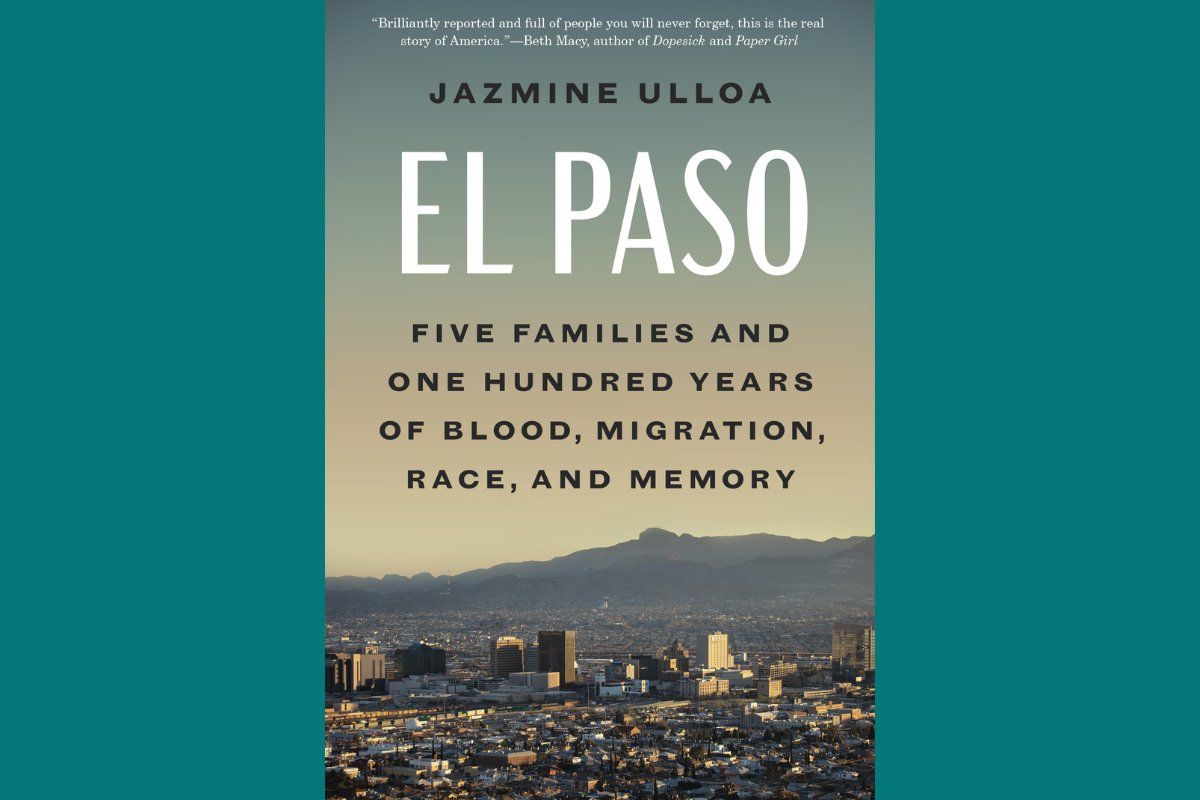
Jazmine Ulloa knew. She is a national reporter at the New York Times and a proud fronteriza. Her new book, El Paso: Five Families and One Hundred Years of Blood, Migration, Race, and Memory came out earlier this month. In it, she explains why El Paso has always been at the center of this country’s foundation and why what happened in 2019 was not an isolated act of madness but the product of a very long and very American history.
“We were at the front lines of a grave and fundamental fight over who we were — over who should belong in the United States and who should not,” Ulloa writes in her book’s first chapter, “over whether we believed in, would live up to, and could uphold a multiracial, multiethnic democracy or craved a strongman’s control and promises of a return to a white Christian nation — in a world where companies and industries were getting too big, moving too fast, breaking too many things, and leaving too many people behind. Those tensions had drawn a white supremacist to the border, and now they had also brought me home.”
 Robert Moore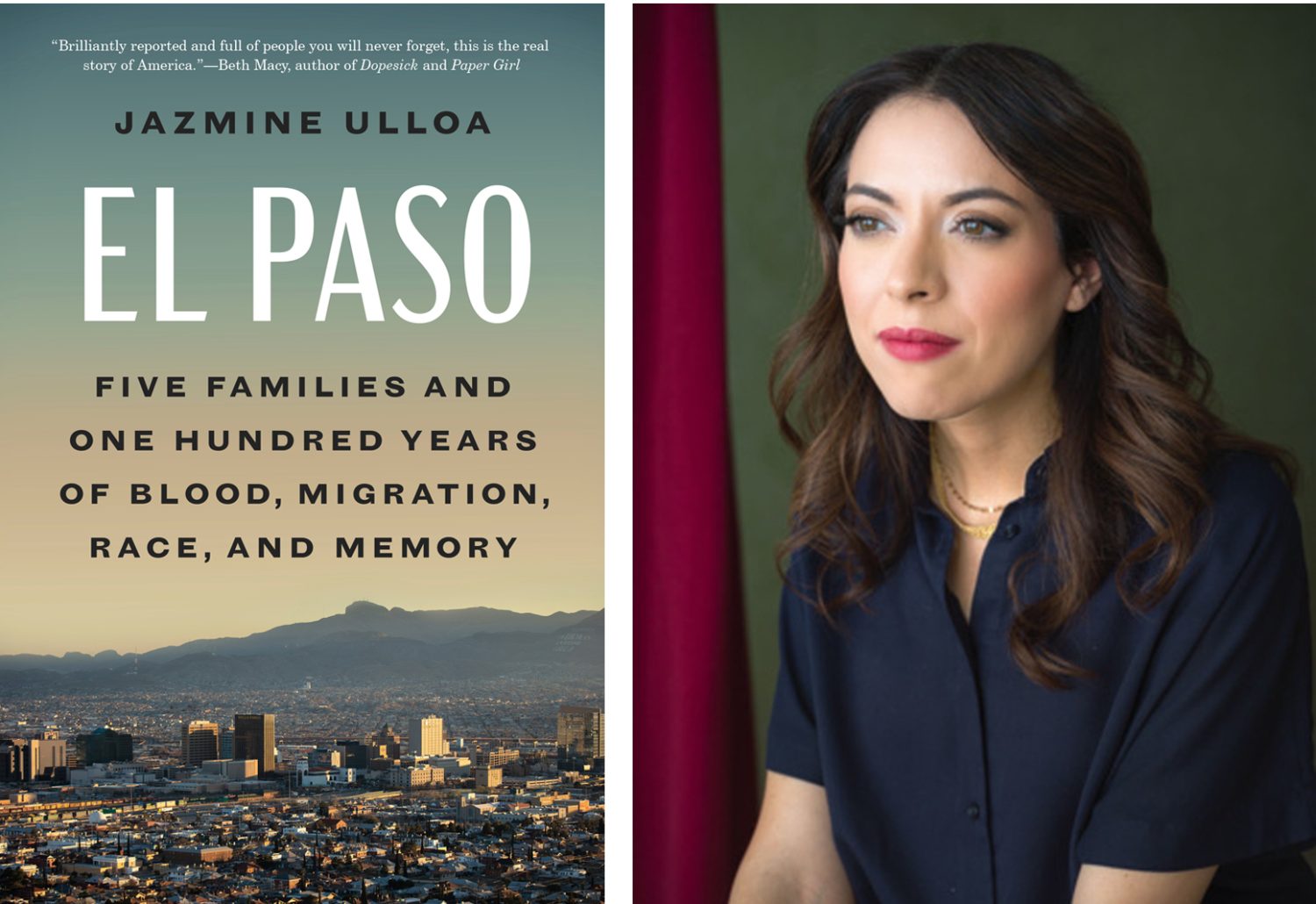
Airspace closures, mega detention centers — El Paso shows up in social-media feeds but most will scroll through with no context or history in mind. The city keeps appearing in the news, and most Americans still don’t take the time to understand why.
Tonight, PBS premieres White With Fear, a documentary about right-wing voices that have exploited race-based fear for decades, including the 2019 El Paso Massacre. In the midst of a second Trump administration that continues to push immigration policies that Amnesty International USA labeled as “harmful,” “racist” and “reckless,” you begin to understand why a book like Ulloa’s is required reading.
I reached out to her via email to talk about her book and put it into some necessary perspective. Here is our conversation, edited for Pressing Issues.
Julio Ricardo Varela: Your book dropped at the beginning of March. What has it been like to finally put this book out into the world, especially right now?
Jazmine Ulloa: It’s powerful and bittersweet to be writing as a proud fronteriza and Mexican American at a time when schools and universities in Texas and beyond are dismantling their Mexican-American and Latino studies courses and departments.
People I know and love and grew up with are sharing and connecting with the book in ways I could have never predicted. At events and signings, so many readers have come up to me to share memories about their parents and grandparents and great-grandparents — braceros, mineros, educators, empresarios and more — who crossed through El Paso and helped build the American Southwest we know today. That has been so beautiful to me.
When we’re once again living through a time when officers are questioning Latinos’ citizenship and so many of our families are wondering whether they can belong, the reception has been a reminder of exactly why I wrote this book. We’re hungry for this history. We want our stories told.
JRV: I read a recent Instagram post of yours saying that “It is in El Paso where we can see how nativism has been central, not exceptional, to how we craft and enforce immigration laws against the largely Mexican and Latino and immigrant blue-collar workers it now declares outsiders, criminals and invaders.” How do you navigate that in your book and in your overall work?
JU: It’s a through-line in the book. I sought to show how El Paso has been a critical gateway into land that would become the United States long before Ellis Island ever existed and that it is El Paso’s history that now holds the key to understanding not only the nation’s immigration battles and how they have shaped Latino identity but our shaping the identity of our nation itself.
It is also in El Paso where we can see that this racist idea of a “Hispanic invasion” of the United States couldn’t be further from the truth: Mexican American culture and history have always been part of who we are as Americans.
Understanding this history — the ebb and flow of nativism and the pushback to it — has also driven much of my work. I started thinking about it more deeply after a self-proclaimed white supremacist opened fire at a Walmart in El Paso, decrying “the Hispanic invasion of Texas.” The massacre happened about three minutes away from where I went to high school and was one of the toughest assignments I have ever covered.
JRV: You also share your family’s origin story in the book and you put yourself and your story in the book? Why did you feel it so important to do this?
JU: I didn’t want to at first. As journalists, we went to be witnesses on the outside looking in. But during the course of the reporting and writing, it became clearer and clearer that the narrative needed a guide, someone who could explain what was unfolding from an outsider's and insider’s perspective.
To truly understand El Paso’s history, I also realized I needed to better understand my own personal history and connection to the city. My book follows the paths of five families, some of whose relatives I came to know intimately. I asked them very tough questions about painful periods in their lives that had, for far too long, been kept in silence. In doing so, I came to find I needed to interrogate my own past as well.
JRV: Given your work as an immigration journalist, how best do you put this case in the context of how journalists have been treated by the federal government these days?
JU: As journalists, we’re on the front lines of the harshest detention and deportation campaign this nation has seen since World War II. As early as June 2025, when immigration sweeps and protests intensified in Los Angeles, journalists there filed a lawsuit against the Department of Homeland Security over use of force, unlawful detention and interference with legal press activity.
But this period does not stand in isolation. Part of our job as journalists is to document uncomfortable truths, and governments on both sides of the border have at times sought to silence that mission. As I explore in the book, Mexico became one of the most dangerous countries in the world for journalists during the drug war, and Mexican and American law enforcement officials and intelligence agents pursued independent journalists and intellectuals from northern Mexico to the midwestern United States during the Mexican Revolution.
JRV: How can your book inform immigration reporting on El Paso right now, for example news of the nearby mega center at Camp East Montana?
JU: El Paso shows we have been here before and will be here again if we keep ignoring this history. I’ve reported from immigration operations in Chicago, Minneapolis, and Washington, D.C., and if we dig into the archives, we see many of the same scenes playing out on the streets today: Federal agents using sweeps, raids and surveillance checkpoints to load people onto vehicles and planes. Blunt forms of racial profiling that entangle U.S. citizens. Harsh nativist, xenophobic and racist rhetoric to justify the means.
So this is not a singular moment but part of a broader pattern with much deeper roots in American history, and many of these actions now unleashed in the nation’s interior — and the U.S. detention and deportation apparatus itself — originated and in many ways went unchecked on the southern border, in predominantly Latino communities like my own.
About the author
Julio Ricardo Varela is the senior producer and strategist at Free Press. He is also a working journalist, columnist and nonprofit-media leader. He is a massive Red Sox, Knicks and Arsenal fan (what a combo). Follow him on Bluesky.
Teamwork (The FCC lawsuit edition)
Compiled by Pressing Issues editors
On Monday, Free Press and a coalition of allies filed a challenge in the U.S. Court of Appeals for the District of Columbia Circuit, seeking to stop the merger of Nexstar and Tegna before the companies combine all operations. The lawsuit further asks the court to set aside the FCC’s approval of the deal. The groups, represented by attorneys at Democracy Forward, assert that the merger is unlawful — in contradiction of laws established by Congress and of FCC procedures, too.
“The whole point of these deals is not better news coverage, as these massive companies claim,” said Matt Wood, Free Press’ vice president of policy and general counsel. “They’re all about raising consumer prices while slashing the companies’ costs, which means firing reporters and centralizing the production of top-down, duplicative and watered-down news. We’re ready to challenge this unlawful deal before the courts and alongside the communities that Nexstar is supposed to be serving.”


See last Friday’s Pressing Issues for more on the problems with this deal, which is also being challenged by industry competitors and eight state attorneys general.
 Craig Aaron
The kicker
“El Paso is a border city that needs to be explained to America every decade.” — Jazmine Ulloa