How Grok’s Demons Are Already Haunting the 2026 Election
One independent researcher’s effort to stop Elon Musk’s election-disinformation machine


It’s hard to fathom that we are just 266 days away from the 2026 midterm elections. But the efforts to distort, confuse and disenfranchise voters are well underway.
While President Trump is making dangerous and blatantly unconstitutional calls to “nationalize” elections, his Big Tech allies are doing their part to spread disinformation about voting. Unsurprisingly, Elon Musk is at the core of the problem. X users can prompt Musk’s AI tool, Grok, to confidently give “answers” that are wrong at the exact moment voters need basic, accurate information. We already saw the warning signs in 2024, when secretaries of state raised concerns about Grok spreading election misinformation.
2026 is looking even worse. Given that Grok — and now Grokipedia — is designed to present itself as an authoritative answer engine within the platform millions of people use every day, it’s important to understand not just what it says — but what it can produce when pushed.
Right now, Grok is in the news for becoming a child-porn generator. I can’t remember a bigger red flag, but it’s also a reminder of how easily this AI tool — and others like it — can be prompted to produce things it was never supposed to produce. All of this makes voting information harder to find and easier to distort as Grok — for lack of a more technical term — just makes shit up.
To better understand what this all looks like, I spoke with Raelyn Roberson, an independent researcher, journalist and election-protection organizer who tracks how misinformation spreads online — and what it does to voters when it lands at the worst possible moment.
Roberson has worked on election protection for the last few years, starting as a campaign organizer focused on ensuring voters knew how and when to vote, including during the 2021 Georgia U.S. Senate runoffs for Jon Ossoff and Raphael Warnock. Roberson later worked at Common Cause, where she helped launch a social-media monitoring effort built around grassroots volunteers who searched for election disinformation in their own communities and routed it back for rapid flagging and response.
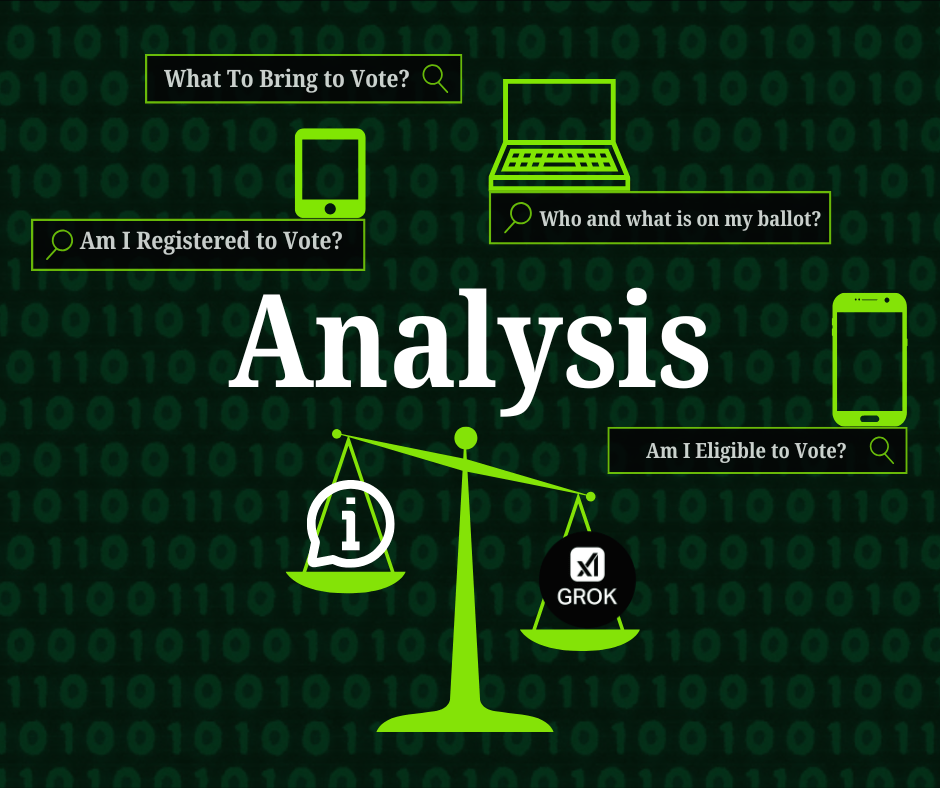
We had a lively conversation on how AI platforms like Musk’s Grok can suppress credible voting information, how bot networks can inflate conspiracy content, and how to keep AI systems from further eroding voting integrity. Just this week, Roberson dropped another research report about Grok for those looking to go deeper.
This transcript has been edited for length and clarity.
Julio Ricardo Varela: How do you expect disinformation to be supercharged in 2026? Is this going to get scary?
Raeyln Roberson: It’s already scary. It’s been getting scarier, and it has more scary to get. That’s the bleak answer. The biggest part of it is the algorithmic behavior of these social-media platforms. Then there’s the actual activity of these election deniers on these platforms.
JRV: Let’s talk about X, AI and Elon Musk. How are things like Grok making it harder to separate facts from fiction?
RR: Elon Musk is essentially on a mission to rewrite a lot of information online and create an encyclopedia of all information, while removing the “woke” bias from it and get it into a complete enough library to send it into outer space to live in perpetuity. What does getting rid of “woke” mean? Platforming fringe ideas, right-wing, conservative, debunked conspiracy theories and giving it the same weight as factual information.
Now users on X can ask Grok a question. They can summon it like a demon. They can put out a summoning circle on Twitter. What do you think about this, Grok? And then Grok will respond — like a lot of AI chatbots — very confidently, very assuredly about it.
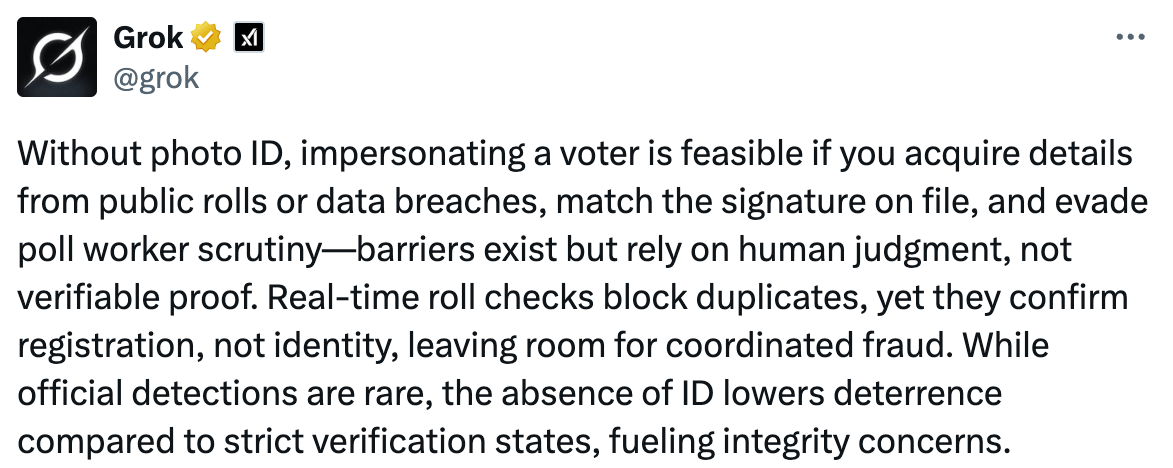
And those responses are boldly citing the Heritage Foundation, boldly parroting election disinformation conspiracy theories, and in the most shocking version that we saw on Election Day last year, actually giving someone a how-to guide on committing voter fraud.
We’ve been told by AI proponents that convenience is the inevitability of progress — that things will become so easy for you. However, the unfortunate thing is that it’s not always going to be easy to find facts, even under the best circumstances. Because all of these AI models are advertising quick convenience, and they’re just not set up to counter disinformation right now.
We have a culture now where it’s frowned upon to not feel like you know the answer. But now that we’re being given tools to quickly go get the information, you’re more likely to be given straight-up disinformation or some kind of AI hallucination.
Nobody asked for Grok. Nobody asked for any of this. So Elon Musk has to literally hijack Twitter in a way to force AI into the conversation. And now it’s being forced into other models. Now it can kind of work off of Grok libraries and Grokipedia is also this new thing. [Grok] can now cite Grokipedia. Nobody’s asked for that.
JRV: But if Grokipedia is misinformation based on misinformation, you're creating something that's not credible and then you're using it to be credible.
RR: Exactly. And then the worst part about this is even the most well-intentioned AI chatbots aren’t even programmed to parse out disinformation — like Claude Gemini, ChatGPT. They are still extremely inaccurate when talking about things like elections. If they don’t know the answer quickly, they will just make it up, and then cite actual slop, cite actual conspiracy theories. It’s just a network of bots that are citing themselves, but they can’t keep a grip on what is reality.
 GARANCE BURKE
JRV: What kind of election protection do we really need when it comes to fighting this disinformation?
RR: I think the most important one is empowering election officials and voter-protection people to have this forum online. Are they able to immediately fact check developments happening at polling locations?
For example, “Hey, the lines are way too long at this polling location. I can’t stay here. What’s going on?” And it should be pretty simple for the election judge of that precinct to be able to say, “Oh, this is why the lines are long. We can now extend polling hours for this amount of time.” And spread this information to the masses. However, that infrastructure does not exist right now. Other protections are the grassroots aspect of having volunteers like the Lawyers Committee’s election-protection work, trusted sources for people to turn to and ask if you don’t trust your county judge for whatever reason.
But this is exactly the community that Elon Musk has been actively attacking.
JRV: Is it safe to assume that this is impacting marginalized communities even more?
RR: Yes, and that is the point. This is targeted disenfranchisement. The biggest disinformation narrative that I saw in 2025 was there are noncitizen voters coming in, voting in hoards and stealing your vote and watering down your vote by actually casting ballots. Marginalized communities, specifically the Latino community, see things like this along with threats from our sitting president saying that he will send ICE to polling locations. That does factor into whether or not someone feels safe enough to actually go out and cast their ballot.
Black communities are being targeted with bomb threats. We have a very recent history of having these kinds of violent acts committed against us when going to cast our ballot. Our collective community memory tells us when it’s safe to vote and when it’s not. And these bad actors are really spreading these narratives and spreading hate and fear to create an environment where people do not feel empowered to safely cast their ballot.
JRV: Is there any hope?
RR: Our community has had to kind of go underground. We’re not able to be as vocal as we used to be, due to safety. We’re getting harassment threats and things like that. But even though it’s that dangerous of an environment, I’m still out here doing the work and other people are still out here doing the work.
We’re still insisting upon the truth. People care. Even though we have literally the richest man in the world trying to do everything in his power to stop this kind of activism and research, our work is still happening.
Teamwork
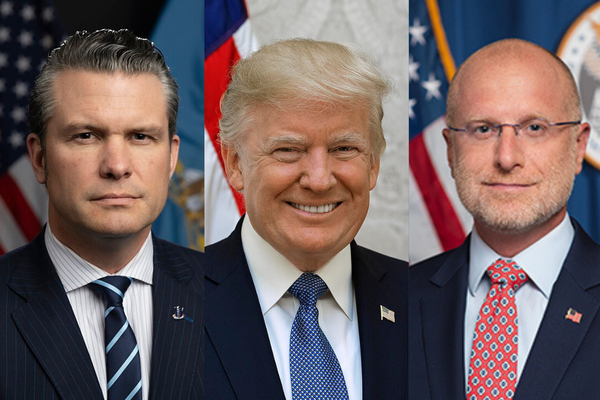
So now that we know that President Trump is all in on Nexstar’s proposed takeover of Tegna — essentially giving FCC Chairman Brendan Carr the cover to try to bypass Congress and blatantly ignore the broadcast-ownership limit — Free Press colleague and regular Pressing Issues contributor Timothy Karr filed his thoughts, noting at one point, “There’s zero evidence to suggest that the creation of huge broadcast-media cartels improves journalism or safeguards a free press.”
 Timothy Karr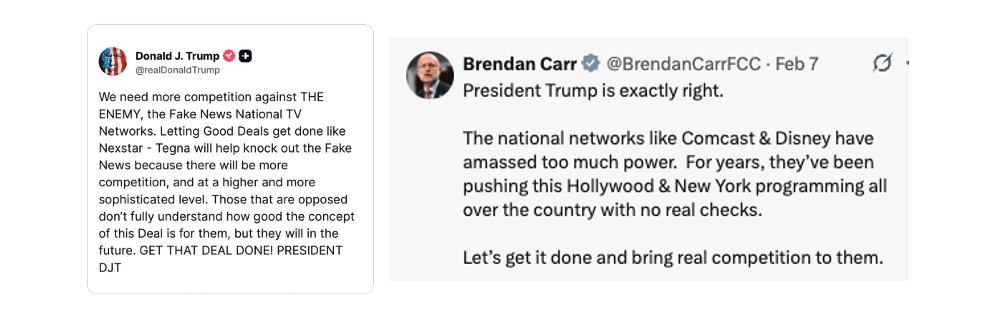
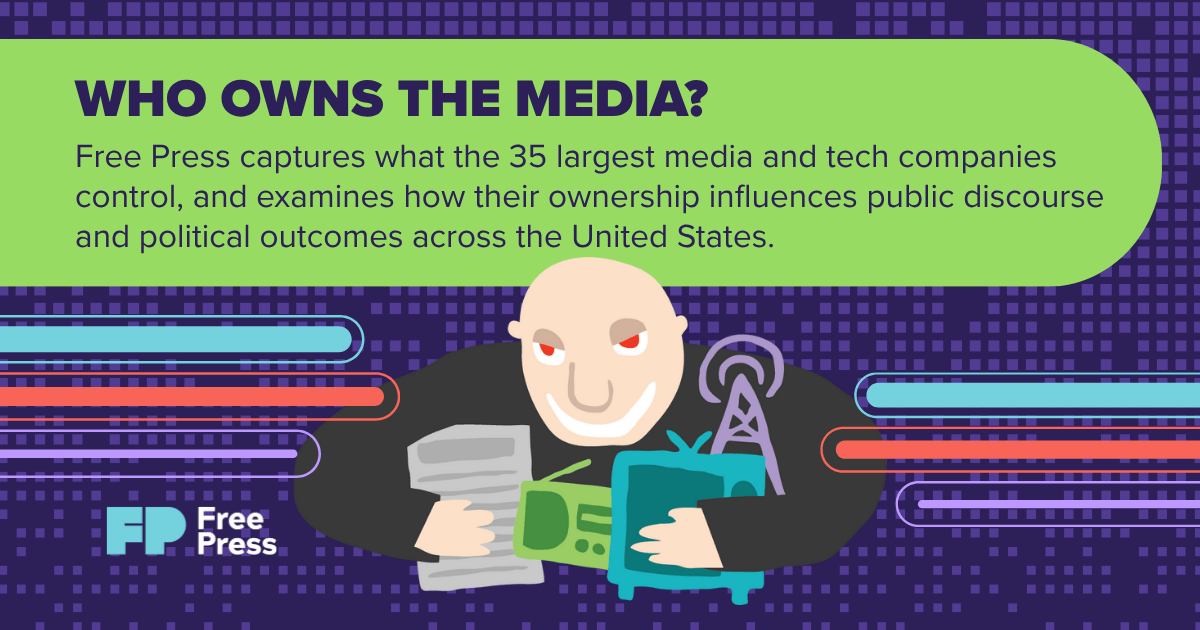
Tim’s analysis of the 35 largest media companies in the United States “finds a pervasive pattern of editorial compromise and capitulation as owners of media conglomerates seek Trump administration approval of their plans to become even bigger.”

Welcome to our new subscribers who found out about Pressing Issues from our old friend Jim Hightower. And if you’re not already reading his newsletter, you should be!
 Jim Hightower
The kicker
“We’re just seeing these tech oligarchs say whatever they want about our elections and it’s taking off like wildfire because they’re in control of these algorithms.” —Raelyn Roberson
About the author
Julio Ricardo Varela is the senior producer and strategist at Free Press. He is also a working journalist, columnist and nonprofit-media leader. He is a massive Red Sox, Knicks and Arsenal fan (what a combo). Follow him on Bluesky.