Nexstar’s Big Payback
The nation’s biggest local-TV broadcaster has passed Trump’s loyalty test and is ready to cash in


Remember Jimmy Kimmel?
In all the time-warping and terrorizing of the Trump administration, even huge controversies quickly become hazy memories.
It was just four months ago that the nation’s biggest broadcasting chains, Sinclair and Nexstar, yanked the late-night comedian’s show in response to pressure from Trump FCC Chairman Brendan Carr.
After a burst of public outrage — and widespread ridicule of Carr’s cartoonish villainy — the broadcasters backed off, and Kimmel was back on the public airwaves.
A month before the attempted Kimmel cancellation, Nexstar announced a $6.2 billion deal to acquire Tegna, one of its largest competitors.
The price of dealmaking under Trump is capitulation and censorship. Nexstar has collaborated with the regime in hopes of securing unprecedented — and brazenly illegal — dominance over local-TV news.
While Nexstar has failed its viewers, undermined its journalists and sacrificed its independence, it has passed a very lucrative loyalty test.
And now it’s ready for the big payback.
Nexstar’s power play
Over the past 40 years, broadcasting lobbyists and their willing accomplices at the FCC and in Congress have obliterated almost every meaningful limit on media ownership. You have them to largely thank for everything from the rise of Fox News and Rush Limbaugh to the death of local radio and the disappearance of local newsrooms to Paramount Skydance’s ongoing destruction of CBS.
“While the public has already lost so much from years of rampant consolidation,” my Free Press colleague S. Derek Turner recently lamented, “there’s still more to lose.”
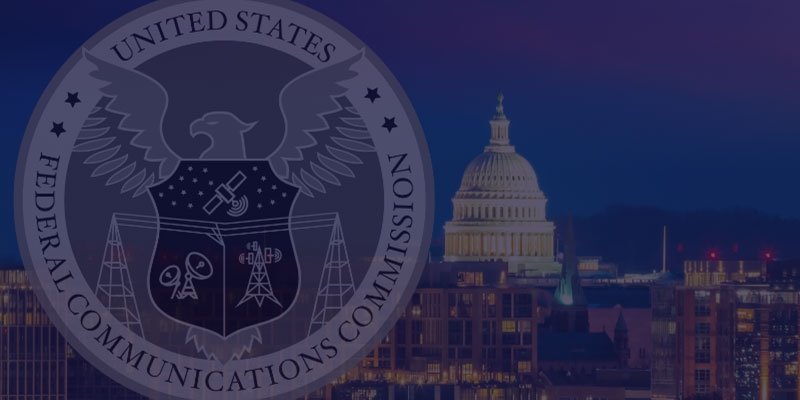
You hopefully had better things to do on New Year’s Eve than scour the FCC docket. But that was the holiday-ruining deadline Carr set for those challenging the Nexstar-Tegna merger. Free Press and a coalition of labor unions and media-justice groups filed detailed comments opposing this dangerous deal. (You can go here to read the whole thing.) Some strange-bedfellow conservatives also oppose the merger, arguing that it would concentrate too much media power in too few hands.


If the FCC approves the merger, the combined companies would own 265 full-power TV stations in 44 states and 132 local markets. In many of those places — from Dallas to D.C., Denver to Des Moines — Nexstar would control two, three or even four local network-affiliated stations.
There oughta be a law
But even by the Trump FCC’s low standards, the Nexstar-Tegna deal stands out for its lawlessness.
In 2004, Congress passed a law establishing a “national cap” that bars a single company from owning full-power broadcast-TV stations that reach more than 39 percent of U.S. households. Turner notes that under the proposed Nexstar-Tegna deal, the combined company would reach more than 80 percent of U.S. television households.
Any deal doubling congressionally mandated ownership limits should be DOA. But Nexstar claims that Carr can issue a waiver to Congress’ clear instructions. For his part, the chairman has been publicly noncommittal, telling a House oversight committee last week that he was “looking into it.” The series of regulation-killing proceedings that Carr has teed up at the agency suggests he’s doing much more than that.


While a previous series of short-sighted court decisions has opened the door to local broadcasting “duopolies,” the proposed Nexstar transaction requires the invention of a whole new vocabulary. If the deal goes through, Nexstar would de facto control four stations in places including Austin, Hartford, Indianapolis, New Orleans and Tampa — a veritable quadopoly.
This unprecedented level of concentration shouldn’t just concern the FCC — it should worry the Justice Department, too. Nexstar’s market power in these communities far exceeds what antitrust enforcers consider unlawful.
Costs of consolidation
Broadcasting is already highly concentrated — and women and people of color own only a handful of stations. When one company owns nearly all the TV stations, you only get one version of the story. And sometimes you don’t even get that.
“Numerous empirical studies demonstrate that as station groups became larger, both in terms of their national footprint as well as the number of stations they controlled within their existing local markets, these firms maximized profits by increasing national content at the expense of time previously allocated to local journalism,” Turner wrote in a recent FCC filing challenging Carr’s plans for further consolidation. “They piped in content produced in distant markets. They also closed newsrooms, laid off experienced journalists, and generally ran newsroom morale into the ground.”
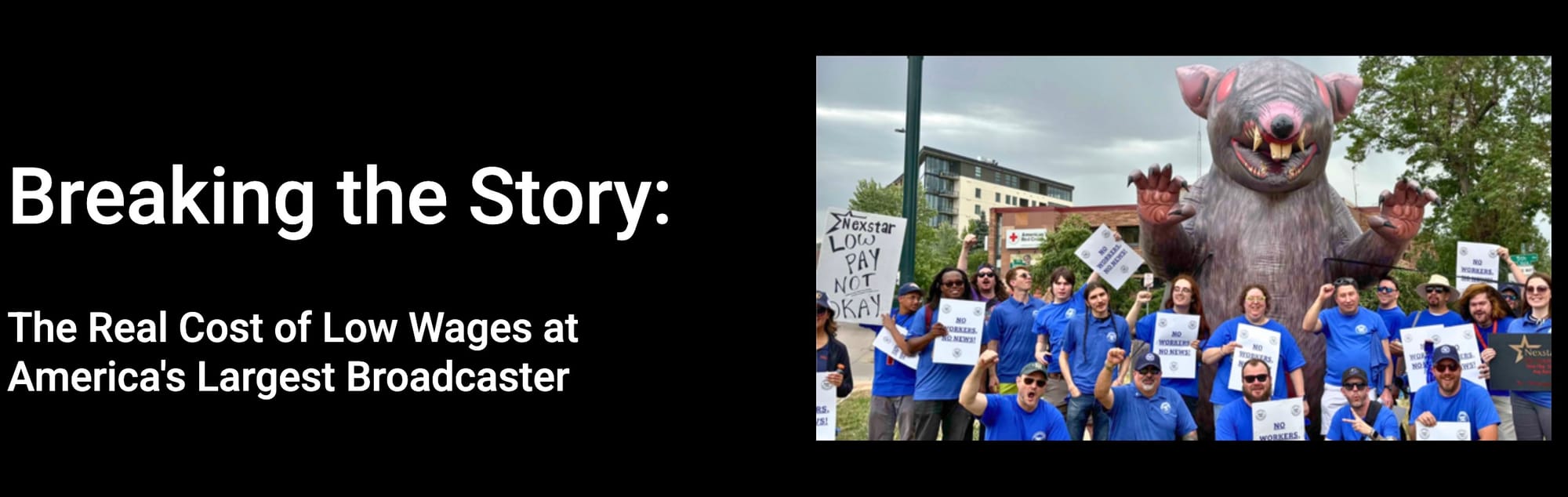
Nexstar also has a dismal record of mistreating workers and trying to bust unions. A post-merger Nexstar would employ 28.4 percent of all workers in the U.S. TV broadcast industry, while cutting jobs and killing off competing employers in numerous markets.
“Our members have seen time and time again what happens when owners of broadcast entities merge,” says Charlie Braico, the president of NABET-CWA, which represents broadcast engineers and technicians. “In the service of Wall Street profits, newsrooms shrink, workers lose jobs, wages decline and local news suffers.”
There’s clearly no public-interest benefit to this merger, no matter how many holiday toy drives the stations trumpet in their filings to appear community-oriented. And the broadcast industry’s claims of poverty don’t withstand scrutiny either. According to Turner, the industry’s total inflation-adjusted revenues in 2024 were up 60 percent from 2009. Even during the online video boom, broadcasters stayed fat on “retransmission consent” payments from cable companies — and on profits from political attack ads.
Broadcasters love to cry about the harms of Big Tech, but they’re laughing all the way to the bank. “Broadcast giants claim that allowing them to monopolize the public airwaves would deal a blow to the continued growth of Big Tech,” Turner explains. “But this notion is an absurd attempt to hide the reality that the main way broadcast conglomerates can continue to earn outsized profits is by eliminating their actual in-market competitors.”
By the way, Nexstar’s stock price has increased by more than 28,000 percent since 2009.
Reclaiming the public interest
Without any legal, public-interest, job-creation or legitimate financial arguments in favor of this merger, Nexstar is left with partisan ones.
Unfortunately, that’s the love language of the Trump FCC. Carr is already meddling in numerous deals with bogus investigations, pressure to install pro-Trump “bias monitors,” and relentless jawboning, knowing that Congress will offer little more than mild rebukes.
(Sen. Ted Cruz got a lot of credit for criticizing Carr’s “easy way or the hard way” comments during the Kimmel debacle. But his tepid “grilling” of Carr at a long-overdue Senate oversight hearing last month didn’t leave any sear marks.)
As detailed in a recent New York Times Magazine profile, Carr’s agenda has often relied on the crackpot legal theories of the Center for American Rights (CAR), a right-wing group that’s given the chairman a guide to twisting the notion of the “public interest” beyond recognition.
Trained by the Federalist Society and inspired by its calls to “crush liberal dominance,” Carr and CAR are working to stamp out independent media and critical coverage of the administration in favor of love-America platitudes and paper-thin “patriotism” designed to mask rising authoritarianism and entrench billionaire control.
Nexstar, like Sinclair and CBS, is happy to oblige as long as its executives get filthy rich. The broadcasters assume the public doesn’t care — and they’re doing their part to ensure it. You won’t see this story covered on local TV.
The next deadline for public input on the Nexstar-Tegna merger is Jan. 26. Free Press has a petition set up that makes it easy to add your voice.

We know what this deal means for local communities. We know it will destroy jobs. We know it’s illegal.
What we don’t know yet — with Brendan Carr and Donald Trump in charge — is if any of that matters anymore.
Open tabs
Over at Techdirt, Mike Masnick did an excellent write-up of Free Press’ Chokehold report that tracked the hundreds of free-speech violations in the Trump regime’s first year. “We’ve said it before, and we’ll keep saying it because apparently it needs repeating: Donald Trump is not a free speech president,” Masnick writes. “He just plays one on TV while doing the exact opposite behind the scenes. And in front of the scenes. And basically everywhere. Over and over and over again.”
 Mike Masnick
Salt Lake City Weekly has an interesting piece on how public broadcasters in Utah are responding to federal funding cuts with creativity and collaboration, while dreaming of what could be possible if we committed to reimagining the system and funding it to meet local needs. “We want to have a more robust source of funding,” said Gavin Dahl of KRCL-FM, a public-media innovator and old friend of the Pressing Issues team. “We don’t want to rely only on generosity.”
 Wes Long
The kicker
“I don’t see any Michael Corleones in the room, only Fredo.” — Rep. Yvette Clarke, questioning Brendan Carr’s gangster credentials at last week’s FCC oversight hearing in the House
About the author
Craig Aaron is the co-CEO of Free Press and Free Press Action and a guy with two first names. Follow him on Bluesky.