Nick Valencia on What He Saw in Minneapolis and His ‘Unfiltered, Unbought and Unafraid’ Journalism
‘I recognize what trauma looks like in the eyes of another.’
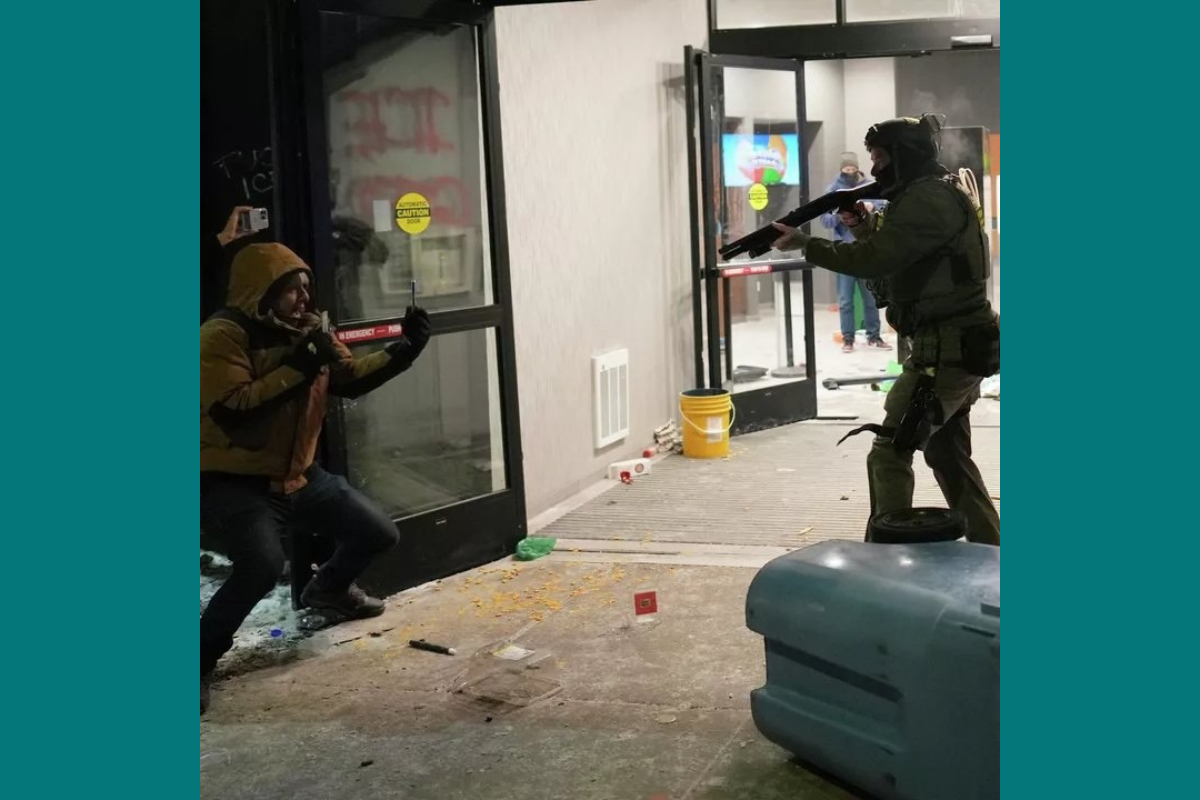
It was surreal to see a journalist friend on Monday’s Drudge Report front page with a federal agent pointing a weapon at him — but that’s what happened to Nick Valencia, the former CNN correspondent and now independent journalist of Nick Valencia News.
Valencia was in Minneapolis for the past couple of days, covering the story of Liam Conejo Ramos — the 5-year-old Minnesota ICE picked up and sent to a detention center thousands of miles away. Valencia was also one of the first journalists on the scene minutes after federal agents killed Alex Pretti on Saturday. On Sunday night, Valencia was caught in a literal potential crossfire and he shared the updates on his Instagram. By Monday morning, Drudge was calling him a protester.
I have known Valencia and his work for more than 15 years, mostly through his correspondent days at CNN. I’ve been closely following and consuming his independent journalism, which he describes as “Unfiltered. Unbought. Unafraid.” Valencia’s work has recently gained more attention, as he livestreams news from around the country on social media and on his main Substack channel, which features podcast conversations and on-the-ground reports. Lately, Valencia has been in my newsfeed a lot as he shines a light on immigration enforcement in this country.
On Monday night, I caught up with Valencia about his Minneapolis reporting over the last few days, how he’s coping with Sunday’s events and what it means to go from working at CNN to being an independent journalist. Here is a condensed version of our conversation.
Julio Ricardo Varela: What did you actually see on the ground during your days in Minneapolis?
Nick Valencia: Well, it started with going into Valley View Elementary and seeing Liam Conejo Ramos’ classroom, and being invited into his classroom and seeing his locker. I did a story called “Liam's Locker,” and it’s got almost 2 million views across all my platforms. I had a personal connection to the school, and they’d been following my reporting. It was a source relationship that got me in there. And so I knew that’s where I was going to start when I went up to Minneapolis. I interviewed the principal, and the headline, of course, would be in any other country, “Secret police target ethnic minority.” They’re going after Latinos, right? But it’s not just Latinos who are being impacted by this.
I have PTS [Post-Traumatic Stress] right now. My right hand is still shaking from Sunday night. I haven’t fully settled. I know I’m gonna cry when I get home. I’m holding on right now, you know? And so I’m saying this, not to talk about myself, but to say that I recognize what trauma looks like in the eyes of another. And that whole school wasn’t there because everyone was remote that day, which is why I was allowed inside the school because there were no students there.
The school staff all looked like they had trauma and PTS. From the nervous laughter to literally just when I asked how they are, on the brink of tears at any moment. And what’s really hard to hear is that there is a lot of hope, but for some people, like one of the teachers in a neighboring classroom, she had a dad taken and now some of the kids are asking, because of Liam’s story, they are asking more about it. And she’s like, “I’m supposed to tell these kids that school is the safest place, and now I don’t want to tell them that because I feel like I’d be lying to them, because they could just get taken when they leave here.”
JRV: You have a five-year-old, so that must have hit hard. You're now an independent journalist. What do you think the traditional coverage is missing or unable to do during this moment? I know you went through a really tough time Sunday night, but you were able to cover a lot of stories in Minneapolis. What do you think is being missed by legacy media?
NV: I’m deploying myself to all this stuff, right? I’m launching myself. I get to decide when I go and use my editorial judgment. About the mainstream legacy newsrooms, I’m using the skills I learned there. My professionalism is my badge when I’m out there. That’s what distinguishes me from some other independent journalists and certainly from legacy journalists. I don’t know, I’m a lot more agile. It’s a lot more flexible.
Fifteen minutes after Alex Pretti was killed, I was there on the scene, and I was behind police tape. I got there right as the initial gas was being deployed. I realized that I didn’t have my gas mask in my trunk, like I thought, because I was planning on interviewing the guy, William Kelly, who was charged by the feds for storming the church. I was actually at a coffee shop at 10 in the morning to interview him when I got news about Alex Pretti’s shooting death, and so I raced over and I took the initial tear gas.
I went back in anyway because I didn’t have a mask, and I said, “I don’t see any other cameras here.” The other people who are holding their cameras are throwing shit at cops. There’s only me here right now, and I went live, and my professionalism was my biggest badge. I did have a badge on there. It says “Nick Valencia News,” but it’s about how I carried myself, the words I was saying. The feds that did fuck with me, because I did get fucked with, man — one Border Patrol agent grabbed me and pushed me 30 yards into a demonstrator. In fact, one of the clips on my Instagram shows me talking to him. I go back up to him after he shoved me 30 yards, and I say, “You used your discretion to fuck with me.”
Some of them, in full disclosure, did respect press rights, and I did have a couple of federal officers who were like, OK, just get over here, you’re fine, including later, that one individual who pushed me 30 yards. He saved me from another one of his aggressive colleagues from escalating violence. It was interesting. I reasoned with this guy on a personal level, this other young Latino. I couldn’t see his face, but I could see his eyes. He didn’t have any crow’s feet, you know, and I saw that he looked like me. You can see the response in my Instagram video. I’m like, look, I’m an ethical journalist here. I have every right to be here, and eventually they pushed me back.
Sunday night was a whole other scenario. The headline from that is, they told me, “I don’t care who you are. I’m going to fucking shoot you. I will shoot. I will fucking shoot you anyway. We don’t care who you are. I will fucking shoot you.”
I’m so grateful that it’s got a response. I didn’t sleep very well Sunday night. I woke up Monday morning to the Drudge Report, putting me on the front page, calling me a protester. An independent journalist. People are telling me, “Why didn’t you have the press thing that you see everybody have?” Well, you know, do you see networks like that out there wearing that? No, you see other independents, and those independents, God bless them, some of them are doing the work. Some of them are trying to be journalists and figuring it out, but there are others who, in between their live shots, are throwing shit at cops. And so cops don’t know when a real journalist like me comes along, who’s independent, not backed by a big camera, or a team or security.
It’s the Catch-22 — those same things that give me the flexibility of being in there, I don’t have to choreograph this dance with a cameraman and match his pictures with my words. I could do it myself. That’s the biggest difference. I have the camera in my hand. I can control what the audience sees as I narrate the pictures. That’s made a big difference in the ability to capture people’s attention, to hold their attention, to build an audience and to create engagement because, I mean, that’s what new media is. You have to go viral every fricking day.
JRV: I’m grateful that you can be so forthcoming about this. What do you think about free speech in the time of these protests and people recording? You’re there trying to do your work. Is it different now?
NV: It’s totally different. On steroids now. It’s elevated to another level. We have the right to be out there to record, but that’s what’s getting us in trouble.
JRV: Do you think people are finally seeing what independent journalists can accomplish?
NV: I’m no longer part of the big myth of traditional media that we’re objective. And the audience has seen through that for a long time, and I never believed it. I think we are all shaped by our personal experience, strength and hope. Right now, I am taking a stand for undocumented immigrants because I believe our conversation should start at amnesty, and what’s happening right now with Trump’s mass deportation policy is the biggest story of our lifetime.
It will shape the children and our next generation around us because it’s not just the little brown kids that they’re going after, like Liam. It’s his classmates who have to live with the trauma of his empty locker and then have the parents explain to them what that means. Or the teacher who looks at the classrooms and sees one less kid there, or the community that’s coming out to try to record and they get killed and murdered.
Teamwork
Before Alexi Pretti’s death, I filed an MS NOW opinion piece about Liam Conejo Ramos through the eyes of a dad who recalls having a five-year-old son and can only imagine what he would be thinking if federal masked agents detained him. Here is a link to the piece.
 Jarvis DeBerry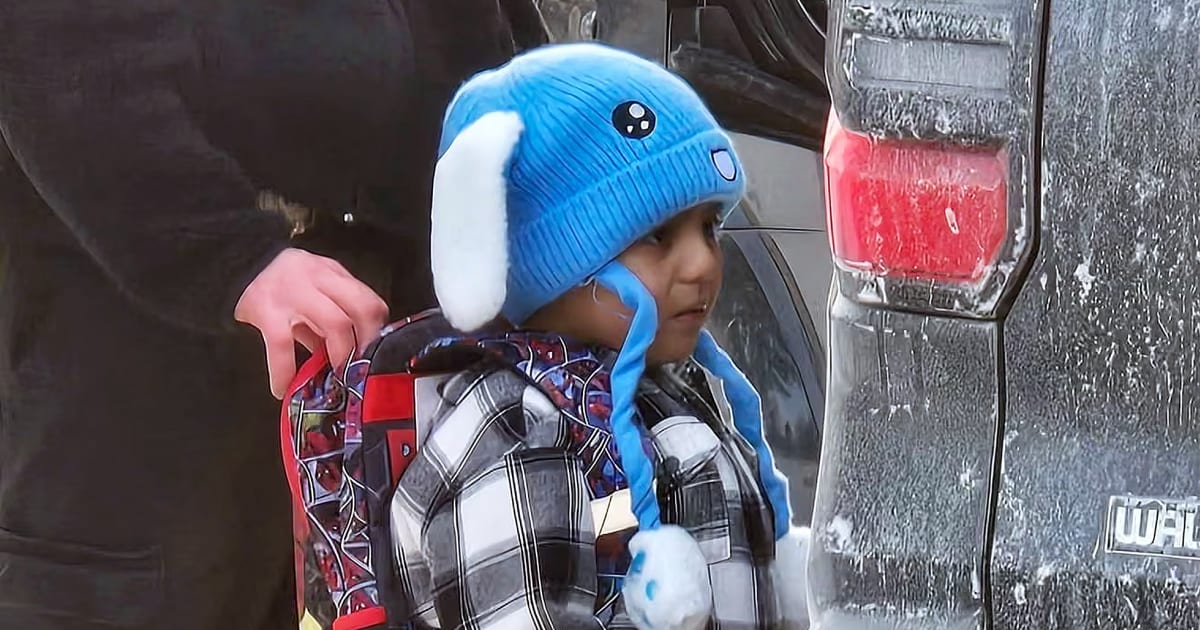
I also wanted to highlight the excellent piece my Free Press colleague, Jenna Ruddock, wrote for the Free Press blog. Jenna has been tracking how the Department of Homeland Security has been expanding its domestic surveillance network. It’s a detailed breakdown of where we’re at in 2026 and how people are fighting back.
 Jenna Ruddock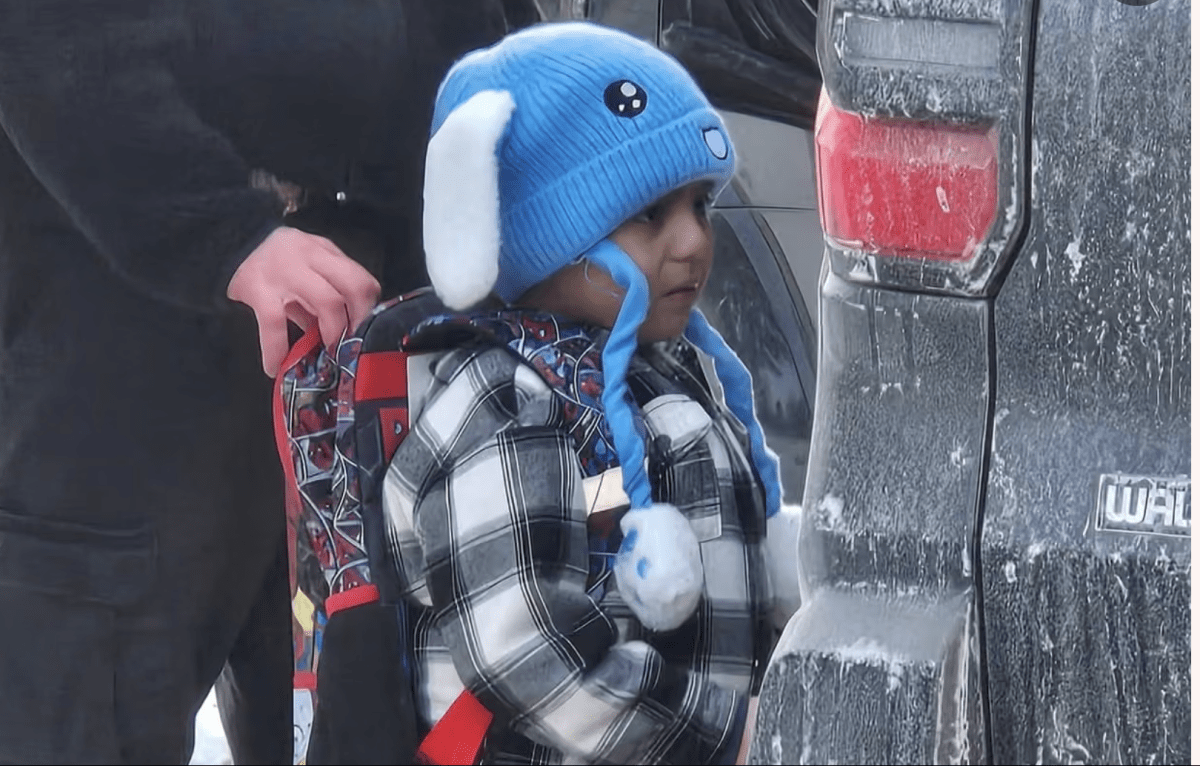
For its part, Free Press joined more than 1,000 other organizations in demanding “an immediate halt in all funding for these deadly operations until the violence, abuses, and deaths in American communities and in immigration detention centers stop.” As my co-editor says, we’re “deeply grateful to those leading this work. We need our political leaders to show a fraction of their vision and bravery. And we need it now.”
The kicker
“American approval of U.S. President Donald Trump’s immigration policy fell to its lowest level since his return to the White House in a new Reuters/Ipsos poll, with a majority of Americans saying his crackdown on immigration has gone too far,” — Reuters, Jan. 26, 2026
About the author
Julio Ricardo Varela is the senior producer and strategist at Free Press. He is also a working journalist, columnist and nonprofit-media leader. He is a massive Red Sox, Knicks and Arsenal fan (what a combo). Follow him on Bluesky.