Pennsylvania Legislator Takes Action to Address the Local News Crisis
A Pressing Issues conversation with State Rep. Chris Rabb about two new local-news bills
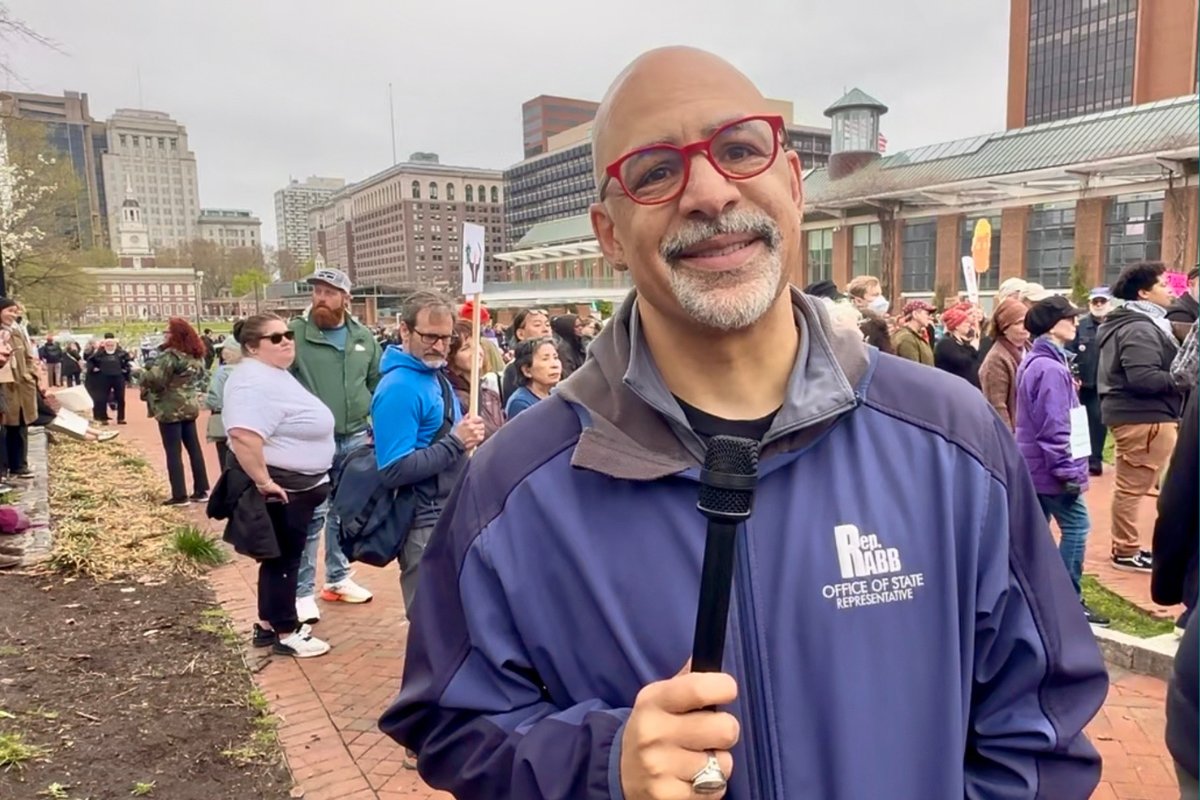
Last week, Pennsylvania State Rep. Chris Rabb introduced two new bills, HB 2047 and HB2048, to fund local news. Inspired by legislation for publicly funded local news passed in neighboring New Jersey, Rabb authored two bills that would create a Pennsylvania Civic Information Consortium and fellowship program for early- and mid-career journalists.
Since Free Press Action led a campaign to pass the New Jersey Civic Information bill in 2018, that state has distributed more than $10 million in public funds to support local-news and civic-information projects. As a result, media outlets and community organizations the consortium supports are filling important information gaps resulting from the loss of local newspapers and the defunding of public-media stations.
Rep. Rabb wants media outlets in Pennsylvania to have the same kind of public support for local news. Although an emerging independent media movement is taking on local news in Pennsylvania, the commonwealth has several counties, particularly in rural areas, that lack local-news sources. And with the state’s growing Latiné population, there is also a need to create more Spanish-language and culturally relevant media outlets.
I first met Rep. Rabb, who represents the 200th legislative district in northwest Philadelphia, in 2014 at a Free Press rally where we were both speaking in support of Net Neutrality outside Comcast’s headquarters. Prior to his election to the Pennsylvania House of Representatives in 2016, he was a well-known blogger and media-justice activist. In 1999, he founded Afro-Netizen, one of the first online communities of Black progressives. Since then, he has continued to advocate for press freedom and independent media — which is why it’s no surprise that he’s the elected official leading efforts in Pennsylvania to strengthen local news.
I spoke with him to learn more about his plans to pass these two bills and his vision for the future of media in Pennsylvania. This interview was edited for length and clarity.
Vanessa Maria Graber: Can you tell us a little bit about those bills, why you decided on these particular models to publicly fund journalism, and your motivation to take action on the local-news crisis?
Rep. Chris Rabb: This is an important investment, so I’ve introduced two companion bills. The first would create and fund a Pennsylvania Civic Information Consortium, which would be an independent and nonpartisan entity designed to distribute grants to local-media outlets and journalistic outlets. This is filling a significant void in the Commonwealth of Pennsylvania, because there are a number of counties that have one or fewer local-media outlets. And in a time of extraordinary media consolidation, fueled by Wall Street’s greed, it’s important that we have trusted hyperlocal and diverse media outlets if we’re going to sustain our democracy and strengthen it.
The other bill creates a fellowship program to feed a pipeline of the next generation of journalists so that media outlets have the capacity they need to do the type of reporting that all communities deserve, particularly marginalized communities. When I say marginalized communities, I don’t necessarily just mean ethnic or urban. We’re also talking about the overwhelming lack of representation in rural communities whose voices need to be lifted up.
VMG: You talked about news deficiencies in rural areas in Pennsylvania. Can you say more about your concerns about the availability of local news in rural areas and the increased spread of disinformation?
RCR: A choice of one is no choice at all, and some counties don’t even have any local independent news. That’s a real problem, because in any community, there’s a diversity of experience and perspective that is not getting out. Their narratives are not being lifted up, their priorities are not discussed and they are essentially othered. And no one deserves to be othered. Everyone should feel centered through at least one entity whose job it is to have public accountability for those people.
When you have rural communities where the only media influence is a national or multinational corporate influence, and they’re being pummeled with misinformation and information that may not be the information they’d like to hear, and news specifically, that’s a real problem. Then you have the rampant spread of disinformation and misinformation in ways that are deleterious to our democracy and to those communities. So making sure that every community has a diversity of representation is really important. That shouldn’t just be for urban districts and for wealthy constituencies. That should be for everyone.
We can’t have a thriving democracy, or attempt to get to a thriving democracy, without an independent and well-resourced media for the state. So the media is very important. In fact, it’s so important that probably for 20 years, what I’ve been telling folks is whatever your number-one issue is, whether it’s reproductive justice, whether it’s climate action, whether it’s LGBTQ issues, whether it’s local business concerns, your second issue that you have to understand and prioritize is media democracy, because anything you care about, no matter what the subject, it's influenced by the media landscape. And if that media landscape is dominated by five tech bros that basically control and surveil 95 percent of the content we consume, that’s gonna have a huge impact on the things we care about most.
VMG: Can you tell me a little bit how you’ve worked with local media in the capacity of an elected official, and how some of your colleagues also rely on local media to share information about what’s happening in Harrisburg?
RCR: In many senses, even though I’m a state lawmaker, my base is hyperlocal. That means that the voices on the ground need to be amplified and need to be listened to. Some of the folks who amplify those voices and make sure that those local community issues are addressed are hyperlocal media outlets, independent or “ethnic outlets.”
[I’m] someone who comes from a media family: My great-great grandparents founded the Baltimore Afro-American newspaper almost 135 years ago, and it’s still in our family today, it’s still an important voice as the corporatization of media flourishes. So I rely on them, and I often feel more comfortable having those conversations with independent media rather than with corporate media that focuses more on profit maximization and clickbait. It’s an important relationship that every public servant should cultivate, and if we can enact programs and policies and resources to help them, it’s a win-win.
VMG: During the global pandemic in 2020, the press had to work very closely with elected officials and staffers at all levels of government, and so there is a relationship there. Oftentimes, people like to think it’s always adversarial, but in fact, many times, we’re working together along with community-based organizations to get that important information to our communities. Can you tell me more about that relationship?
RCR: Yes, because there’s the legislative and policy aspect of this work. There’s the public-advocacy part, where it may not be a particular bill, but we’re lifting up a topic like racial justice. And then there’s the more resource-focused programs that you need to know are available through the government. There are instances where the nature of a public servant’s connection to the media is more about information sharing as opposed to persuasion, right? So if you believe your viewers, your listeners, could benefit from this event or these resources, you share it, right? And it’s not about promoting a candidacy or campaign or ideological perspective, but this is the nonpartisan, constituent-services-oriented part of the job that’s super important, and that’s definitely one way that elected officials and government can work closely with folks in the media.
VMG: I want to end by asking about your long-term vision for the future of media in Pennsylvania. What do you hope Pennsylvania media will look like in 10 years?
RCR: I would love to see a media landscape where the dominant media outlets are not controlled or influenced by Wall Street, [where] the diversity of the ownership and the content reflects the diversity of the Commonwealth. I’d like to see business models where the organizational structures are in alignment with certain communal values. So for instance, worker co-ops, consumer co-ops, producer co-ops of media generation and news would be extraordinary. There’s so much creativity in this space.
With the appropriate resources and opportunities, and when these bills are enacted into law, specifically around the civic information consortium, I’d like to see a heck of a lot more than $10 million go toward it. I’d like to see the expansion of existing entities and the creation of new ones that will allow for the type of diversity of expression and news coverage and information that we don’t currently benefit from because of the broligarchy. I want us to have spaces that are not infected by corporate greed and bigotry, and media that does not tell a very narrow narrative and benefits the public good.
About the author
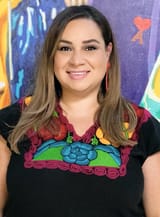
Vanessa Maria Graber is the journalism and media education director at Free Press. She creates resources for newsrooms and trains journalists about civic-journalism best practices, community engagement and meeting community-information needs. Follow Vanessa Maria on Instagram @newsjawn.
Open tabs
Updates and highlights curated by the Pressing Issues team
The news team from Atlanta-based Esta es la Cosa (Spanish for “Here’s the Thing”) featured Pressing Issues’ original reporting about Univision and Telemundo broadcasting DHS ads. The video summary is in Spanish, and our team appreciates the shout-out.
A story from Fairness & Accuracy in Reporting (FAIR) about Viola Ford Fletcher, who died last week at age 111 and was the oldest-known survivor of the 1921 Tulsa Massacre, provides a stark reminder of how white-owned local media back then played a major role in stoking the violence. The story cites Free Press’ Joe Torres, who wrote in 2021 about that ugly history.
 Vince Musselino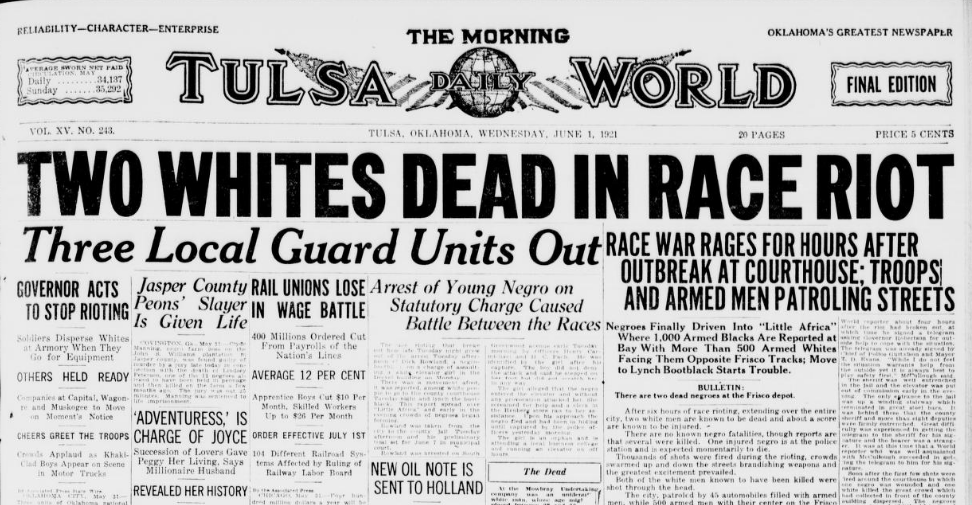
The kicker
“I'm always looking for good trouble. And this is a moment when we have to stand up and realize it's up to us. It's not up to anyone else. We are the leaders we've been looking for, and I'm here to affirm all the people who are anxious, who are frustrated, who are scared, but who are also empowered to do something and not just wait for something to happen to us.” — Rep. Chris Rabb at the Hands Off Protest in Philadelphia
Editor’s Note: Free Press, the publisher of Pressing Issues, is a nonpartisan organization and does not support or oppose any candidate for public office.