Public Media’s Promise Was Never the Problem
This is the moment to find a better solution. But the winning coalition must be as broad and as honest as the problem is large.

When President Lyndon B. Johnson signed the Public Broadcasting Act of 1967, it was part of the Great Society’s broader commitment to fighting inequality in the United States — the belief that the government had a role in ensuring that all communities, regardless of income or geography, should have access to education, information and culture. The Carnegie Commission on Educational Television had laid out the vision, Congress had debated it and Johnson signed it into law.
What emerged was a public-media system that, for all its limitations, became something millions of people in the United States relied on, whether it was local news in places where no other outlet existed, children’s programming that reached across income levels or emergency alerts in communities where a public-radio station was the only signal that cut through.
The funding was always inadequate — the United States has never invested in public media at anywhere near the level of comparable democracies, leaving stations dependent on a combination of federal dollars, corporate underwriting and listener donations just to stay afloat. That financial precarity shaped everything: the type of journalism stations could afford to do, which communities they served and how much creative risk they were willing to take.
In theory, public media was supposed to be independent and insulated from outside pressure, but the chronic need to satisfy the hyperpartisanship of annual congressional appropriations, the forced reliance on corporate underwriters and the weight of institutional bureaucracy made it harder for that independence to stand out. That tension calcified over time into something more structural — a public-media ecosystem that was, in too many places, more comfortable serving the audiences it already had than doing the harder work of reaching the ones it kept claiming it wanted to reach.
Despite everything, public media remains one of the few spaces in this country where local news, culture, education and civic information serve the public good rather than advertisers, shareholders, billionaires or political patrons. That mission is worth fighting for, but we need to be clear-eyed about what we are actually defending when we say we want to protect public media — and what we want it to become.
My public-media journey
My career in public media started late and didn’t follow the traditional path. It was 2014, and I had just joined Futuro Media to help build a digital-engagement strategy for America By The Numbers With Maria Hinojosa, a PBS documentary series about the country’s changing demographics. Every week, when a new episode aired, I hosted online community-viewing events, watching in real time as audiences who had rarely seen themselves reflected in public media showed up and engaged with the work in moving ways. The series performed well, brought in new and diverse viewers, and proved something that should not have needed proving — that public media could reach communities it had long ignored if it were more strategic and intentional about it.
For someone who grew up in the first generation of kids shaped by the original run of Sesame Street, Mister Rogers’ Neighborhood and The Electric Company — and yes, Rita Moreno and Morgan Freeman on the same screen in the 1970s meant something — working on America By The Numbers gave me hope that a system that reflected the country’s full demographic reality was within reach. For the next nine years, public media remained central to my professional life, whether it was working on Latino USA as part of NPR’s national radio schedule or securing a production agreement with FRONTLINE for Futuro’s 2024 documentary on the Uvalde massacre. The work was genuinely gratifying.
It was also frustrating. I saw how the public-media industry was stuck in its ways, how it was failing to adapt as quickly as it needed to to thrive in the age of digital media. I had a clear view of a landscape that was, in too many places, moving far too slowly for what the moment demanded — still thinking in dated, broadcast-era terms, still protective of institutional structures that weren’t serving their communities.
The collapse
Then the bottom fell out. What had been a slow institutional decline accelerated into demolition. Right-wing attempts to defund public media had failed in the past, so when the Trump administration threatened to eliminate federal funding last year, many people felt there was still hope.
That was a tragic miscalculation. Congress gutted nearly $1.1 billion in already-approved Corporation for Public Broadcasting (CPB) funding, and, once that money was gone, the CPB board voted to dissolve the institution. More than 1,500 local public and community-radio stations were left scrambling to figure out what came next. The infrastructure that had taken decades to build was now operating without its core foundation.
 Scott Neuman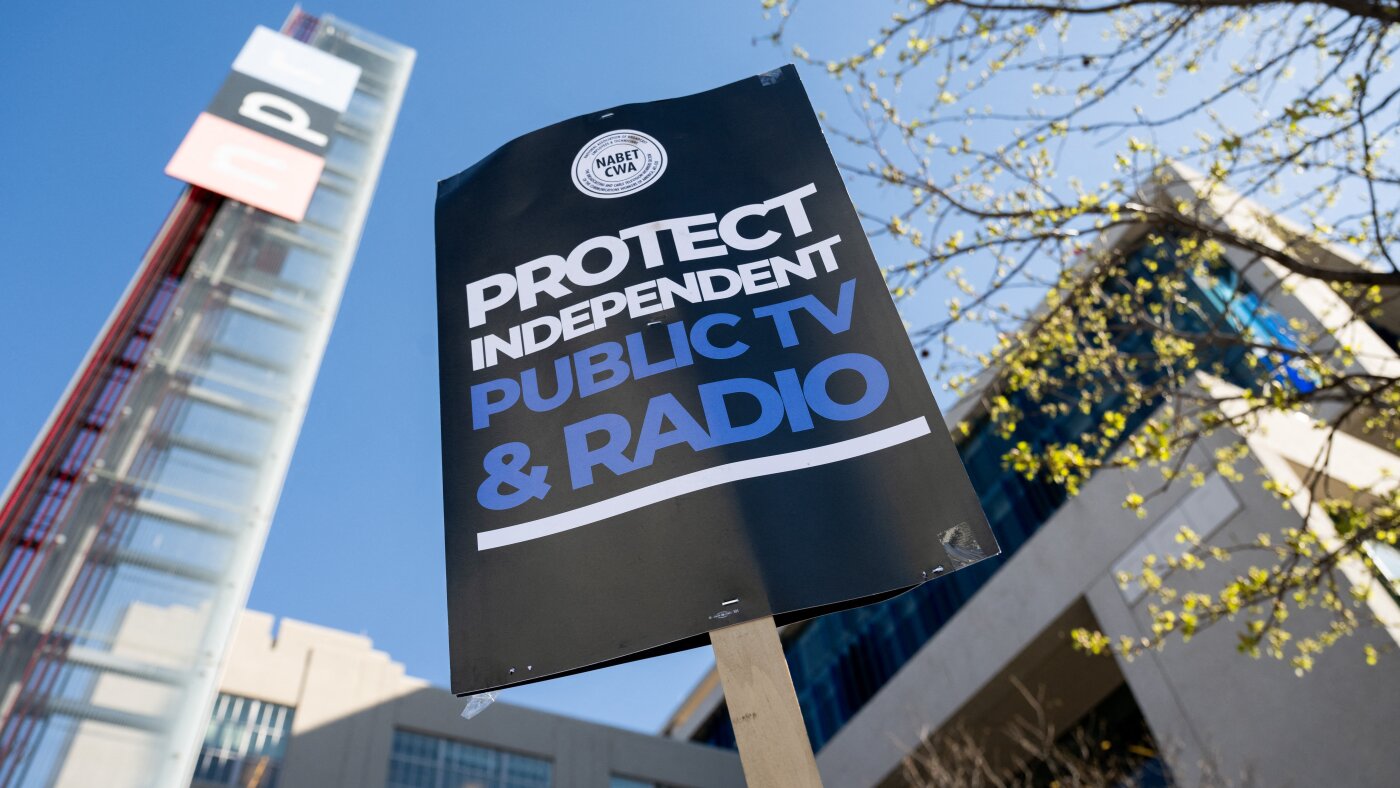
The attack on public media was always about who gets to control the flow of information, and whether an independent, noncommercial media system that serves the public interest can even exist at all. It was one front of a much broader war against press freedom and even basic accountability. The same forces defunding the CPB and launching bogus investigations into local stations were also targeting commercial broadcast licenses, barring reporting from the White House, promoting more media monopolies and watching corporate media offer Trump bribes and bend the knee.
Response to the collapse was immediate. Listeners and viewers donated in historic numbers. Philanthropy mobilized. The Public Media Bridge Fund raised more than $60 million in emergency funds to stabilize at-risk stations. It was an extraordinary show of support, but it will only buy so much time.
 Austin Fuller
All this has raised bigger questions that short-term emergency funding cannot answer: Where is this bridge going, and what kind of public-media system do we want to build next?
I have my own answers, and it was time to find out if they felt right.
Welcome to the jungle
Earlier this month, I attended the Knight Media Forum in Miami, an annual gathering of leaders in journalism, philanthropy and technology. In one of the keynote presentations, Tim Isgitt of Public Media Company, which organized the Public Media Bridge Fund, described today’s media landscape as a dense and perilous jungle featuring trillion-dollar platforms that are engineered for polarization and social isolation.
“Within this jungle,“ Isgitt said, “too little feeds our curiosity. Not enough educates us, and trust is systematically eroded.“
Then, Isgitt said what needed to be said.
“In a landscape dominated by trillion-dollar companies, it’s going to take a hell of a lot more than the $535 million provided annually to CPB. A nation that takes democracy seriously must seriously invest in public media.”
Acknowledging that it might be impossible to secure such an investment in the current political climate, Isgitt urged attendees to think with “imagination, boldness and action.”
“We are in the Carnegie Commission moment of our generation,” he added, citing the philanthropic effort that led to the creation of public broadcasting. “We have in our hands the agency, opportunity and even the responsibility to build a new, enduring public-media system for the next 50 years. We must meet this moment, and out of today’s media jungle, build our future.”
Igsitt shared a broader version of what public media is and can be. “When I define ‘public media’ today, I think far beyond traditional definitions. It’s all of us producing independent, community-rooted and mission-aligned media that serves the public interest. We are all public media.”
Video of Isgitt's Knight Media Forum speech
What transformation requires
Isgitt’s words resonated because they named something that this field has been circling around for a while without committing to — that the work ahead is about transformation, and that transformation requires everyone, not just the people who already agree on what the answer should look like.
Free Press has been fighting for public media for more than two decades. This year, we are redoubling our efforts to help answer what comes next.
That means expanding who’s in the room and getting into deep conversations with the full range of stakeholders who need to be part of whatever gets built: the institutionalists who understand how these structures operate, as well as the innovators inside and outside the system who understand what needs to change. We need elected officials and funders too, of course, but also the community-media makers, independent journalists, documentary filmmakers, media activists, educators and others who have often been excluded from the conversation.
I’ve always been in the disruptor camp, pushing for faster movement and more willingness to serve communities the system kept saying it wanted to reach. That hasn’t changed. The public media we need can’t be built in silos. The coalition has to be as broad and as honest as the problem is large.
What my Free Press colleagues and I are committing to in 2026 is the listening and organizing work that builds the foundation for a serious policy push — connecting what is happening at the state and local levels to a longer-term vision for what federal investment in public media should look like. We have ideas, many of which are already succeeding. And as my Pressing Issues co-editor and Free Press Co-CEO Craig Aaron wrote last year in this newsletter, “It will take years of organizing to rebuild what the Trump regime has demolished in just a few months. While I wouldn’t have chosen this path, we now have the chance to recreate something even better.”
 Craig Aaron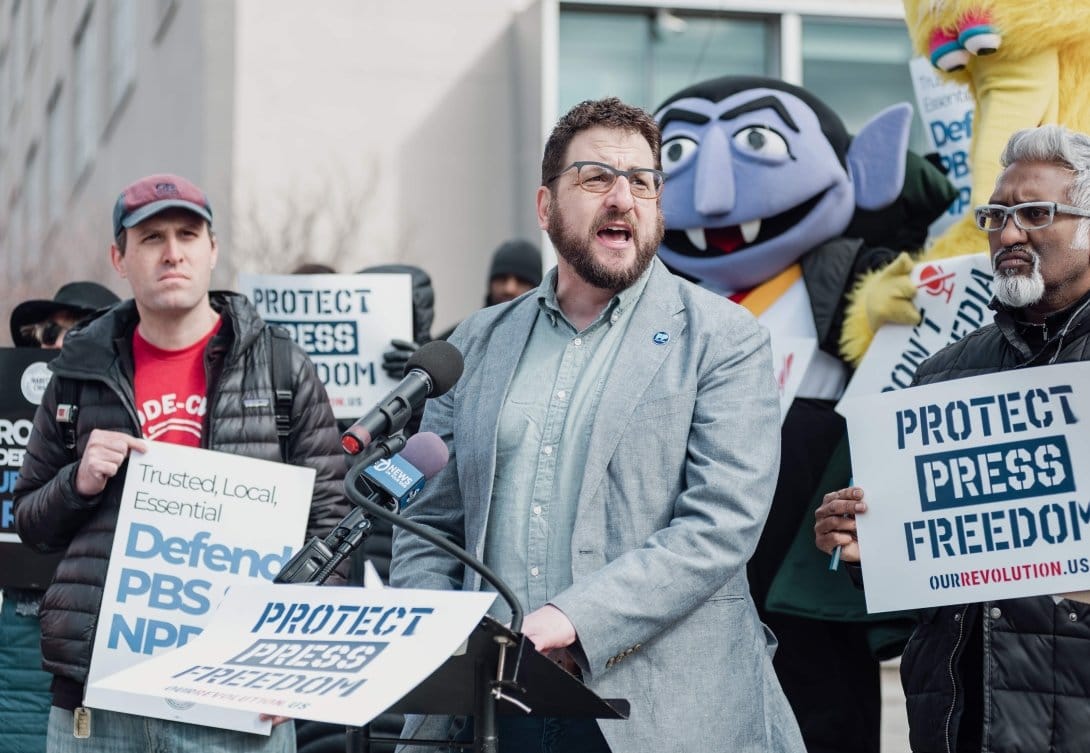
A new public media
Twelve years ago, watching those audiences show up for America By The Numbers and seeing what public media could be, I let myself believe that the gap between the system’s promise and its reality would finally merge. The years since have been more complicated, and CPB’s dissolution has made the stakes impossible to ignore. But my belief hasn’t gone away. If anything, the wreckage has made the case for acting with more urgency than ever before.
Back in 1967, leaders from across the country defined the core principles before asking Congress to act. We have a greater opportunity now, and an even greater responsibility. The question is whether we are willing to meet it with the imagination, boldness and action the moment requires — defining the public-media system this country has never had the courage or the resources to build.
Update: Merger-madness edition
Warner Bros. Discovery concluded that Paramount Skydance’s latest bid was “superior,” leading Netflix to ditch its $83 billion offer. That decision is certainly making Paramount Skydance CEO David Ellison happy: He and his dad, Oracle CEO Larry Ellison, are chummy with Trump.
 David Folkenflik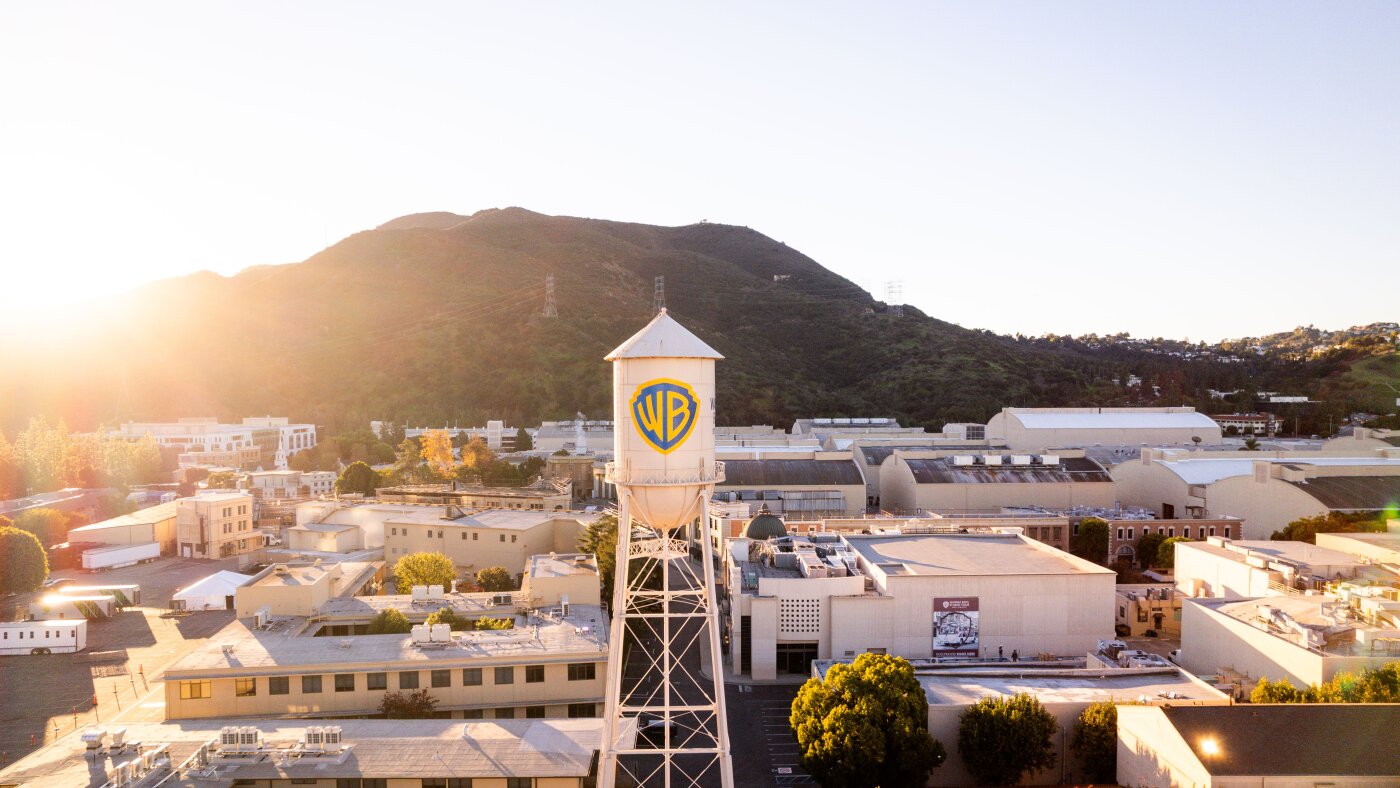
Not sure happy billionaires who want to keep consolidating media is the way to go.
The Free Press team went into rapid-response mode on Thursday night, as you’ll see in the Wall Street Journal, Variety, The Wrap and Poynter, among others.
“The Netflix deal was disastrous but this new one is even worse,” Craig said in a statement. “The idea that Paramount should be allowed to control CBS and CNN should be unthinkable, especially given their record of turning the Tiffany Network into a trash heap. The Ellisons have already promised the Trump administration that they’ll make sweeping changes to CNN given the chance, and we know what that means: firing journalists, spiking important stories and replacing the news with empty propaganda.”
Earlier this week, The New Yorker published a story about an under-the-radar merger, the Nexstar-Tegna fiasco. The piece features Craig’s thoughts on the dangers for local journalism and democracy as the FCC’s Brendan Carr performs for Donald Trump, America's most dangerous channel surfer.
 Jon Allsop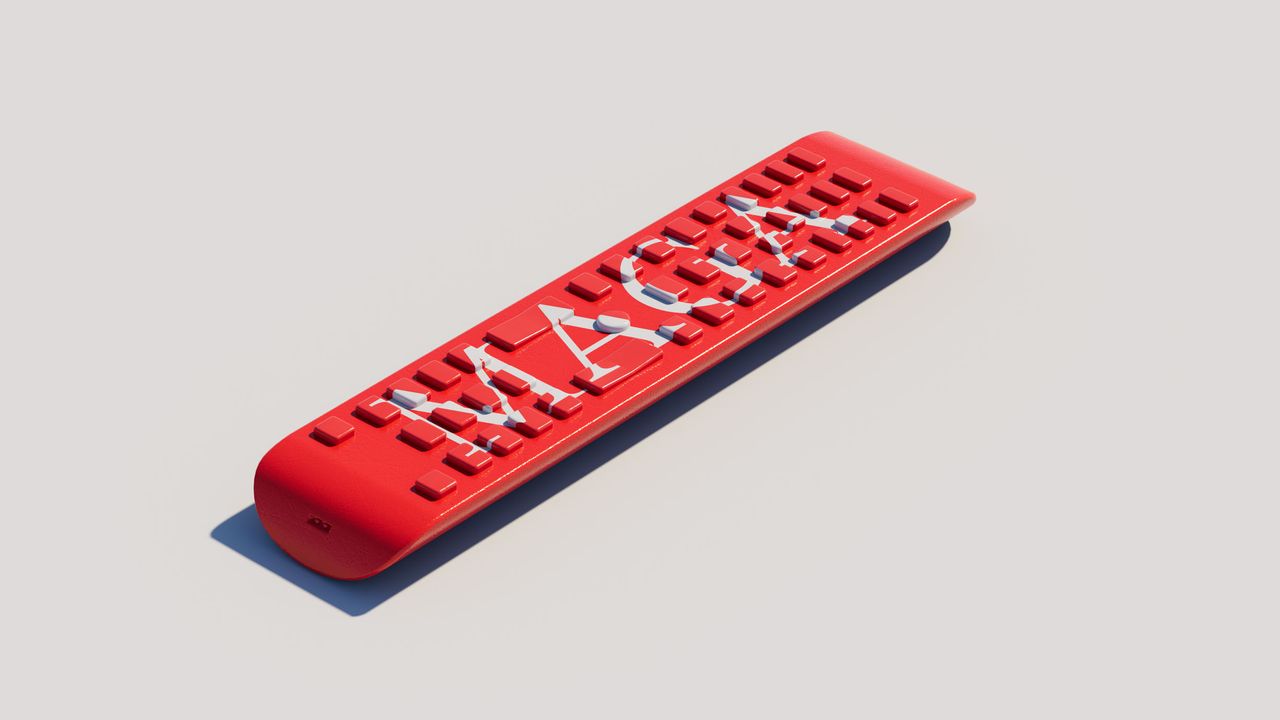
The kicker
“What a future is ours — if we don’t confuse the chicken snake for a boa constrictor and commit preventive capitulation and if we refuse to allow government officials and corporate spokesmen to set our agenda with no scrutiny of their words and deeds and no sifting of the truth from spin.” —Bill Moyers, 20 years ago at the 2006 PBS Annual Meeting
About the author
Julio Ricardo Varela is the senior producer and strategist at Free Press. He is also a working journalist, columnist and nonprofit-media leader. He is a massive Red Sox, Knicks and Arsenal fan (what a combo). Follow him on Bluesky.