The Polarizing Narratives of Venezuela as Told Through Messaging Apps
A Digital Democracy Institute of the Americas analysis reveals how information about the world’s biggest story differs depending on the language

It’s our first Pressing Issues post for 2026, and we didn’t expect it to be about Venezuela. But now that we are all witnessing the debut of a “Donroe Doctrine” — here we are.
As a journalist who has covered Venezuelan politics since Hugo Chávez’s time, what is transpiring in real life and online does not feel new to me at all. I’ve called Venezuela one of journalism’s third-rail issues, as the polarized nature of coverage is real. In this era of constant information, everyone has a take. Right now, we should all be listening to the voices of Venezuelans who have lived through the Chávez and Maduro years. It’s also important to try to better understand what is being shared online — and how political narratives differ from one another.
 Juan Escalante
That’s why I was intrigued that the Digital Democracy Institute of the Americas (DDIA) — a nonprofit organization that uses research to help inform Latino communities and promote healthier democracies — published an analysis of what public online messaging apps were sharing about the initial events in Venezuela.
I reached out to Roberta Braga, DDIA’s founder and executive director, to discuss the analysis.
Julio Ricardo Varela: What does DDIA’s analysis tell us about how quickly narratives formed on WhatsApp and Telegram after the news broke?
Roberta Braga: Between midnight and 10 a.m. on Jan. 3, at least 13,000 unique messages referencing Venezuela were shared across 1,600 WhatsApp and Telegram public groups, reaching tens of millions of users in English and Spanish. Five hours after that — which coincided with President Donald Trump’s press conference — 5,000 more unique messages proliferated across 1,100 WhatsApp and Telegram channels, with distinct narrative clusters emerging in both Spanish and English spaces.
This rapid proliferation within the early window demonstrates how messaging apps function as near-instant narrative incubators, providing context before mainstream media can offer it and before fact checking can counter misleading explanations.
JRV: What does this analysis reveal about how messaging apps now function during geopolitical shocks, especially for journalists and the general public trying to assess credibility in real time?
RB: Messaging apps have become crucial battlegrounds for shaping public understanding of geopolitical events. [That’s] why analysts, reporters and consumers alike should triangulate these early narratives with reliable verification before forming conclusions.
Messaging apps are early accelerators of narratives. Apps like WhatsApp and Telegram rapidly host competing narratives, often before traditional news outlets or fact checkers can contextualize events. This early window sets cues for interpretation and frames discourse across languages and countries. The speed and intimacy of messaging apps mean that gut reactions can spread rapidly, and these reactions are particularly potent when messages align with preexisting beliefs or geopolitical contexts.
Journalists and the public should treat messaging-app chatter with caution. Our analysis shows that narratives emerging on encrypted platforms can be widely seen, even if they’re not corroborated. For journalists, this means messaging-app narratives are a source of early trendspotting, but they require careful sourcing. For the general public, it is essential to be aware that “facts” from these apps often lack verification and may reflect emotional framing rather than established truth.
JRV: Based on your social listening, what were the dominant themes competing in messaging apps, and how did they differ across Spanish- and English-language spaces?
RB: Spanish discussions immediately after the announcement leaned more toward sharing news links, discussing immediate implications for Venezuela and debating questions of sovereignty. English narratives often combined U.S. geopolitical framing with broader ideological framing — such as the frame of liberation versus exploitation.
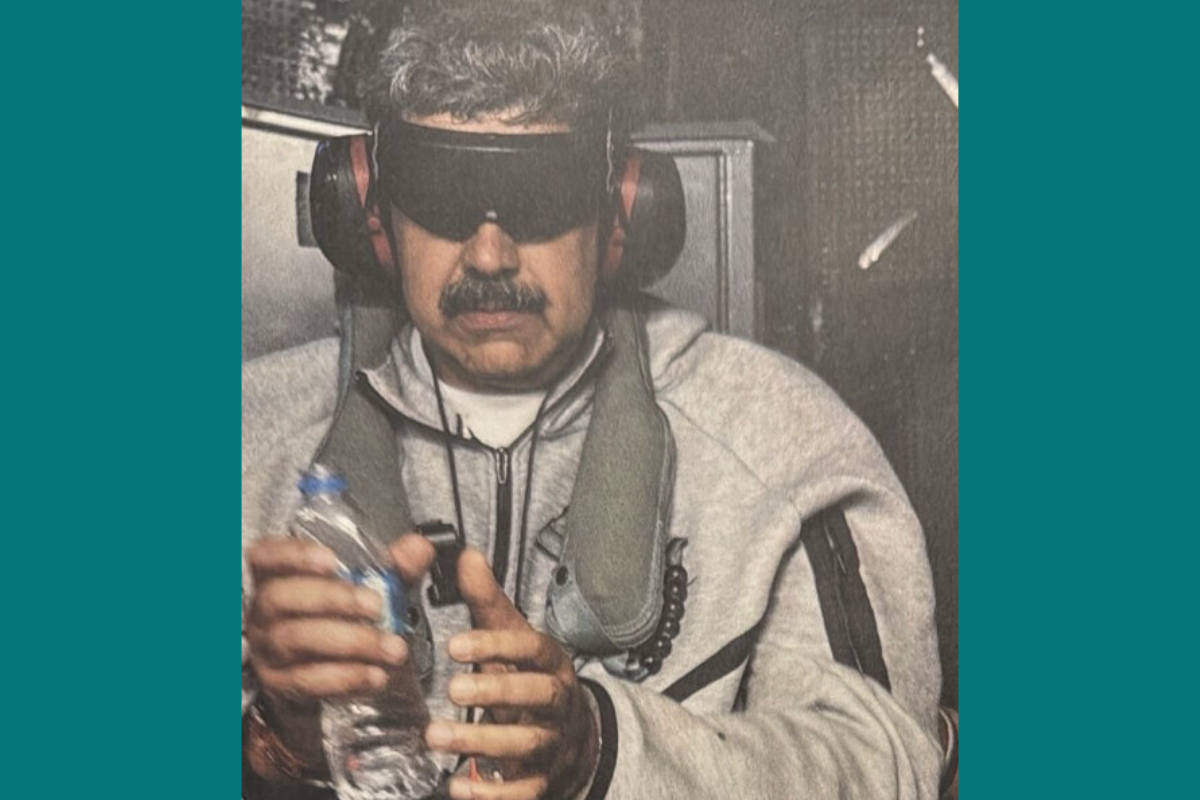
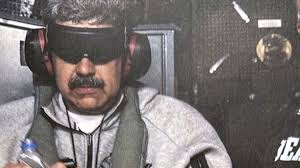
In Spanish, our researchers noted that the first-time window focused on Maduro’s physical extraction as a successful and meticulous move. It was something only the U.S. could have pulled off — language President Trump offered during his press conference. Many messages amplified the first official photo of Maduro’s capture posted by President Trump on Truth Social.
Spanish speakers also used WhatsApp and Telegram to amplify specific Trump quotes regarding the future of Venezuela under a U.S. administration. Most people shared news links, noting the U.S. will govern the country until a “legal transition” is achieved, with a strong focus on resuming oil production and “generating money” to make Venezuelans “very rich.” At this stage, not many people had ventured to explore what that meant in the medium term, a perspective that has since changed following the appointment of Delcy Rodríguez as president and Maduro’s court appearance in New York on Monday.
Another narrative of sovereignty, resistance and imperialist aggression emerged primarily from pro-Maduro voices or anti-interventionist groups, including many left-leaning leaders in Latin America. It framed the U.S. actions as purely “Yankee imperialist aggression” and a violation of sovereignty, something that has subsequently been deeply debated.
In English, the narratives took somewhat different shapes. First, English-language messages celebrated U.S. leadership and military professionalism, often framing the event as a definitive end to the regime. Other messages focused on the technical and tactical success of the U.S. operation, describing the raid in cinematic detail and highlight[ing] the use of “massive blowtorches” and the breach of a “fortress-like” residence equipped with steel doors.Some messages (especially on Telegram) amplified controversial framings of U.S. policy — like a “Donroe Doctrine” that signals hemispheric dominance.Another narrative framed U.S. intervention as a thinly veiled mission to seize Venezuela’s oil wealth. These posts claimed that President Trump had already designated American companies to manage the country’s petroleum reserves — a claim he affirmed without providing proof. This theme characterizes the operation as “theft” and “robbery,” dismissing humanitarian or democratic justifications. It’s worth noting that President Trump did not cite human rights or democracy in his first press conference after Maduro’s capture.
JRV: Within the early narrative scramble, where did misinformation appear, and how did it blend with speculation or incomplete information rather than clearly false claims?
DDIA’s investigation didn’t detect many clear-cut lies within the first hours, but misinformation emerged in subtler ways, especially in how information was framed or what people chose to amplify. We observed ambiguous or speculative claims presented as fact, such as the definitive framing of Maduro’s detention conditions or the United States’ motives, without verified sources. This was particularly the case prior to Trump’s press conference.
There was also AI-generated and manipulated imagery, including numerous images — many seemingly clickbait — claiming to show Maduro in custody. These were widely shared online, with many shared before we had evidence he had been captured. Tools like SynthID flagged several fabricated images despite appearing “real” and independent fact checkers identified at least one deepfake photo purporting to show Maduro captured by DEA/military personnel that shows signs of being AI-generated. These fake visuals spread before or alongside the later-shared real image from Truth Social, misleading many users (from the posts we saw) about the nature and timeline of what was being shown. We also saw some false narratives about who carried out the operation (e.g., DEA versus U.S. military) and why (economic exploitation versus law enforcement).
In these contexts, incomplete information and speculation often appear as misinformation, as the constraints of messaging apps — lack of context, absence of sourcing and echo-chamber dynamics — amplify unverifiable or partially substantiated assertions.
JRV: How did perceptions of U.S. involvement shape both the spread of narratives and the types of misinformation you observed in these messaging networks?
RB: Perceptions of U.S. involvement were central to how people using messaging apps framed and amplified content. Broadly, the distinction between “pro-intervention” and “anti-intervention” became the primary lens through which messaging-app users interpreted most subsequent claims. In many cases, misinformation or half-verified claims were amplified more because they supported a group’s broader view of U.S. motives than because of their standalone factual accuracy.
Pro-U.S. narratives included messages celebrating a “flawless intervention,” framing the event as a liberation or historic achievement. Critical or skeptical narratives depicted the operation as economic exploitation (“oil robbery”). Sovereignty-focused framing, especially in Spanish-messaging spaces, characterized U.S. actions as an imperialist or illegal intrusion.
Teamwork
On the final day of 2025, Free Press colleague Nora Benavidez published an Op-Ed in the New York Times about Trump’s censorship actions in the first year of his second term. Nora’s piece highlights her Chokehold report that Free Press released in December.
With the news that the Corporation for Public Broadcasting will officially dissolve, my fellow Pressing Issues editor and Free Press Co-CEO Craig Aaron called it “a sad day for public broadcasting” but “also a call to action.”
“The deepening crisis in journalism and the ongoing dismantling of our democracy call for a fundamental rethinking of what public media can be. Those of us who understand how essential public media is to a healthy democracy must begin reimagining what’s possible — and start organizing to achieve it.” Craig said.
Read the full statement here.

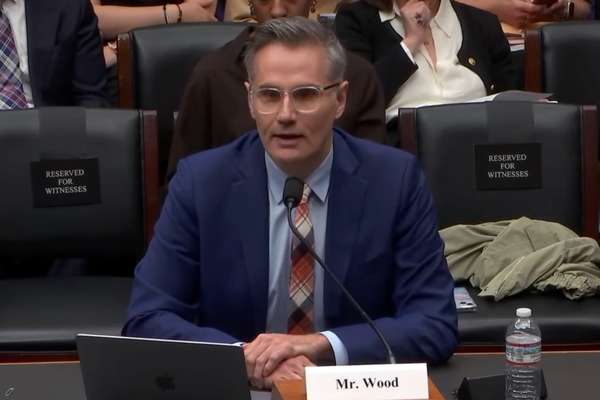
Tune into the House Judiciary Committee this Wednesday at 10 a.m. ET, when our colleague Matt Wood will be testifying at a hearing on competition in online streaming — with a heavy emphasis on the proposed merger of Warner Bros. Discovery and Netflix, the hostile takeover bid from Paramount Skydance — and the undue interference of the Trump regime on the entire process.
The kicker
“The future of Venezuela must be determined by the Venezuelan people alone, with full respect for their human rights, including the right to self-determination, and sovereignty over their lives and their resources.” — Spokesperson for the UN High Commissioner for Human Rights Ravina Shamdasani
About the author
Julio Ricardo Varela is the senior producer and strategist at Free Press. He is also a working journalist, columnist and nonprofit-media leader. He is a massive Red Sox, Knicks and Arsenal fan (what a combo). Follow him on Bluesky.