What Cicero Can Teach Us About Making Better Media Policy
And why we keep asking the wrong questions


I’ve always been more fluent in Pig Latin rather than the real thing, but that guy Cicero was on to something.
Cui bono — “who benefits?” — the skeptical statesman-philospher asked 2,000 years ago, and it should still be the first question for crime solvers and policy analysts alike.
Yet when it comes to debates over public funding and the future of journalism — which only feel like they’ve been dragging on for two millennia — we’re failing to make this fundamental inquiry.
Andyay Itsyay akingmay emay azycray.
Et tu, Tofel?
Dick Tofel is a former Wall Street Journal executive best known for his roles in founding and leading ProPublica (Latin translation: “for the people”), the esteemed nonprofit investigative newsroom. He’s now a Substacker who focuses on the future of the news biz and criticizes journalism philanthropy.
In this recent post, Tofel set out to explore an important but difficult problem: how to “provide quality journalism on a sustainable basis to communities that don’t have much money”?
 Richard J. Tofel
This is a question any viable journalism-policy approach should answer. Commercial mass media focused on clicks and dollars aren’t meeting local needs — and aren’t trying. Luxury brands and expensive subscriptions prop up the type of elite media that features 10,000-word think pieces.
Philanthropy of the kind that launched ProPublica — with a $20 million initial investment from the Sandler Foundation in 2008 — is, in Tofel’s words, “notoriously strategically fickle, and deeply allergic to making permanent commitments.” True enough, even if many local outlets could thrive for years with a fraction of those funds.
If quality local journalism is a public good — and it is — then we’re going to have to support it with public dollars.
But Tofel says otherwise, claiming “public funding of journalism is worse than the problem it seeks to solve” because of the risk of government interference in editorial content. He suggests that supposedly “neutral” policy approaches, like tax credits for newsrooms or subscribers, might be acceptable but are too indirect to reach audiences most in need.
The latter is partly true, but it’s also a trap. In Tofel’s world, anything doable isn’t worth doing and anything worth doing is impossible to achieve.
What’s already working
If we’re going to address the crisis in journalism, we must reject such narrow thinking around public funding. Yes, government censorship is a huge concern, as is the kind of congressional meddling that defunded public media.
But that doesn’t mean we should abandon public support; instead, we should put in place better policies and genuine guardrails. Much of the rest of the world figured this out decades ago. States like New Jersey and Pennsylvania are showing how it can be done and are giving us a glimpse of what’s possible if our policies are aligned with local needs.
Programs like New Jersey’s Civic Information Consortium are already working: They’re funding innovative projects and serving communities of color that were excluded when the broadcast licenses and printing presses were handed out. Such programs have bipartisan support, and are putting money in the hands of publishers and creators on the ground. They just need more funding.
 Mike Rispoli
You can trust us
These state efforts aren’t widespread or fully scaled up yet. But the basic recipe for doing so isn’t complicated.
If we want an informed citizenry and a functioning democracy, we need to invest in public media. This investment should encompass more than just broadcasting, with an emphasis on local reporting and on covering issues commercial newsrooms overlook. And we need significant funding — double or triple what the federal budget used to allocate for the Corporation for Public Broadcasting.
To discourage political meddling, we should fund local journalism through a trust (or multiple trusts) that is nonpartisan, independent and shielded from the annual appropriations process. We should push the money closer to the ground, target it toward underserved audiences and run a lot of experiments. And we can do all of this without dictating editorial decisions.
Where would the money come from? I like the idea of a 1 percent tax on the advertising revenues of corporate giants redirected toward local journalism.
 Alex Frandsen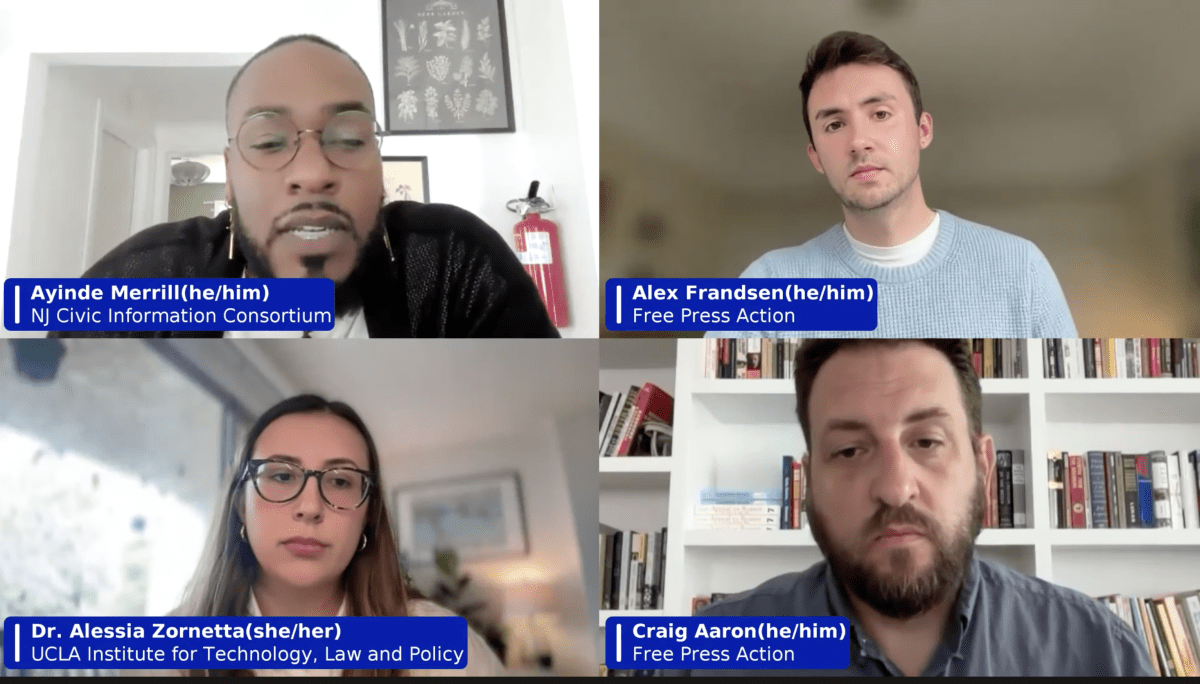
But it’s not the only option. You could instead restore Amazon’s tax bill, which dropped last year by more than $8 billion, even as company profits skyrocketed. That’s enough to support a public-media trust and then some — and seems an appropriate penance for Jeff Bezos’ destruction of The Washington Post.
The point is the money is out there. It’s just being spent on other things, like ICE, data centers and mega-yachts.
Not neutrality
The philosophical hand-waving and knee-jerk rejection of public-funding approaches — and Tofel is far from alone in this camp — ignores the practical reality that public-funding approaches have worked and are working. When constructed carefully, public grantmaking is independent, nonpartisan and efficient because it can target the most important gaps.
There’s a lane for tax-credit approaches, if they’re saving newsroom jobs and helping build a bridge to what’s next. But many policy models that claim to be “neutral” simply uphold the status quo. If your tax-credit policy is solely based on current newsroom headcounts, you’re entrenching incumbents and existing market power. If you ignore financial needs when crafting your media subsidies — and print and broadcast TV are in starkly different situations — then you’re probably spending on the wrong priorities.
If the largest beneficiary of your bargaining code or “journalism-protection” bill is Rupert Murdoch, you’re just doing it wrong.
The least we can do is stop pretending that media policy choices have ever been neutral or free from bias, when they’ve always been twisted to reward conglomerates and other corporate actors. The result has been runaway media consolidation, the suffocation of U.S. public media, and the unhealthy codependent relationship propping up commercial broadcasters with attack ads that fuel our broken campaign-finance system.
Public investment isn’t the problem, unless we’re talking about the lack of it. The problem is the private capture of our resources — and our lawmakers, too.
Hello, Cicero
While we’ve taught journalists to stay out of policy debates, the same rules never seem to apply to their bosses. Our choice is whether to keep enriching the biggest corporations at the expense of everyone else — or start investing in the kinds of institutions, coverage and creativity we need to improve lives.
The issue isn’t whether the government should be involved in journalism policy — it always will be — but whom those policies are going to help. Asking cui bono, it turns out, is a pretty good way to separate good policies from bad ones.
Political opposition from those in power is formidable, and passing these good policies won’t be easy. But nothing worth doing is.
For now, let’s at least try to start with some better questions, easeplay.
Teamwork
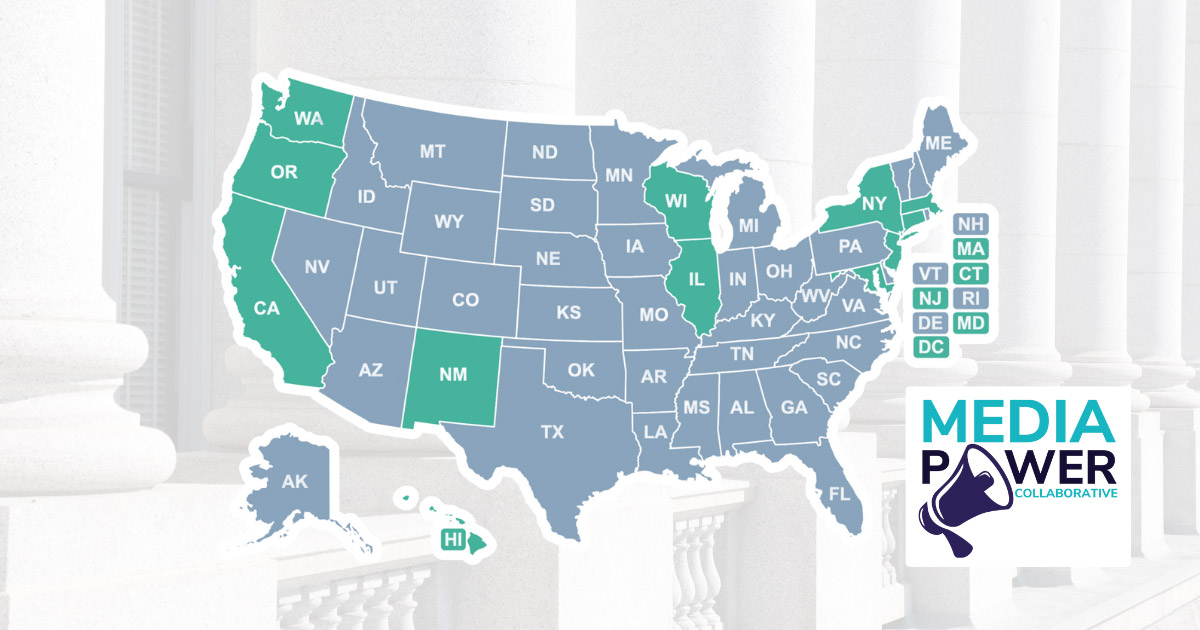
Speaking of what’s working, Free Press’ Media Power Collaborative project recently updated its State Policy Tracker — which is currently documenting bills in 16 state legislatures. This interactive map connects you to information about all these efforts. Let us know if we’re missing anything good happening where you live!

On Monday, Free Press joined 16 other nonprofit organizations in an amicus brief urging the U.S. Court of Appeals for the D.C. Circuit to stop Trump’s Federal Trade Commission from carrying out a “retaliatory investigation” into Media Matters for America for critical coverage of Elon Musk’s X. A federal judge blocked the FTC’s investigation in August.
“When the government uses open-ended investigations to drain resources, intimidate funders, and silence critics, the damage goes far beyond one organization — it sends a warning to every journalist and researcher in the country,” says Annie Chabel of The Intercept, which led the effort.
 The Intercept
The FTC’s bogus investigation is one of the items on the long list of administration misdeeds chronicled in a scathing New York Times editorial published Tuesday about “Trump’s Plan to Twist the News.” The Times describes the actions of the FTC and the Federal Communications Commission as “a pincer movement” that’s “twisting consumer protection statutes to penalize speech” and “weaponizing the ‘public interest standard’ to bully broadcasters into submission.”
The kicker
“When regulators treat editorial decisions as fraud and condition business mergers on the content of news broadcasts, they are not protecting consumers. They are engaged in a hostile takeover of the marketplace of ideas.” —New York Times Editorial Board
About the author
Craig Aaron is the co-CEO of Free Press and Free Press Action and a guy with two first names. Follow him on Bluesky.