What I Learned Lobbying for Local News in Massachusetts
Doing the daily work of connecting communities to a more equitable and fully-funded media system
I’ve always thought that good public policy work should start by asking, “Who’s at the table?” This isn’t just a question of who’s consulted down the line, but who’s sitting there from the beginning, talking about a problem, the possible solutions and how to make them happen.
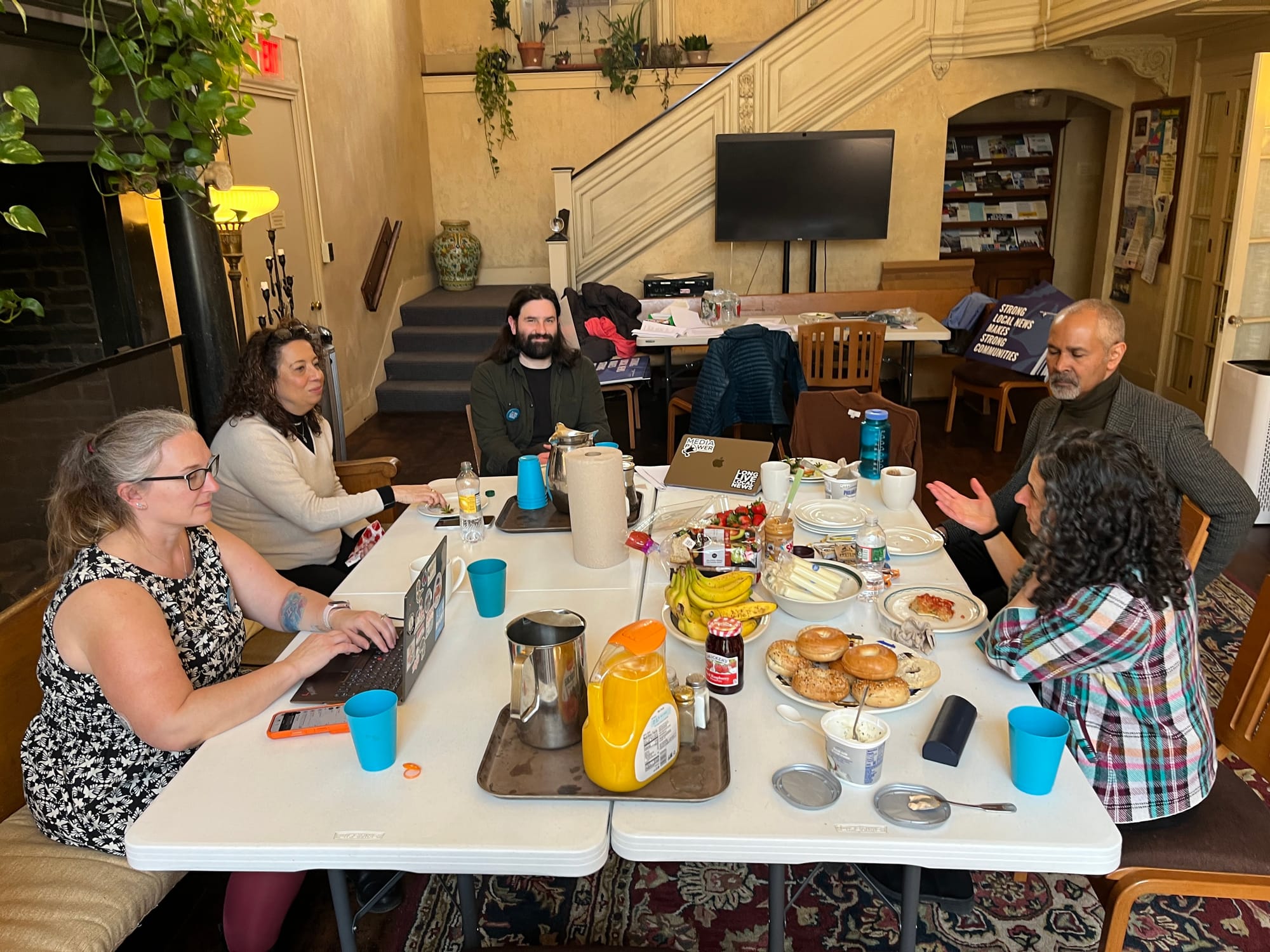
This week in Boston, I got to experience a real-life example of this, gathered around a large wooden table in a 200-year-old historic Quaker guest house hidden in the heart of Beacon Hill.
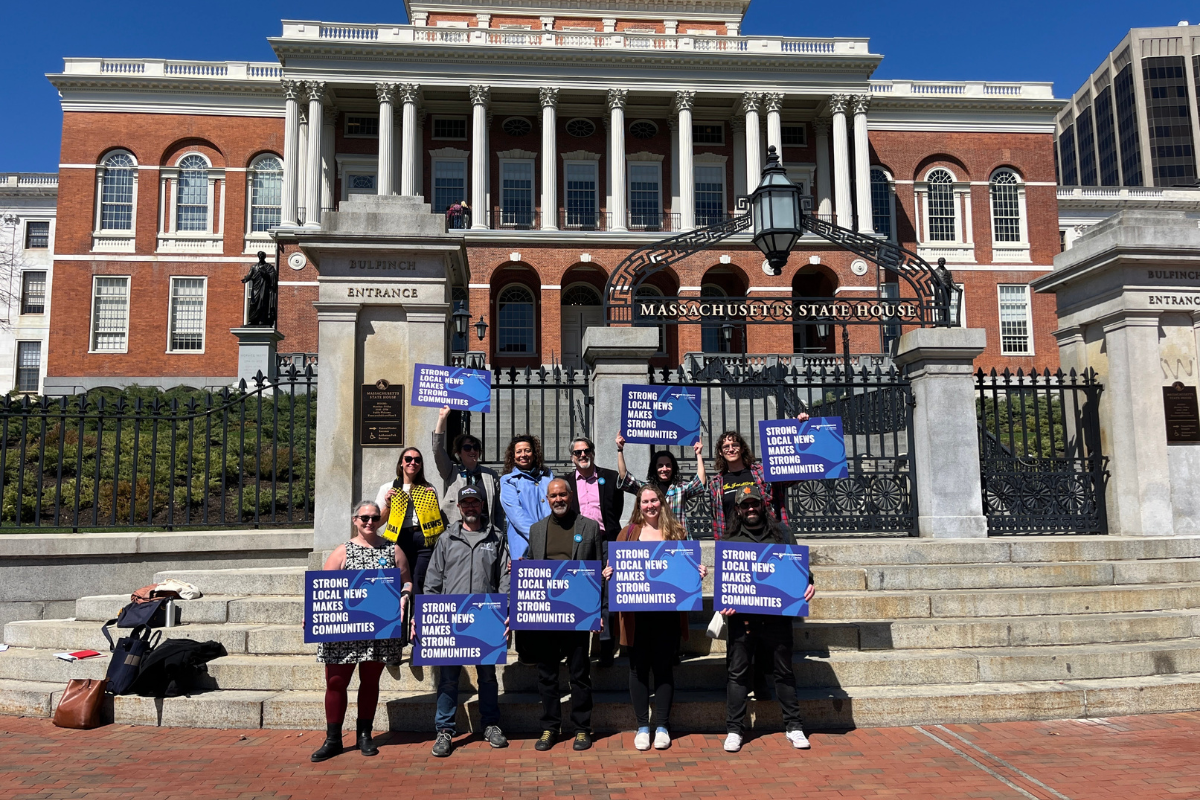
As the national field director at Free Press, I joined a dozen local newsroom leaders, journalists and community advocates for a local news lobby day, where we met with lawmakers and urged them to provide more funding and support for community-rooted news and information. This grew out of our broader organizing work to build statewide coalitions that can advocate for local news policies rooted in the needs of communities.
As a group, we had spent the past year meeting on Zoom, strategizing on how to advance legislation that would center the needs of local, independent newsrooms that provide vital public services to their communities. We decided that the day before Local News Day would be a good chance to gather in person in Boston and start talking with legislators about investing in the kinds of news and information that keep their constituents safe, informed and engaged in their communities.
The work of these local outlets — including The Flipside, The Shoestring, Burlington Buzz, Boston Institute for Nonprofit Journalism (BINJ) and Worcester Sucks and I Love It — is deeply valued in their communities. It’s also often shouldered by one or two overworked, underpaid people who are researching, writing, editing, fundraising and web designing.
But they are dedicated to the services this reporting provides to their neighbors, which include producing detailed local election guides, covering school board meetings, offering in-depth analysis of legislation protecting immigrant communities, and investigating allegations of abuse and corruption by public officials and businesses committing wage theft.
Off to the State House
So on Wednesday morning, April 8, we gathered around a table for breakast, running through the schedule for the day, gathering handouts, and putting on our “I Love MA Local News” pins as we waited for a Western Mass. carpool of other journalists to roll in. In classic fashion, the breakfast group immediately jumped on their laptops and spent the day editing stories and running their newsrooms in between dashing to the state house, running out for extra microphone batteries and swapping strategies for audience engagement, reader surveys, fundraising and producing print magazines.
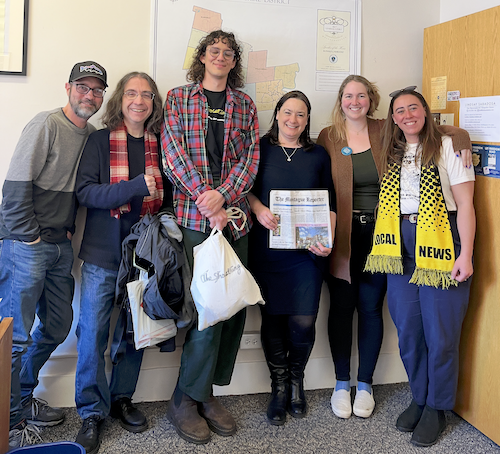
In total, we spent nearly six hours meeting with nearly 20 legislative offices, dropping in to chat with staff, greeting members in the hallways, handing out copies of local print newspapers and telling legislators’ about the impact these outlets have on a community’s ability to engage in public life.
We talked with lawmakers about designing legislation that centers the needs of immigrant communities from Haverhill to Holyoke, and the importance of supporting trusted Spanish-language journalists who are rooted in the places they work. We also shared stories illustrating the vast differences in the needs of rural communities like Turners Falls, Montague and Pittsfield, compared to those of Worcester, Burlington and Roxbury.
Any policy designed to support local news must be nimble enough to meet the diverse needs of these communities. It should be shaped by the trusted outlets and community members who know those needs best.
Before our lobby day, I had been nervous about asking such busy people to take a full day of their lives to run through the halls of the State House, squinting at floor maps and asking strangers for directions.
I wondered if they would feel it had been worth the trek, especially for those who drove two hours each way to join us. But across the board, people told me that the conversations with lawmakers and gathering as a community were well worth it. Many were meeting each other for the first time, after reading each other’s work for years. Jason Pramas of BINJ, showed up with homemade banana bread. As we debriefed the day over pints of Guiness at Emmets Irish Pub, folks assured me it had been “a great use of my time” and, my personal favorite, “way more fun than I expected.”
We had fans
I think the day felt meaningful, in part, because of the supportive response we got from almost every lawmaker. Many recognized these journalists in the hallways — shouting, “Burlington Buzz?! I’m a huge fan!” — and said things like, “Anything Yawu Miller of The Flipside supports, I’ll get behind.”It reminded me that many lawmakers inherently understand the need for more informed communities. They rely on local news outlets and trusted messengers to inform constituents about social services, community events, and upcoming elections, just to name a few.
And despite their extreme, insistent humility, local journalists are often true leaders and connectors in their communities. People stop them on the street to share stories and information and text them at all hours. They are the people folks turn to when they need to make sense of what’s happening where they live. At a time when AI, social media and media censorship make it hard for people to know who they can trust, the crucial need for these trusted, locally-rooted reporters cannot be overstated.

Most importantly, we spent the day connecting with each other, sharing energy and ideas, dreaming up ways to serve the communities each person cares so much about. To me, that’s the point of grassroots organizing. Change doesn’t start by drafting a policy memo, consulting a small group of power-players and waiting for the right political window to open. It’s about coming together, sharing ideas, providing mutual support and — ultimately — building the power we need to open the window ourselves.
About the author
Sarah Stone oversees Free Press’ civic-media field strategy, which aims to pass public policies that transform local news and create equitable access to civic information. Prior to joining Free Press, Sarah worked as the deputy director of strategic advocacy at the Friends Committee on National Legislation, where she built a grassroots network advancing federal policy change across all 50 states.
Open tabs
Compiled by Pressing Issues editors
Our friends at FAIR have published an excellent summary of the attacks on “the right to cartoon” and how the ongoing attacks on these artists, illustrators and journalists are part of a troubling global trend of government censorship that has unfortunately reached our shores. FAIR also shouts out independent outlets like In These Times that have prioritized publishing political cartoonists and other artists.
 Hank Kennedy
All of us here at Pressing Issues are excited for this weekend's theatrical release of Steal This Story, Please!, a documentary about the life and work of acclaimed independent journalist Amy Goodman of Democracy Now! It’s getting rave reviews, even from The New York Times. Getting out to the theater is a great way to support independent media and documentary film, two of our most favorite things. Go see it!
The kicker
“Local media is the connective tissue of a healthy democracy. It tells the stories no one else will, holds power accountable where it matters most, and keeps communities informed and engaged. Without strong local journalism, entire regions risk becoming invisible.” —Massachusetts State Rep. Lindsay Sabadosa in The Shoestring