Puerto Rico Journalists Just Beat a ‘Fake News’ Law in Federal Court
Sandra Rodríguez Cotto, one of two reporters who sued over a COVID-era censorship law, talks with Pressing Issues

On Aug. 4, the U.S. Court of Appeals for the First Circuit unanimously struck down Puerto Rico’s COVID-era “fake news” law, affirming a permanent injunction first won at the district court level in 2023.
The law made it a crime to knowingly spread a “false alarm” or false information during a declared state of emergency — and was punishable by up to three years in prison and a $5,000 fine.
The ACLU and its local affiliate, the ACLU of Puerto Rico, represented journalists Sandra Rodríguez Cotto and Rafelli González Cotto when they sued the government over the law in 2020, arguing it would chill exactly the kind of reporting the public needs most during a crisis.
Free Press joined the University of Georgia’s First Amendment Clinic, the Electronic Frontier Foundation, the Foundation for Individual Rights and Expression, the Freedom of the Press Foundation and PEN America in a friends-of-the-court brief backing the journalists. The First Circuit agreed with them, writing that the law “represents an impermissible restriction of speech, particularly during times of emergency when it is most imperative that the public be well-informed and the government held to account.”
I talked with Sandra Rodríguez Cotto — a veteran journalist with an impressive history of speaking truth to power — about the legal fight, what it cost her personally and professionally and why she sees a direct line between this decision and the water crisis Puerto Rico is living through right now.
 DÁNICA COTO Associated Press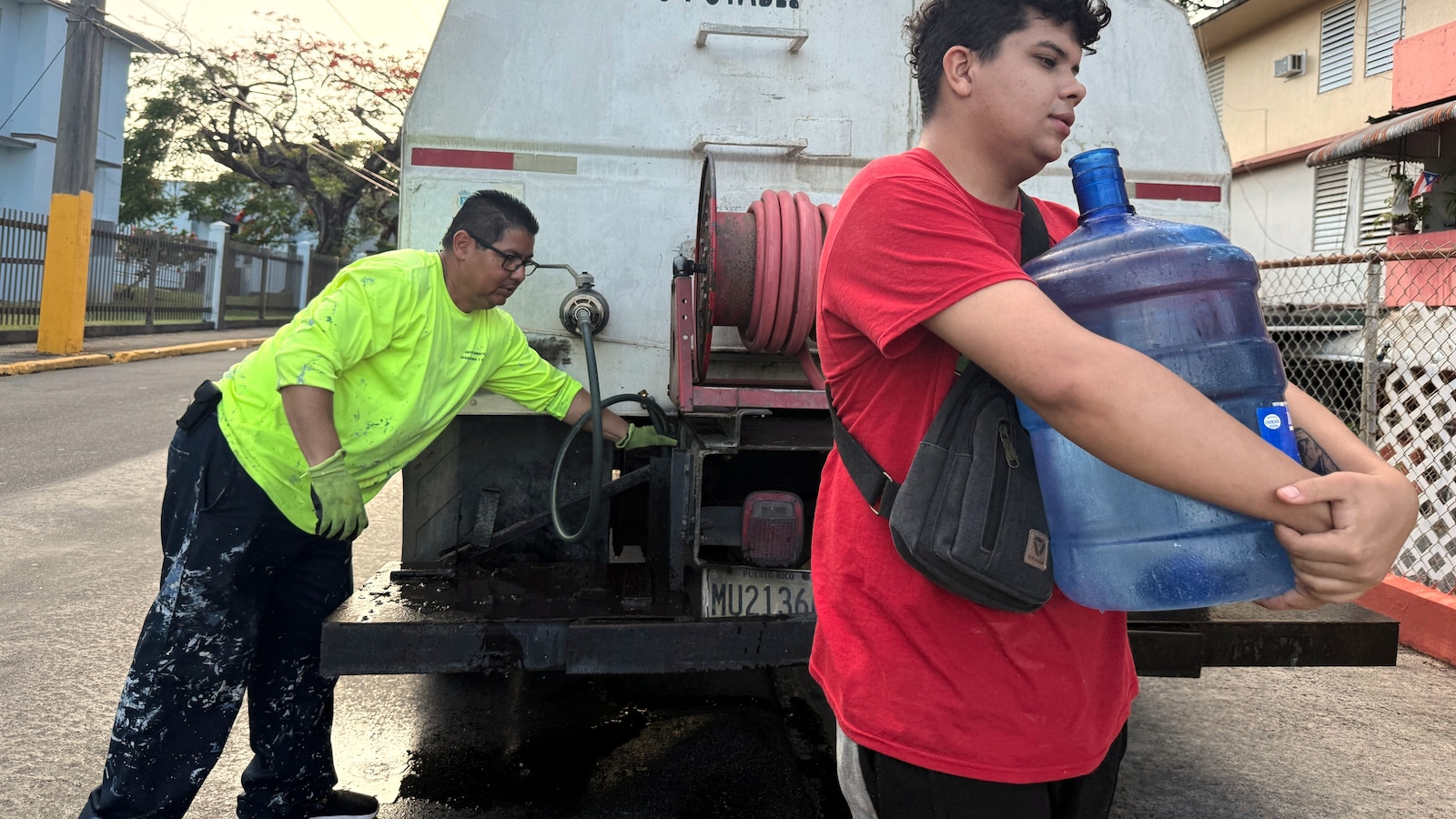
Rodríguez Cotto and I spoke in Spanish over the phone. I translated and edited our conversation for length and clarity.
Julio Ricardo Varela: This law hung over you for more than five years, since you filed suit in 2020. What was the moment when you felt that threat most directly in your work?
Sandra Rodríguez Cotto: It’s hard to point to one specific event, because I don’t want to suggest I’m a victim. I’m not. I’ve been at the center of many public controversies over the last 10 years.
When Hurricane Maria hit in 2017, I was here in Puerto Rico, and I saw everything that happened: the deaths, the shortages of medication and aid. It was hard to get accurate information back then and it was important to cover those moments.
After that, back in the summer of 2019, I was the first reporter to expose a private government chat that eventually led to the resignation of a sitting governor. I’d already been writing opinion columns about corruption I was seeing in the Puerto Rican government, and I knew something was happening, but I didn’t have enough proof until parts of the chat became public.
That’s when everything came together, and it’s been very hard ever since. I haven’t stopped working. It’s been the most intense experience of my journalistic career, because that’s when I faced the most pressure from every direction: death-threat campaigns, harassment and coordinated attacks on social media. Everything you’d read about in a playbook against the press has happened to me.
At the same time, I kept doing the work while they tried to shut me down. There were real efforts at prior censorship. So I know, personally, what it’s like to face a system that doesn’t want you to publish. And on top of the troll campaigns funded with public money, you then have to face a law that tells you that we’re declaring a state of emergency, and you can’t talk. If you investigate anything, you could go to jail, because we get to decide what’s true and what’s false.
You’re living in a place where, for all practical purposes, there’s a dictatorship of information. When you know the law — and specifically the Constitution, the First Amendment, which guarantees freedom of the press, and Puerto Rico’s own Bill of Rights, which says the same — you have to fight, because that’s exactly when the press is needed most.
These aren’t isolated incidents. It’s been a consistent campaign since Hurricane Maria and the accountability reporting that followed. I was breaking almost every major corruption or environmental scandal on the island, one after another, even before they became bigger stories.
JRV: Has the weight of all this taken a toll on you?
SRC: Yes, it’s been hard because people need to understand that it’s not just about them attacking you or writing something insulting about you online. It goes further than that. There is real, somewhat systematic repression against the press here, even as officials try to hide it.
I’ve studied this and written books about it with other authors. This isn’t something I’m making up. Those in charge do two specific things. First, they cut off your access to commercial media — you don’t get hired, you get pushed out of the radio stations you work for, all to push you out of journalism entirely. That makes it very difficult to survive in this business. Second, they threaten to sue you, trying to create an atmosphere of submission and fear. We can’t allow this to happen. We don’t live in a totalitarian country.
JRV: The court noted that this law could have been used against people simply debating the effectiveness of masks, or even against jokes and satire. Does the scope of the ruling surprise you, or does it confirm what you always suspected was the law's real purpose?
SRC: It’s interesting, looking at it from that angle. This law dates back to the earliest days of the pandemic, when the Wanda Vázquez administration locked all of us down and pursued a very heavy-handed policy. The governor and her administration officials wanted to control the narrative.
There’s a case that actually happened when a pastor at an evangelical church sent his congregation a WhatsApp message telling them to stock up on supplies, the way you would before a hurricane, because no one knew how long the lockdown would last. Church members got scared and forwarded it to friends and family, and it spread. At that point, the Vázquez administration wanted to prosecute him under this law. He would have gone to jail if it weren’t for public pressure and other religious leaders speaking up, saying he hadn’t done anything illegal, that people were just trying to prepare for a pandemic.
So on one hand, you had the government trying to control and manipulate the narrative, because that’s manipulation too, and on the other, the real danger underneath it. We lived through that during the pandemic, but you have to look at it beyond that one moment, because Puerto Rico has essentially been under a continuous state of emergency since the hurricane.
JRV: The ACLU of Puerto Rico linked this ruling directly to the current drinking-water crisis, saying this type of law is exactly what a government would reach for to silence oversight during an emergency. Make that connection for me?
SRC: Right now, we’re in what’s technically a drought emergency, though I’d call it a manufactured one. It’s been known for a year that the effects of El Niño were coming, that the reservoirs and dams needed maintenance, and that maintenance didn’t happen. Some communities have gone three or four months without water, with no official rationing declared.
That’s a combination of poor management by people who didn’t know how to run the water utility, and a drought that isn’t entirely natural. A lot of people don’t have water right now, and it could get worse. There are already warnings that the drought will extend into September, and unless a storm fills the reservoirs, there’s no relief in sight.
This is happening everywhere, including the fires in the U.S. and Europe and the floods worldwide. You can’t separate Puerto Rico’s situation from that larger reality. And it’s in that context that a law like this is so dangerous. It can be used to silence voices and restrict the press exactly when scrutiny matters most.
There’s also a broader pattern here that I don’t think people fully register. The current Jenniffer González-Colón administration has passed laws that chip away at press freedom and journalism. Puerto Rico is effectively building a system of laws designed to pressure the opposition and impose broad censorship, and any outlet that pushes back gets squeezed.
On the one hand, the government has been buying up advertising space in nearly every news outlet on the island, effectively buying silence. Newspapers and TV channels that depend on those contracts answer to the government. Now, Governor González-Colón is doing the same with regional outlets and radio stations. Add to that the so-called “transparency law,” supposedly passed to improve access to public records. In practice, it gives the government more time to respond to requests, so it can take a month to get the information you need immediately for a story. It’s a war of attrition.
In this specific case, at least we won. But you have to see it as part of a broader set of laws working together against the press, not just a single statute.
JRV: This was a unanimous decision from the First Circuit, but it could still, in theory, go to the Supreme Court. Do you consider this fight over, or are you preparing for another round?
SRC: We’re waiting. The government has a set number of days to appeal, and it wouldn’t surprise me if they do. These lawsuits are handled by private law firms that get paid to litigate them, so there’s every incentive to keep fighting, and the government is going to do everything it can to hold on to control. If this reaches the Supreme Court, we’ll see what happens.
If it were somehow reversed, it would be a devastating blow for press freedom and freedom of expression, not just in Puerto Rico but across the United States. It would open the door to laws like this everywhere. But in my heart, I don’t believe that’s going to happen. The Constitution is clear — nothing can override freedom of the press. My hope is that nothing happens.
About the author
Julio Ricardo Varela is the senior producer and strategist at Free Press. He is also a working journalist, columnist and nonprofit-media leader. He is a massive Red Sox, Knicks and Arsenal fan (what a combo). Follow him on Bluesky.
Teamwork
Compiled by Pressing Issues editors
A “Corruption Walk.” On Thursday, Free Press organized an action outside the Federal Communications Commission to expose FCC Chairman Brendan Carr’s role as President Trump’s censorship czar. Activists and advocates stationed between a subway stop and the doorstep of the FCC held 11 signs that detailed Carr’s corrupt attempts to silence and bully any media that refuse to bow to Trump’s anti-democratic White House agenda. The signs were displayed prior to and during the FCC’s monthly meeting, allowing attendees to read about the ways Carr has violated his oath of office as they entered the building.
 Timothy Karr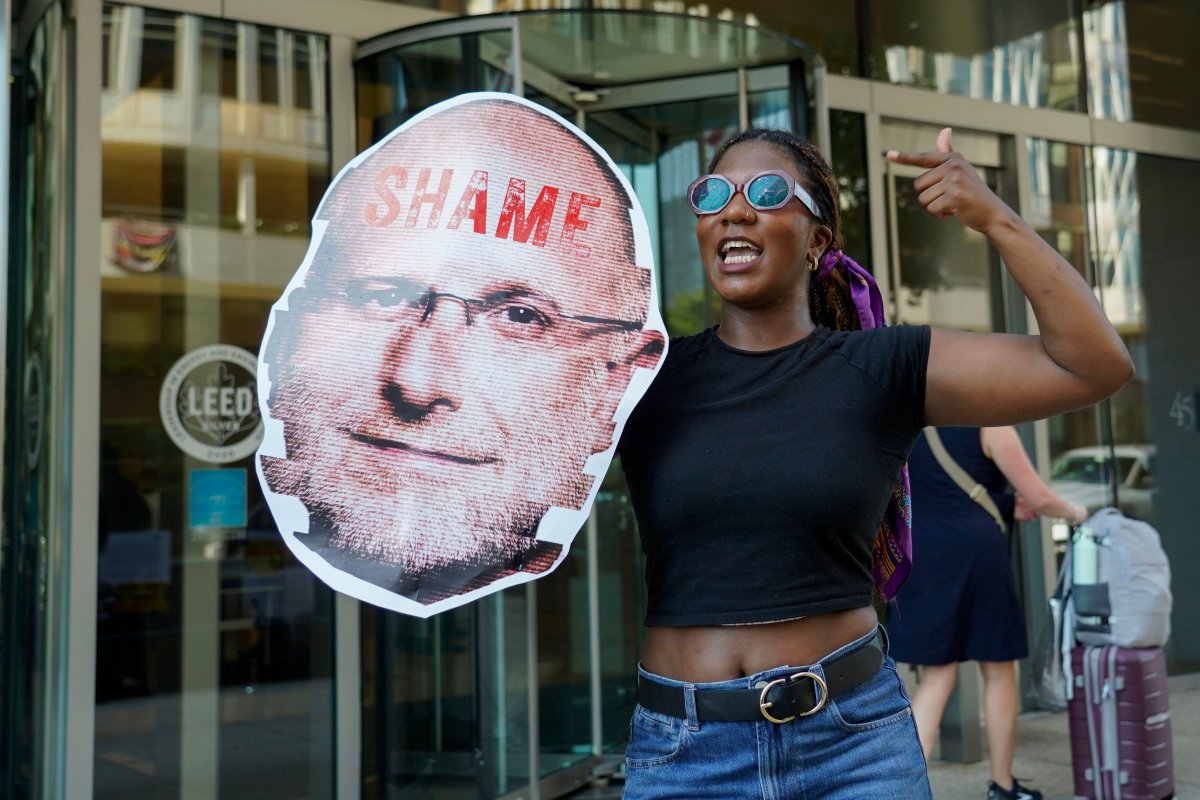
The kicker
“This is a win for free speech and press freedom. While it’s only natural that governments seek to rein in misinformation, especially during moments of crisis, such attempts are often the vehicle through which government actors target the press and muzzle dissent. At the heart of our First Amendment is the ability to share information, opinions and news of the day that might be of public import.” —Nora Benavidez, Free Press’ senior counsel and director of digital justice and civil rights, about the Puerto Rico ruling