Bridget Todd and the Business of AI Intimacy
A Pressing Issues conversation with the host of “There Are No Girls on the Internet” about her new audiobook

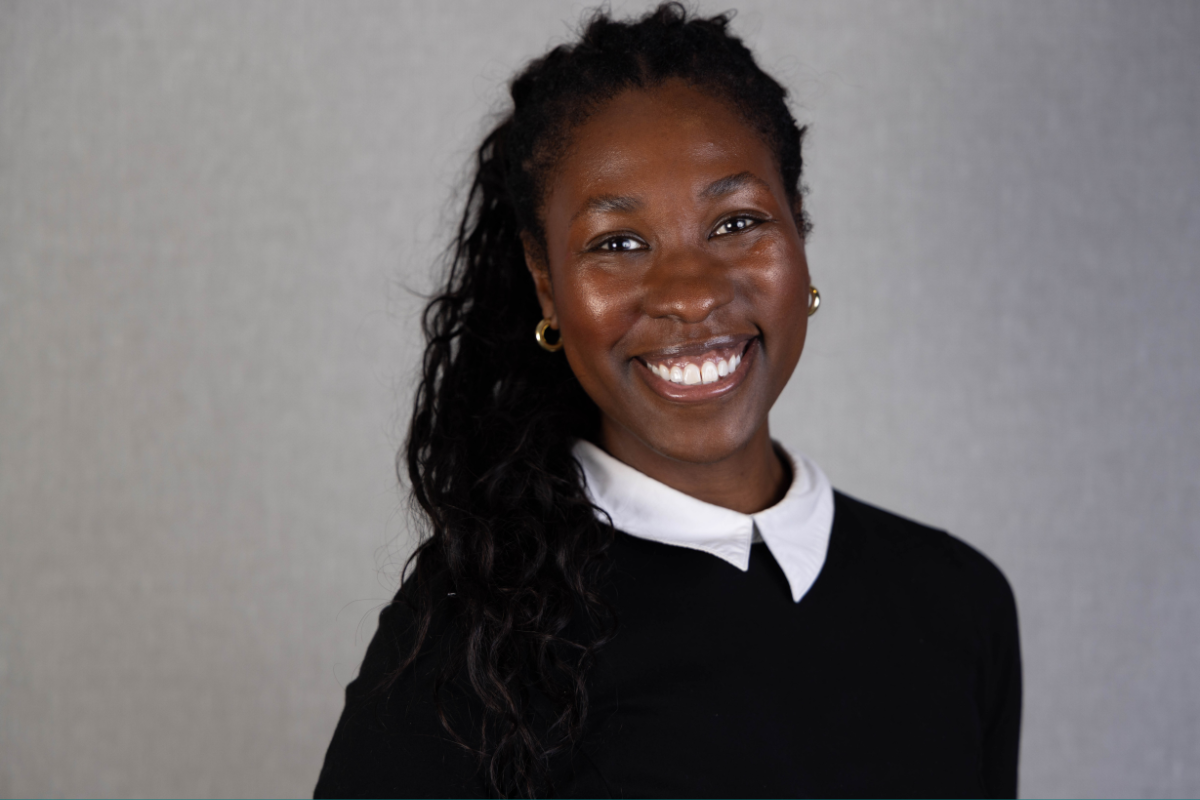
Bridget Todd has spent years reporting on tech, gender and power. As the host of iHeart’s “There Are No Girls on the Internet” podcast, Todd has covered disinformation, tech accountability and how marginalized people are treated online. She is also a MacArthur Foundation Technology in the Public Interest Fellow and an affiliate at Harvard’s Berkman Klein Center for Internet & Society.
Todd’s latest project is Love at First Prompt: AI and the Future of Intimacy, an audiobook she co-authored with social scientist Michael A. Amato. While doing research for this audiobook, Todd reported on AI companionship — trying it herself and talking with people who have built relationships with chatbots, including some whose use turned into dependency.
I spoke with Todd over the phone about the project. We discussed how Big Tech is profiting from AI companionship, what happens to the data people hand over in their most private moments and what consent means when your partner is a product a tech company owns.
The interview was edited for length and clarity.
Julio Ricardo Varela: In your own words, what is Love at First Prompt about, and why did this feel like the moment to produce the audiobook?
Bridget Todd: Love at First Prompt came about because I was seeing all this breathless conversation about people forming intimate connections with AI companions and chatbots. I would read those stories and think, “Oh, this person is so pathetic. This person is unwell. This person is putting themselves at risk.”
But because I was putting so much focus on the individual — whether their connection with AI was healthy, pathetic, sad or whatever — I wasn’t really applying any scrutiny to the companies at all. So I wasn’t asking questions about, well, are companies commodifying the intimate connections of what might be vulnerable people? All this increasingly intimate information they’re collecting from people — how are they keeping it safe? Are the companies behaving appropriately?
And so this book is really an attempt to shift the conversation away from individuals and place that scrutiny on the companies and the people who run them, and to ask, “What happens when these companies see our inner emotional world as just another thing to commodify and profit from?”
JRV: As a tech journalist, did you have any perceptions as you started work on the book that changed during the process?
BT: When I first started the work, I assumed that the people who were using AI for companionship and intimacy were putting themselves at great risk for harm, that this was very bad in terms of the individual.
I was really like, “Oh, I know I’m gonna find a lot of individual harms.” Based on the available research, most healthy adults are unlikely to experience catastrophic harm from having some form of intimate connection with AI. Now, importantly, that is different when we’re talking about vulnerable adults or children. But I was really surprised that there actually isn’t a huge, robust body of research suggesting that, for most healthy adults, they’re putting themselves at risk. That was surprising.
The conversation around people who use AI for companionship is so steeped in stigma and judgment that it’s easy to overlook others who might have intimate connections with chatbots.
But when you listen to people like Mark Zuckerberg and Sam Altman speak, they could not be clearer that this is the plan that they have for everyone, right? So even if you’re somebody who would say, “I would never experience intimacy with an AI companion,” well, Mark Zuckerberg is betting that’s not the case. In fact, he says that in 10 years’ time, all of us will have AI friends.
The part that he doesn’t say is, AI friends that he owns, operates and profits from. So even if you’re somebody who thinks this conversation has nothing to do with you, tech leaders are betting that that’s not the case, and that in 10 years’ time, they will be selling you AI friends.
JRV: So what happens with the data? Is there accountability in that, or is that what we’re struggling with right now?
BT: I think that is what we’re struggling with. I don’t like it when people say that AI is unregulated, because there is plenty of AI regulation, some of it good, some of it bad. But when it comes to companies and their rules for keeping what we tell them safe, there really aren’t many regulations.
In the audiobook, I spoke to a privacy expert, and she said that since chatbots are designed to ask increasingly intimate questions about you, she wouldn’t tell a chatbot anything that you would not tell a gossipy cousin or a chatty coworker. Because we simply don’t know. And this has real connotations.
In other countries, where people are on dating apps, sometimes governments that are hostile to queer and LGBTQ folks will pressure those dating apps to turn over information — intimate information about their users’ romantic and sexual lives. We have not seen that with AI companions, to be clear, but it’s not a stretch to imagine that’s in the realm of possibility.
And so I think that the way that chatbots are designed to mine you for increasingly intimate information, to keep you talking, to keep you engaged — I think it’s concerning that it’s just fine that these companies are getting into more intimate and sensitive aspects of all of our lives.
JRV: You’re concerned, but you also talk about it bringing real comfort to people, although some people have spiraled into dependency. So how do you hold both truths? It could help some people, but there are harms too.
BT: That’s exactly it. I think it’s like any other conversation about technology, where it has the potential to both help and harm. I love technology. I would not be who I am today if I had not grown up with a free and open internet to express myself and connect with people. And so we have to move beyond these conversations that live at extremes, where anyone who experiences some form of intimacy with AI is putting themselves at great risk, while also recognizing that some people with intimate connections to AI are at risk of harm, right?
If you’re vulnerable, if you are a child or a young person, if you are using AI for things that it’s really not supposed to be used for, that’s an issue. Sam Altman has been explicit that even though he knows millions of young people are using ChatGPT for therapy, he himself says that’s not safe or good, even though he knows that’s how people are using it. I think it’s really about acknowledging the complexity and nuance here and figuring out what responsibilities we should place on companies to ensure that harm isn’t catastrophic. Because right now I don’t feel like we’re having that conversation.
JRV: If you were able to sit with Zuckerberg or Altman or anyone — “I get it, there is some promise here, but this is what you need to do to keep this notion of a free and open internet that’s safe” — what would you tell them?
BT: This is a little bit above my pay grade, but I don’t think it makes sense right now to be blazing trails into people’s intimate emotional lives as quickly as they have. These folks who run these companies are all gas, no brakes. OpenAI just announced the first hardware product they’re going to sell — a consumer device, and surprise, surprise, it’s a smart speaker you put in your home that mimics a human-like AI companion. It also has the ability to move around with you mechanically. And so I would say that while we are still hammering out the way that technology shows up in our inner worlds and emotional lives, I don’t think it’s appropriate to continue hitting the gas, right?
While you have active lawsuits around things like self-harm because young people use your technology, I don’t think it makes sense to be just all gas when it comes to this.
I did not realize how much these companies are making these specific forays into our intimate inner worlds. So much of the conversation about digital rights in the last few years has been about these very specific parts of our internet experience — who owns your intellectual property, who owns your browsing data or your location data, who gets to make money off of that.
I think the next frontier of digital rights is really going to be about our inner emotional world. Who gets to commodify that? Who owns that? Who makes money from that?
JRV: With the work you do on your podcast — marginalized people finding their voices against tech that’s built by elite, geeky white dudes — how does AI intimacy connect through a gender, race, disability or class lens? How do you connect the dots between your podcast and the book?
BT: That’s such a good question. I would say something that we dive into in the audiobook is the ways that tech companies are — I mean, OpenAI has sort of had one foot in, one foot out, but Meta is all in, and obviously, Elon Musk’s xAI is all in on sexual content and erotic content.
If you are a sex worker online, payment processors do not work with you. But when Elon Musk’s xAI can use Grok to create erotic images, payment processors did not abandon X en masse. So tech companies get to set their own rules, while human sex workers are essentially legislated off the internet. That means that the sensitive, intimate, thorny work of creating erotic content is going to increasingly be handled by tech companies’ AI.
JRV: Is AI companionship a symptom of a broader loneliness crisis, or is it manufacturing a demand for a problem it then sells the cure to? Or is it the deeper technological, we’re-all-in-our-bubbles thing?
BT: I think it’s a combination of all of that. I think in writing the book, I realized how much of this is systemic, right? We live in an increasingly capitalistic hellscape where you have to work more and more and more hours just to be able to afford life. That dynamic does not allow people to do the work it takes to maintain nourishing friendships and relationships.
And so it’s one of those things that’s really tough, because that’s institutional, that’s systemic. There’s no easy answer to solve that problem. Tech companies have swooped in and they’re like, “Oh, we have the solution for this problem that we ourselves have worsened.” It really is a situation where they’re creating and worsening the problem, but also selling us back the cure in a form of technology that they own, operate and profit from.
About the author
Julio Ricardo Varela is the senior producer and strategist at Free Press. He is also a working journalist, columnist and nonprofit-media leader. He is a massive Red Sox, Knicks and Arsenal fan (what a combo). Follow him on Bluesky.
Teamwork
Compiled by Pressing Issues editors
Free Press in the news. The Federal Communications Commission voted along party lines last Thursday to overturn a rule that prevents any company from owning stations that reach more than 39 percent of the national broadcast audience. Free Press — which is planning to take Chairman Carr to court over this unlawful decision — made the media rounds about how this dangerous vote would pave the way for even more media consolidation. Free Press also noted that only Congress — not the FCC — gets to change this law.
“Changing this limit requires congressional action, but Carr doesn’t care,” Matt Wood, Free Press’ vice president of policy and general counsel, told the Guardian in a statement. “He’ll do whatever it takes to clear the way for Trump-aligned billionaires to swallow up stations wherever and whenever they please. The result would be just one or two dominant broadcasters in every market, deep job cuts for journalists and an influx of bargain-basement content disguised as local news. This spells disaster for the local communities that broadcasters are supposed to serve.”
 Jeremy Barr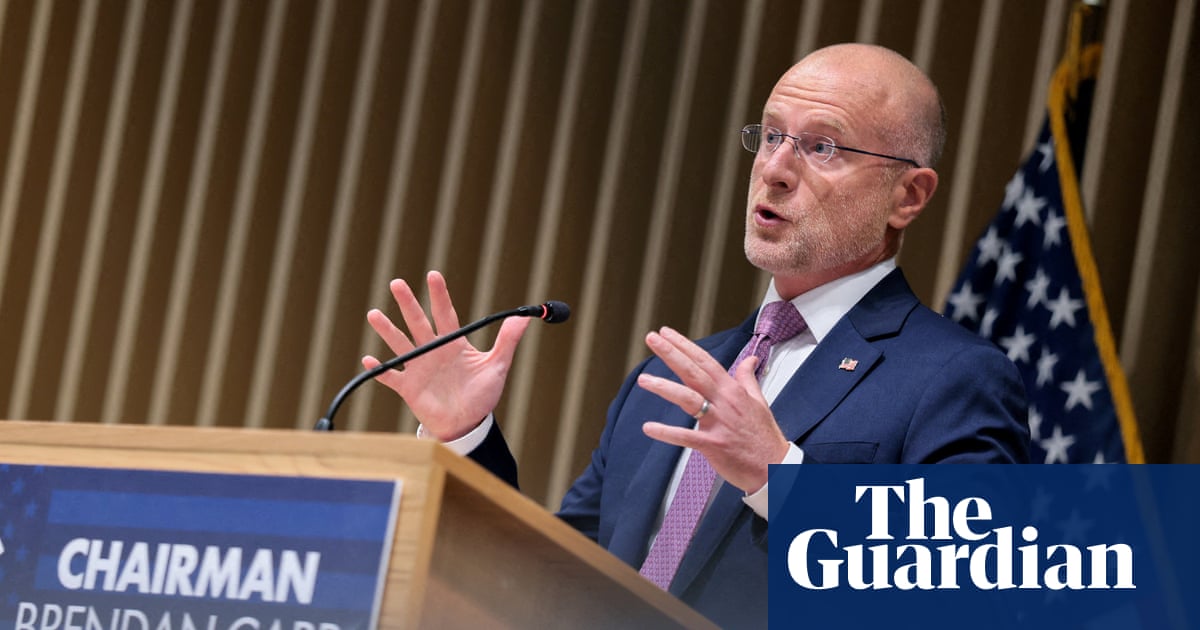
CNN also featured Wood in a story about the ruling and Carr’s actions.
“His goal is to spur more media consolidation involving companies Donald Trump views as ideological allies and corporate cronies,” Wood said.
From Democracy Now!, Free Press Co-CEO Jessica J. González said the following: “The FCC does not have authority to do this, because that statute was set by Congress, and only Congress can change a law. So, Free Press and allies plan to sue the FCC to halt this blatant attempt to hand over more media into the hands of Trump’s oligarch cronies, and we believe that we will win.”

The kicker
“These companies are increasingly trying to widen the window of what is acceptable for a tech company to have power over and take up space in. These parts of ourselves that we once thought of as sacred — our connection with our God, our connection with our sexual selves, our emotional inner world. Increasingly, we find these companies saying, ‘We want to be taking up space in those lanes in your life, and we want to be making money from it.’” —Bridget Todd