Kimberlé Williams Crenshaw and the Need for More ‘Backtalkers’
The legendary legal scholar says we must ‘resist the stories that we’re being told that tell us that there’s nothing that we can or should do to change the circumstances’
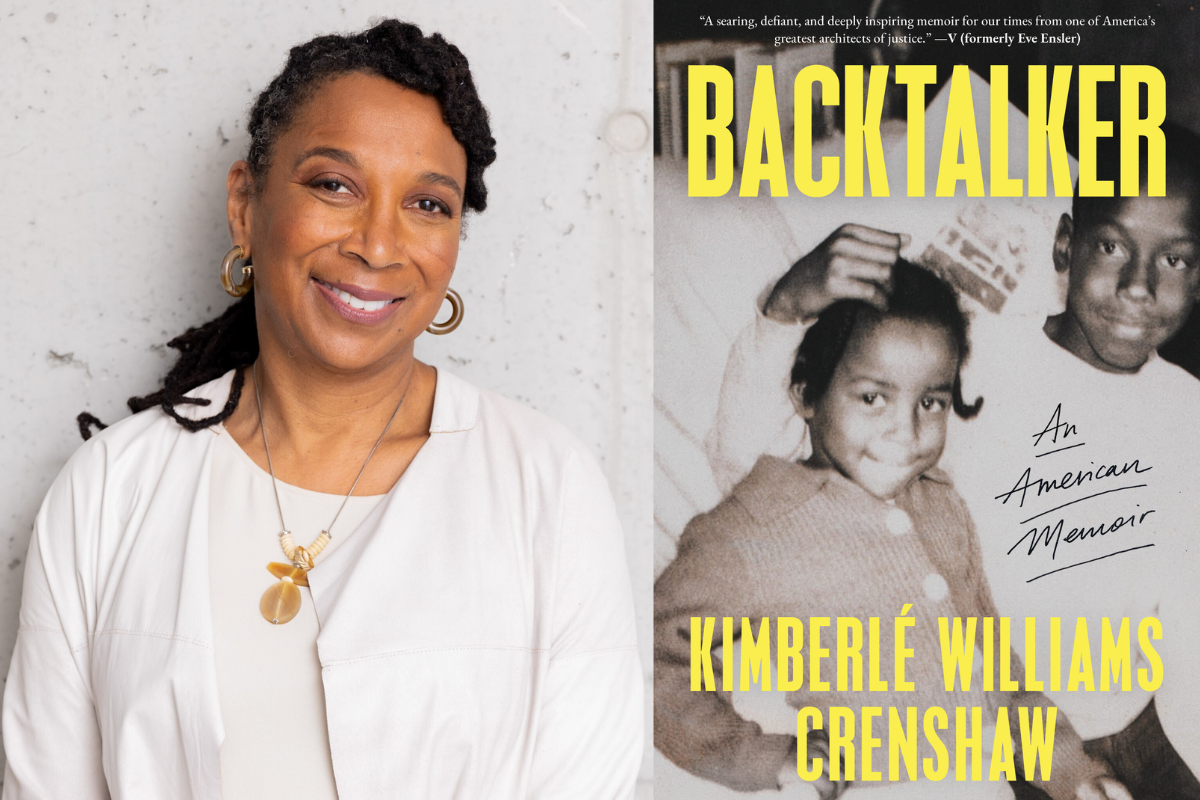
Intersectionality. Critical race theory. These are the concepts Kimberlé Williams Crenshaw is famous for coining. With them, she’s given us a vocabulary to talk about the ways the law and our society erase significant portions of our population — particularly Black women.
Crenshaw, who is a distinguished professor of law at UCLA, the Isidor and Seville Sulzbacher Professor of Law at Columbia Law School, and the co-founder and executive director of the African American Policy Forum, has written a new book, Backtalker: An American Memoir.
Backtalker details Crenshaw’s experiences at the intersection of racism and sexism — and explores how she and her parents responded to them. Whether it’s a classmate accusing young Kim of stealing or her mother losing generational wealth due to redlining, the Crenshaw family knows how to name and fight racism. That their youngest daughter has to figure out her own approach to combating sexism is part of what makes Crenshaw so special today. It’s what prepared her to support Anita Hill during Clarence Thomas’ Supreme Court confirmation hearings and take part in so many other defining fights of our era.
I spoke with Crenshaw about her book, work and the state of the nation. She shared her belief in the often-repeated Martin Luther King Jr. quote, “The arc of the moral universe is long, but it bends toward justice.” However, she has a caveat: “It does not do so automatically. It takes hands — many hands, millions of hands — actually getting into that space and grabbing onto the arc and bending it to justice.”
Backtalker shows her work as one set of those hands — and in her book she encourages us to join her. Reading her memoir, I felt called to action — and so it was an honor to chat with the groundbreaking legal scholar over Zoom.
This conversation has been edited for length and clarity.
Cristina Escobar: Why is backtalking important now?
Kimberlé Williams Crenshaw: I’ve used backtalking as a transgressive frame to suggest that the authoritarianism that we are facing requires us to resist being infantilized because backtalking is usually something that is used to discipline children.
If you ask too many questions, or if you disagree with the edict that comes from someone who has an authority relationship to you, you are basically being framed as a backtalker. Well, I’m trying to suggest that we all need to embrace that idea of backtalking.
We need to resist authoritarianism. We need to resist the stories that we’re being told that tell us that there’s nothing that we can or should do to change the circumstances — that what we have inherited is all that there can be.
So, in the same way that we have transformed names like queer and Black into something positive, I think we should transform the idea of backtalking into something that’s deeply positive, necessary and patriotic.
CE: What do you wish the public knew about intersectionality or critical race theory that is getting obscured in this moment?
KWC: I wish the public knew that these were frameworks and terms that were used to translate the actual circumstances of our lives into policy discourse, into law and into the academy.
These ideas were not cooked up in some laboratory somewhere. They come out of the real lived experiences of real people — in my case, specifically people who were born into a state of unfreedom. These real people observed, watched and later participated in the movements to change these circumstances and make the promises of America work for everybody.
So it’s not un-American, it’s not unpatriotic, it’s not divisive — unless you believe that America should only work for the benefit of a very few people.
CE: I found the book very inspirational. How do you hope that people use your example?
KWC: For people who read the book and see stories that are very similar to theirs, I hope they recognize themselves in the story.
My book tells multiple stories about exclusion, marginalization or sometimes thoughtless devaluation of people who are racially subordinate or gender marginalized. It’s telling that story to say this is not unheard of. I’m not talking about the planet Mars. I’m talking about Earth, in this particular patch on Earth, which is the United States.
If people recognize it, either in their own lives or the lives of people they know, it’s a credible story that is legible. But these stories are being erased by power claiming that the words and the frameworks that describe this are no longer legitimate in the United States. If that is no longer legitimate, then your experiences are no longer a legitimate basis for you to understand your world — and transform it.
I’m hoping that people will read [the book] and will understand that if they’ve heard about critical race theory or intersectionality from those who are trying to convince them that these are dangerous, un-American ideas, then they’ve seen the face of a campaign of distortion, and they have been touched by it.
It’s not just me, it’s not just people who call themselves critical race theorists. It’s them, too, who are being targeted and silenced.
CE: Can you share a bit about your understanding of progress, the arc of justice and how your thinking keeps you from giving up today?
KWC: There’s always been an ebb and flow, always some forward momentum and then a backlash. I think that recognition keeps me from being as depressed as people who were born in a moment where it was all an upward trajectory, and then are being confronted with a dynamic that was in abeyance during their political awakening, but has always been part of our history.
I’m from Canton, Ohio, so I always have football metaphors — the line of scrimmage is being pushed back and back and back, but the game is not over. This is just part of the long battle over whether our country will really arrive at a fully functioning and resilient, racially inclusive democracy, or whether we’re going to fall back on older models of what a limited and exclusive democracy will look like.
CE: At Free Press, we focus on our ability to get information, to connect and to communicate. Why do you think it’s important to prioritize our ability to freely express ourselves, share ideas and learn?
KWC: Literacy is square one, ground zero, in any ability to fight for our democracy. We need to know what we’re fighting for, why it is a fight and why it’s not a simple declaration that we live in a democracy.
I am often reminded by one of my mentors — whenever a new effort to erase or redefine or defame the work that I do happens — she’ll always remind me that the dogs never bark at parked cars. They bark at the ones that are moving, that are transporting us from where we are to a place that we want to be.
That little reminder is what I always go to when the question is, “Why does it matter that there’s a whole list of words that this current administration doesn’t want to be used in any government work?” Banning words like equity, bias, inclusion, discrimination, women and Black takes away the grammar to describe our circumstances. Banning takes away our capacity to do anything to transform those circumstances.
So that’s why freedom of speech and pushing back against censorship are so important. It is what we have to do to move our democracy forward.
About the author
Cristina Escobar is the senior director of marketing and communications at Free Press. She’s also a cultural critic and the co-founder and editor-in-chief of Latina Media Co, an indie outlet platforming Latina and queer Latinx perspectives. A true millennial, all of her medical knowledge comes from (re)watching Grey’s Anatomy. You can follow her on Instagram @cescobarandrade.
Open tabs
Compiled by Pressing Issues editors
Using zines to convict anti-ICE protesters. Earlier this week, nine anti-ICE protesters in Texas received unusually harsh prison sentences of 50 years or more after they were convicted of terrorism charges. They received these sentences after a police officer was shot and wounded during a protest at the Prairieland Detention Center near Fort Worth last July. Part of the evidence the federal government used? Left-wing zines, according to reporting from The Guardian.
As the story notes: “What the federal government has described as ‘antifa extremists’ are activists you’d find anywhere in the US: trans people, tattoo artists, vegans and anti-ICE community members who engage in mutual aid. The federal government’s focus on the possession of leftwing literature, including zines, and other basic security measures common in our modern era — like owning Faraday bags, meant to block wireless signals to prevent surveillance; using the encrypted messaging app Signal; or dressing in all-black clothing — is alarming to activists.”
“Zines discussing ideas of revolution, mutual aid, ideas of a world after capitalism should not be able to be criminalized in and of themselves,” Xavier de Janon of Defending Rights and Dissent told The Guardian. “That’s just dangerous to all of us.”
 Lex McMenamin and Flávio Pessoa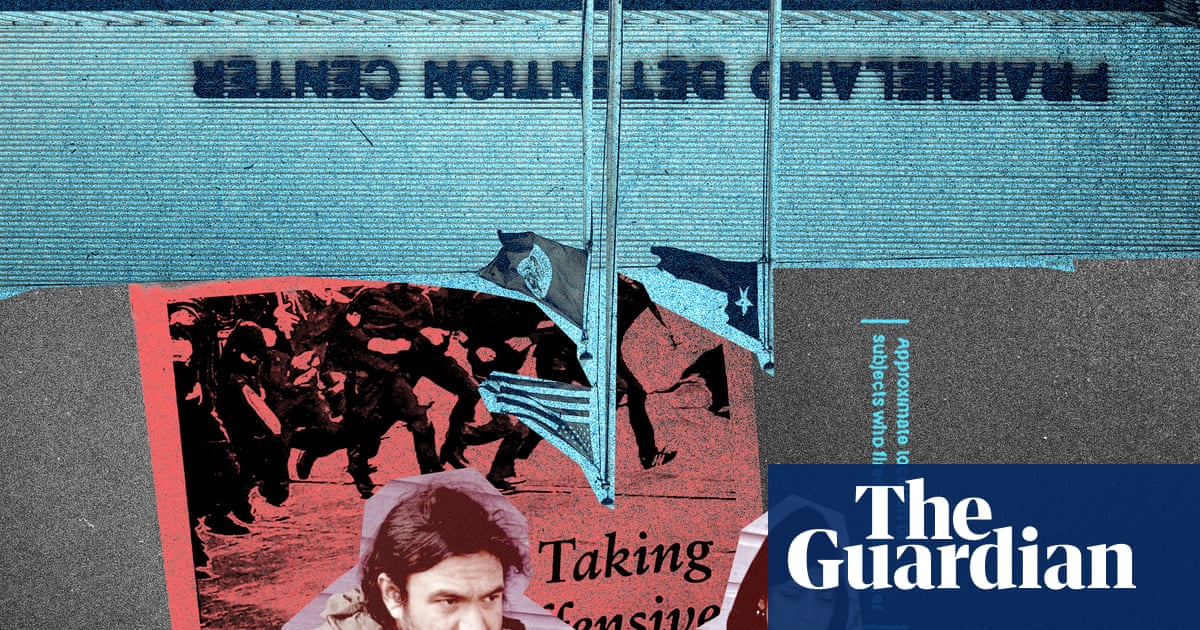
Teamwork
Anti-trans panic at FCC. Over at the Free Press blog, Policy Counsel Shilpa Jindia writes about how FCC Chairman Brendan Carr is “exploiting his perch” to silence LGBTQ+ voices by calling for warning labels on children’s programming that features trans or nonbinary characters. Free Press has condemned Carr’s actions and questioned their legality in filings with the agency in May and June.
The FCC is proposing changes that it has no authority to make. The agency’s actions are just about fabricating moral panic and performing for President Trump. “Even without any concrete evidence of actual and significant parental concern, the dark subtext of the FCC’s notice is clear: Brendan Carr believes that themes of gender identity are violent, sexual or indecent — and merit regulation,” Jindia writes. “Nothing could be further from the truth.”
 Shilpa Jindia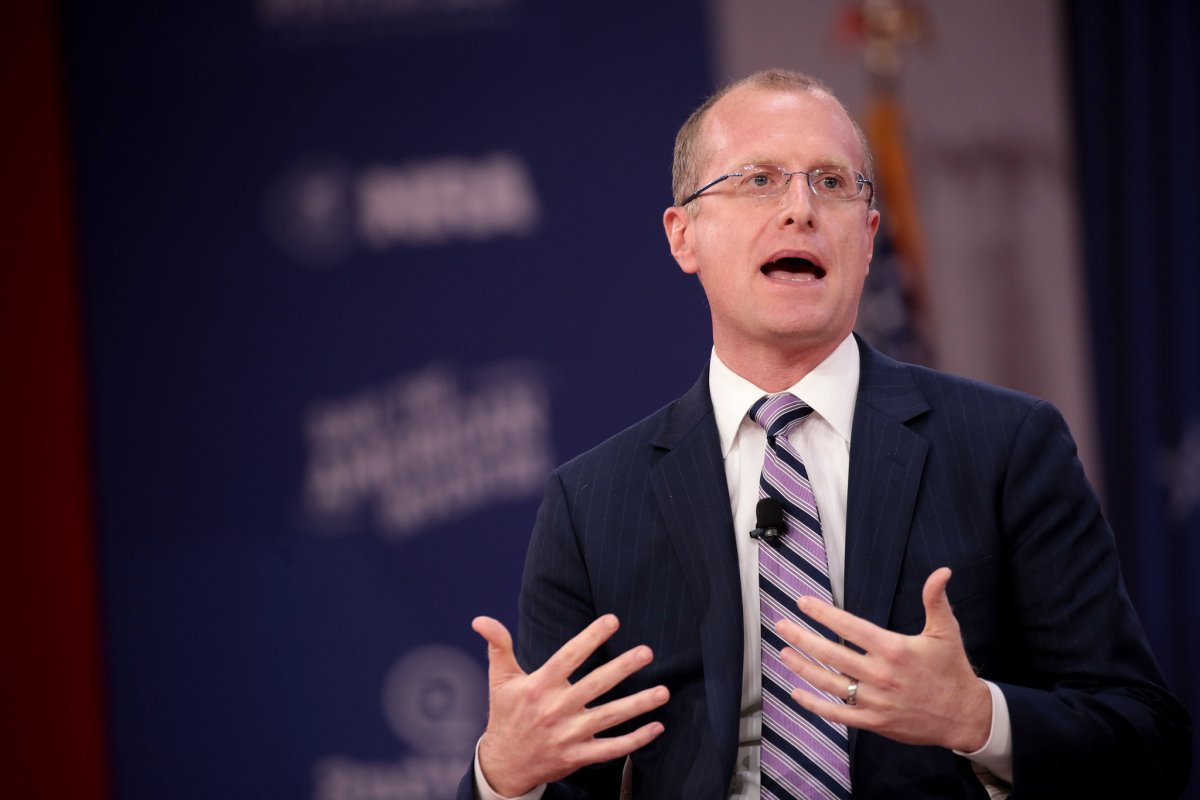
The kicker
“When I see histories being unwritten or erased from school curriculum; when I see words like intersectionality or critical race theory being distorted, gentrified and villainized; when I see efforts to create a template that suggests that telling the truth about our history is being un-American or anti-patriotic, it tells me power is trying to control access and means to literacy.” —Kimberlé Williams Crenshaw
Pressing Issues will be back with a new edition on July 14.