Sarah J. Jackson and Black Mediamakers’ Second Sight
Why we need to keep uplifting Black voices

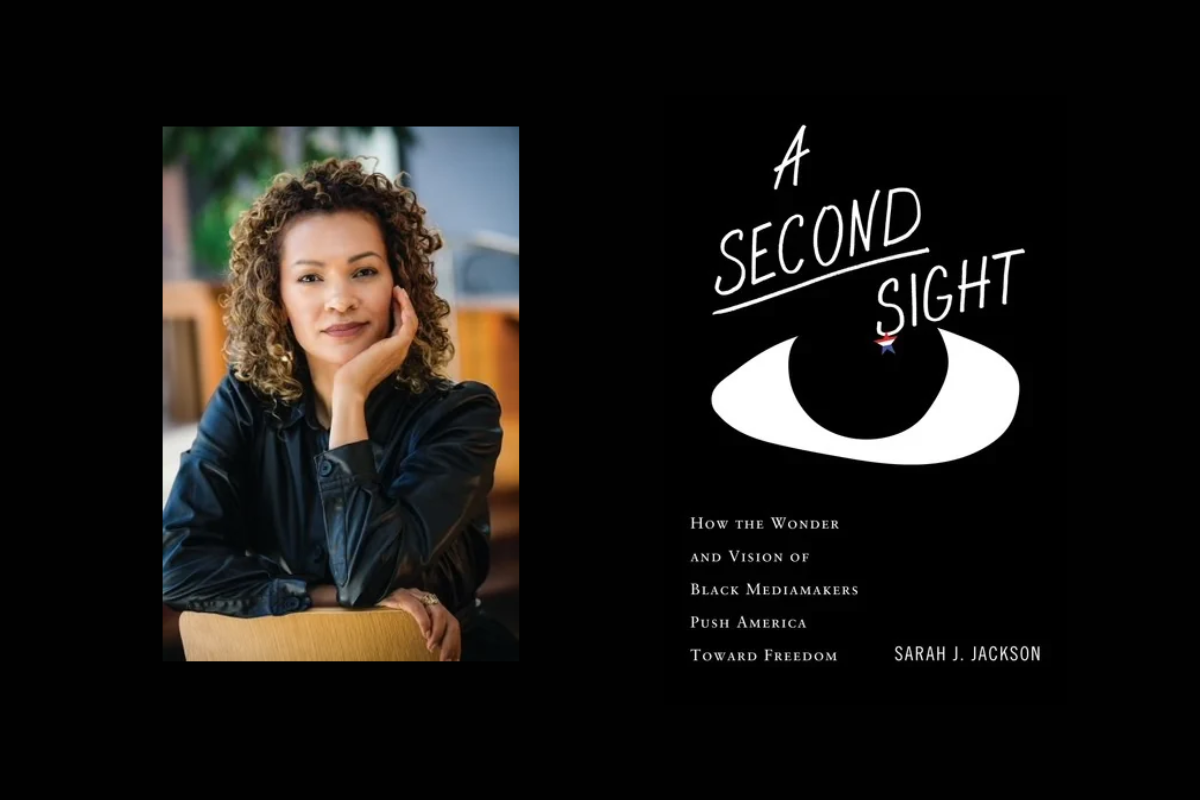
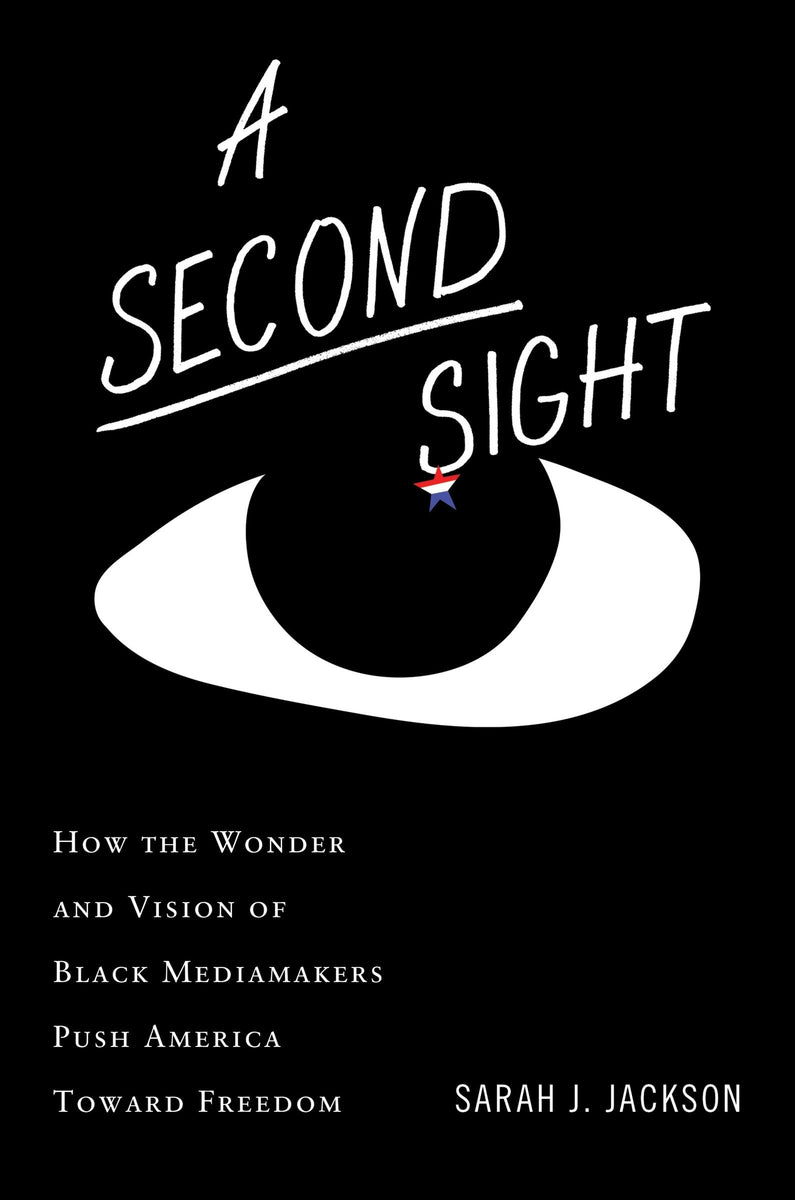
These are very precedented times. That’s what Sarah J. Jackson, media scholar and author of A Second Sight: How the Wonder and Vision of Black Mediamakers Push America Toward Freedom, reminded Pressing Issues in a recent interview. We were talking about how the Trump regime’s crackdown on free speech uses the white supremacists’ playbook — an oppressive set of tactics that dates back to this nation’s founding.
In A Second Sight, Jackson chronicles how Black mediamakers have kept truth-telling, using their unique positions both within and without U.S. society to urge our country to do better. Her scope is broad — she looks at all types of media, from Ida B. Wells’ 19th-century newspaper to Ryan Coogler’s Sinners. And features original research: Jackson interviewed around 50 Black mediamakers — ranging from comedian and actor Wyatt Cenac to 1619 Project creator Nikole Hannah-Jones — and drew on a wide range of scholarship to craft the book.
 Mariner Books
An associate professor at the Annenberg School for Communication and co-director of the Media, Inequality, & Change Center at the University of Pennsylvania, Jackson is also the author of Black Celebrity, Racial Politics, and the Press and #HashtagActivism: Networks of Race and Gender Justice.
This conversation has been edited for length and clarity.
Cristina Escobar: Could you explain what “second sight” means? Why is it particularly important to understand today?
Sarah J. Jackson: The concept comes from the esteemed intellectual mediamaker, sociologist and activist W. E. B. Du Bois. People are more familiar with the concept of “double consciousness,” which Du Bois uses to explain the way that Black Americans have this very disconcerting experience as a result of white supremacy, of constantly being outsiders within. When Du Bois introduces double consciousness, he says that one of the consequences is the profound gift of “second sight.”
It’ll sound very familiar to those who have studied Black feminist scholarship, because folks like bell hooks and Patricia Collins described it as this particular standpoint where — when you’re on the outside looking in — you have a clear view of the center. You can see that what’s at the center is myth and lies and obfuscation, and you can see the picture more broadly, as compared to those swimming in the white-supremacist soup.
This concept of second sight helped theorize and explain a larger intergenerational and collective framework that you see across different kinds of media and mediamakers. In my book, I trace how Black mediamakers are thinking about the United States. I argue that before the country’s founding and before the first Black newspaper, Black people — people of African descent in the United States — were already using this gift to expand how democracy could be imagined, to expand how values like liberty, justice, freedom and safety could be both more radical and more inclusive.
Joseph Torres: How would you describe the current state of Black mediamakers? What troubles you and what is inspiring you?
SJJ: If you understand the backlash to Reconstruction, you understand the backlash you’re living in now. If you study American history, there are moments of progress and then regression. These disruptions to the social order make people ask, “Why do we think about it this way? Why do we do politics this way?” In these moments, the second sight of Black mediamakers is called upon to help the nation explain what it’s been missing and what it should be doing differently.
After George Floyd was murdered in 2020, I talked to many Black journalists who worked at flagship newspapers and mainstream magazines, and they shared that their white colleagues were shocked by the video — which made these journalists mad. They were angry because generations of Black journalists had been trying to tell their colleagues that the way we covered police in the United States was justifying and legitimating this kind of violence. But their colleagues wouldn’t let us tell those stories, and even when they did, they stopped listening too quickly.
If the critiques of law and order in this country had been heard when Ida B. Wells made them or when the Black press covered the Scottsboro Boys case, many of the Black mediamakers I talked to said that Michael Brown wouldn’t be dead, Trayvon Martin wouldn’t be dead, George Floyd wouldn’t be dead. Breonna Taylor wouldn’t be dead. They felt this deep betrayal because these industries had welcomed them as Black mediamakers, but had not listened to their critiques or second sight, and had not made structural changes to address how the public was understanding and being informed about these issues.
CE: We are in this time where the government is cracking down on high-profile, white mediamakers like Jimmy Kimmel and media companies like ABC. We see a lot of this ‘unprecedented’ word thrown around, and it feels a little disingenuous when we look back at the history of our country and see the violence against Black mediamakers. How can we address that failure to see and learn from the past to build a better media system going forward?
SJJ: In many cases, Black mediamakers are the canaries in the coal mine on questions of the First Amendment, political affiliation, religious affiliation and other things that are supposedly core values.
I kind of chuckled when you said we keep hearing this word “unprecedented.” We’re living in very precedented times — not unprecedented. To give just one example — during World War II, many Black newspapers were saying, “We support fighting fascism abroad, and even though you don’t treat us as equal citizens, we’re going to sign up to fight Nazis with you because Nazis are bad. But can we please fight fascism at home? Because this whole lynching thing, this whole Jim Crow thing, this is also fascism.”
They famously had the “Double V” campaign — victory at home and victory abroad. Eight different government agencies worked to censor and limit the circulation of Black newspapers during World War II, doing everything from stopping the delivery of ink so that they couldn’t print to the post office holding issues of newspapers to surveilling and harassing Black publishers.
In more recent examples, I write about Karen Attiah. Right after Jeff Bezos bought The Washington Post and changed its editorial direction, there was this bleeding of talent. It left Karen Attiah as the only Black person on the editorial desk, and she was fired for social-media posts after Charlie Kirk was assassinated. She recently won that case, but I thought it was remarkable that only after that happened, Trump started targeting Jimmy Kimmel and Stephen Colbert, and threatening to take FCC licenses.
I thought, “Oh, so this Black woman journalist gets fired for essentially posting a quote Charlie Kirk said, and it wasn’t constantly in the 24-hour news cycle, but it was the warning.” (Editor’s note: Earlier this week, Attiah said she wouldn’t return to the Post, noting that the outlet would deny “guaranteed freedom and institutional support.”)
In these instances, you see a pattern of censorship — sometimes it’s formal institutional censorship. Sometimes it’s editorial censorship or censorship through harassment and threats. You see this pattern as something that often happens to Black mediamakers first, but it always comes for everyone else.
If we want a free democracy where everybody has the information they need to make informed decisions about the policies and leadership they support, we need freedom of the press. We also need freedom of speech. And we can take many lessons from the ways that Black mediamakers face down these threats. They are often the first victims, but nevertheless they persist.
JT: Communities of color don’t own and control much of the media infrastructure, and yet, despite this lack of power, Black voices are still able to shape meaning in society. That meaning is always being contested. It’s not fixed. Does that give you hope? And how does this importance of storytelling and meaning-making translate into potential outcomes in our daily lives?
SJJ: Helping people imagine the world differently helps bring those differences into real political materiality. Imagination and stories are a huge part of it, but so are structures. In the book, I draw on a sociologist named Ronald Jacobs, who talks about infrastructural stratification and participatory inequality, and the fact that even today there is stratification of economic resources, of leadership and editorial oversight.
We would be fast-tracking toward the kind of second-sight political analysis and integration in our media system if there was a fair and equitable starting place for communities to tell their own stories, make their own critiques and for their narrative interventions — whether it’s speculative fiction or data journalism — to be integrated into the mainstream.
We should fix the systems so that we can hear more of these incredible stories, and hear the voices of all kinds of Americans. The missing voices are not just filled with incredible critique and analysis that, if we listen, could make us better. These voices are also filled with incredible imagination, beautiful stories and remarkable culture that we all are deprived of if they don’t get an airing in our media ecosystem. Those things help make us better too.
About the authors
Cristina Escobar is the senior director of marketing and communications at Free Press. She’s also a cultural critic and the co-founder and editor-in-chief of Latina Media Co, an indie outlet platforming Latina and queer Latinx perspectives. A true millennial, all of her medical knowledge comes from (re)watching Grey’s Anatomy. You can follow her on Instagram @cescobarandrade.
Joseph Torres is Free Press’ senior advisor of reparative policy and programs. He advises the co-CEOs and other key Free Press staff in setting and evaluating the organization’s policy positions and priorities. Joseph is also a co-founder of the Media 2070 project and is a visiting scholar at the Media, Inequality & Change Center at the University of Pennsylvania’s Annenberg School for Communication.
Open tabs
Compiled by Pressing Issues editors
A moment of DEI progress. Earlier this week, Nicol Turner Lee concluded in a Brookings piece that the midterm results were also a victory for diversity, equity and inclusion (DEI) initiatives.
“Given the new composition of leadership at the federal and state levels, it is very unlikely that Trump’s anti-DEI policies will resurge, or at least in the same way they did earlier in his presidency,” Turner Lee wrote. “In fact, a Democratic-controlled Congress may attempt to overturn the discriminatory and invasive policies that were predicated on anti-DEI efforts.”
 +13 more
The kicker
“We need to create an information environment that looks more like democracy. Right now, our information environment looks like a fiefdom.” — Sarah J. Jackson