The U.S. Immigration Regime Is ‘Racist by Design’
A conversation with historian Dr. Kelly Lytle Hernández about the historic whites-only system driving the U.S. immigration machine

Among other issues, Free Press’ multi-state Solidarity Over Surveillance (#SOS) campaign is fighting to stop data brokers from extracting and selling our most sensitive information to law enforcement and ICE. A combination of surveillance tech and data piracy allows police and ICE to spy on protesters and terrorize Latino communities with threats of detention and deportation.

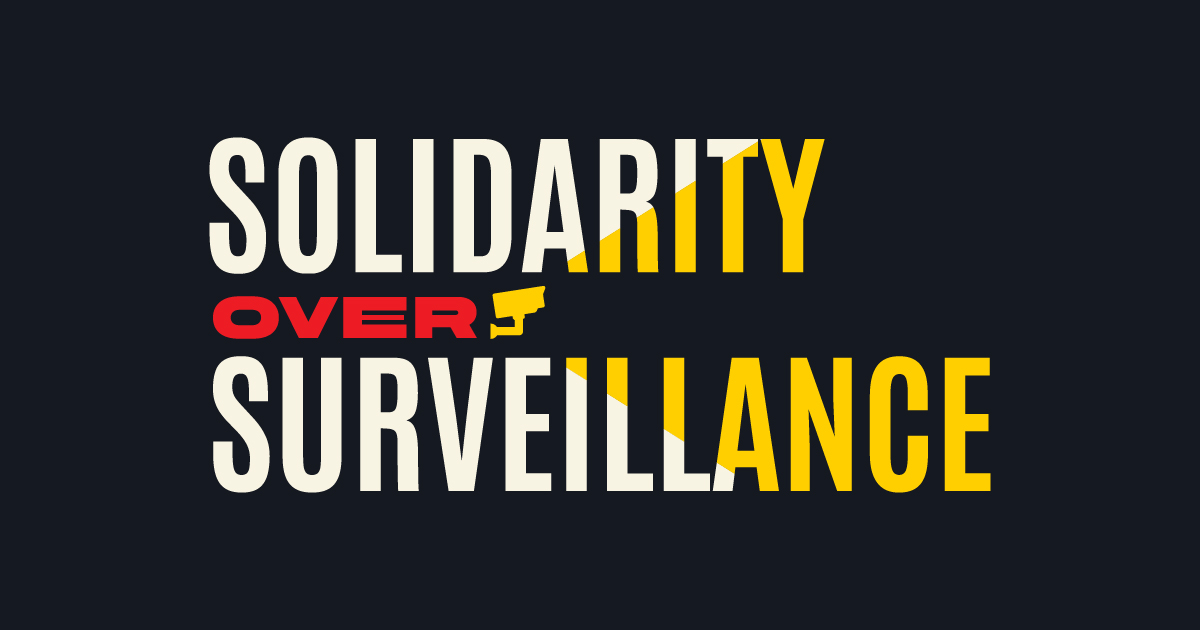
This government targeting of non-white immigrants is neither accidental nor new. It is grounded in years of U.S. history, a topic UCLA Professor Kelly L. Hernández explores in her timely book, Racist by Design: Two Centuries of U.S. Immigration Control.
I recently spoke with Hernández to connect that history to today’s reality. She is the Thomas E. Lifka Endowed Chair of History at UCLA and works primarily on issues of race, immigration, and the carceral state writ large. Her previous works include Migra!: A History of the U.S. Border Patrol, City of Inmates: Conquest, Rebellion, and the Rise of Human Caging in Los Angeles, 1771–1965, and Bad Mexicans: Race, Empire and Revolution in the Borderlands.
In Racist by Design, Hernández describes the U.S. immigration system as a complex machine with many different levers and components, tracing its origins to shortly after the American Revolution and during the Haitian Revolution, when the U.S. passed the nation’s first racially targeted migration bans.
“These anti-Black migration bans, which are designed to protect the institution of chattel slavery in the United States, are actually the inciting event of U.S. immigration control,” Hernández told me.
Her book is for anyone interested in and concerned about immigration issues. Racist by Design provides the context that you’ll rarely see in the mainstream media, though it is essential to understanding the immigration system and the media’s role in perpetuating it.
“It will help readers understand how we got here, why it’s happening, and give us some ideas about how to stop it,” she said.
This conversation has been edited for length and clarity.
Ruth Livier: Why is this fuller origin story important?
Kelly Hernández: We’ve been told a story that racist immigration laws began with Chinese exclusion during the 1880s and 1890s, and that’s not untrue. It’s just incomplete. The first race-based migration laws that were passed or adopted in the United States were adopted by states and territories in 1803, and they targeted free Black migrants.
At the beginning of the U.S. republic, the principal issue was the fear that free Black migrants’ arrival into the U.S. South or into any slave state or territory would incite or inspire mass revolt among the enslaved.
This becomes an absolute panic and terror after the outbreak of the Haitian Revolution in 1791. Thomas Jefferson, President Washington, and many others were determined to do whatever they could to stop this revolt and to stop free black people from coming to the United States and bringing the Haitian Revolution with them.
I chronicle the history of race and immigration controls beginning in that moment, because what I’m trying to really hammer home with this origin story is that this is about power, labor control, counterinsurgency and all that’s happening at both the domestic and the global levels.
RL: Then came the era of the Chinese Exclusion Act in the 1880s. How did it shape the immigration system that we see today?
KH: It is in this era that immigration control is federalized. In the early republic, prior to the Civil War, it was the states that controlled immigration matters. That is because slaveholders, who held outsized power in Congress, were determined to retain authority over migration matters.
They didn’t want abolitionists to pass laws regulating who could be imported into the United States, or who could be moved across state lines, or watering down the fugitive-slave laws. If slaveholders retained this power, then they could better protect chattel slavery. That’s why immigration control was localized in the early period of U.S. history.
After the Civil War, with the ratification of the 14th Amendment, changes started to happen. The 14th Amendment does many things. In addition to enshrining birthright citizenship, it also prohibits states from violating the due process or equal protection of any person in the United States.
Chinese immigrants began to use it to fight anti-Chinese laws in California, using the Equal Protection clause in particular, saying, you can’t target us for discrimination.
But there’s a person who sat on the U.S. Supreme Court then, Stephen J. Field, whom I would describe as a white nationalist. He disliked Chinese immigrants and believed the United States to be a white-settler republic for Caucasians only. But Chinese immigrants could no longer be targeted for exclusion at the state level because of the 14th Amendment.
And so Field’s very crafty. He hears a case of about 22 Chinese women in California. And he says, You know what? You’re right. The 14th Amendment says that you cannot be discriminated against because the state — the state in particular — cannot violate your equal protection rights. However, the 14th Amendment’s equal protection clause does not apply to the federal government. So he takes that case and ushers it up to the Supreme Court, where it issues a ruling known as Chy Lung v. Freeman of 1875, which federalizes immigration control.
The whole point was to create or find a domain in which anti-Chinese immigration laws could continue outside of the bounds of the 14th Amendment. In fact, the federalization of U.S. immigration control is a scheme to skirt equal protection. And there’s a set of cases that follow that not only help immigration control skirt the 14th Amendment but also unhinge it for the Constitution in general.
RL: So, white nationalists have played key roles in shaping the U.S. immigration regime?
KH: Yes. However, white nationalists are not the only brand of white supremacists. There are also what I call in the book racial capitalists, people who say, yeah, we agree that this is a white man’s country, but we need another group of people, non-white folks, migrant folks, to come in and do work for us.
The American South during the Jim Crow period, for example. They didn’t want Black folks to leave. They wanted them doing the hard work as a subordinated group. So these racial capitalists are always angling for immigration policies that allow them to retain access to non-white workers, while prohibiting them from getting a path to legal permanent residency or citizenship or full incorporation into the body politics. They are all about guest-worker programs, which take advantage of the criminalization of undocumented border crossings. Because once you have a population that’s not only subject to deportation, but can be imprisoned and fined prior to their removal, that amplifies the threat these workers are facing. This strengthens the power in the hands of these employers — these racial capitalists — who were all engaged in immigration policy.
By the end of the 1920s, white nationalists and racial capitalists had come together to stitch together a whites-only immigration system.
RL: What do you mean by a “whites-only” immigration system?
KH: I use a whites-only system as a conceptual device. Think about Jim Crow America. Whites-only signs rarely kept all Black folks totally out of an area or a building. It just regulated the conditions under which we could enter: Under second-class status, under subordinated status. When I talk about the whites-only immigration system, I’m talking about a system being stitched together that, for the white nationalists, is trying to keep as many non-white immigrants out of the country, and, for the racial capitalists, is trying to regulate non-white immigration into and out of the country.
RL: What mechanisms did they use to shape this whites-only machine?
KH: It’s never just been explicit. This machine has had all kinds of mechanisms to manage that entry and enforce whether or not people leave.
By the end of the 1920s, almost all Asian immigration was prohibited. The vast majority of Black migrants were ineligible to enter the United States. A large number of Mexican immigrants were criminalized in terms of how they entered the country. And, at the same time, there were also all kinds of pathways for European immigrants to legalize their status. There’s a lot of grace for white-European and Canadian immigrants. There’s a lot of punishment, exclusion and ineligibility for non-white migrants.
RL: The Border Patrol was created around this time. Why was it added to the machine?
KH: It was established just a couple of days after the adoption of the 1924 Immigration Act. Their job basically is to enforce these new immigration laws to enforce the whites-only immigration system, principally by patrolling the nation's land borders at that time.
The Border Patrol pretty quickly shifts from comprehensive immigration law enforcement in the borderlands to targeting Mexican immigrants in particular. They developed racial profiling practices and tracking priorities about who gets targeted and who is policed. I spend a lot of time in the book talking about how that happened.
RL: Who benefits from the criminalization and state of terror when it comes to the threat of deportation or deportability?
KH: Employers, in particular, large employers, benefit. Most of us do not. Deportability can frighten people away from joining a labor union, demanding a higher wage or seeking a job with better working conditions. None of us does better when those conditions are present for anyone. We all have skin in the game to end the system of deportability that the immigration regime creates.
RL: Why is multiracial solidarity critical to pushing back against this immigration regime?
KH: The answer to white supremacy is multiracial democracy. Multiracial solidarity campaigns have mucked up the gears in the past. Over centuries, immigrants and their advocates had been winning cases. We won measures of due process for migrants facing exclusion and removal. Things were improving. So in part, what we’re seeing right now is a blowback against some of the wins.
My work provides examples from the past to make clear the fundamental importance of multiracial solidarities in challenging these systems and regimes, and that requires action on all sides in the immigrant rights movement. If we can carry it all together, I do believe that we can dismantle white supremacy.
About the author
Ruth Livier, Ph.D., is a campaign manager at Free Press. Ruth has more than 20 years’ experience in the entertainment industry, which drives her commitment to fight for media equity. Follow Ruth on Bluesky.
Teamwork
Compiled by Pressing Issues editors
Local hero. The team at Front Runner New Jersey featured Pressing Issues contributor and Free Press Senior Director Vanessa Maria Graber for Hispanic Heritage Month. As the profile notes, “She stands as one of the region’s most influential bilingual Latina journalists and media educators — a leader whose work spans policy, community organizing, and civic journalism. Her journey reflects the very values she champions: representation, accountability, and the belief that journalism is a public good.”
 AC Joseph Media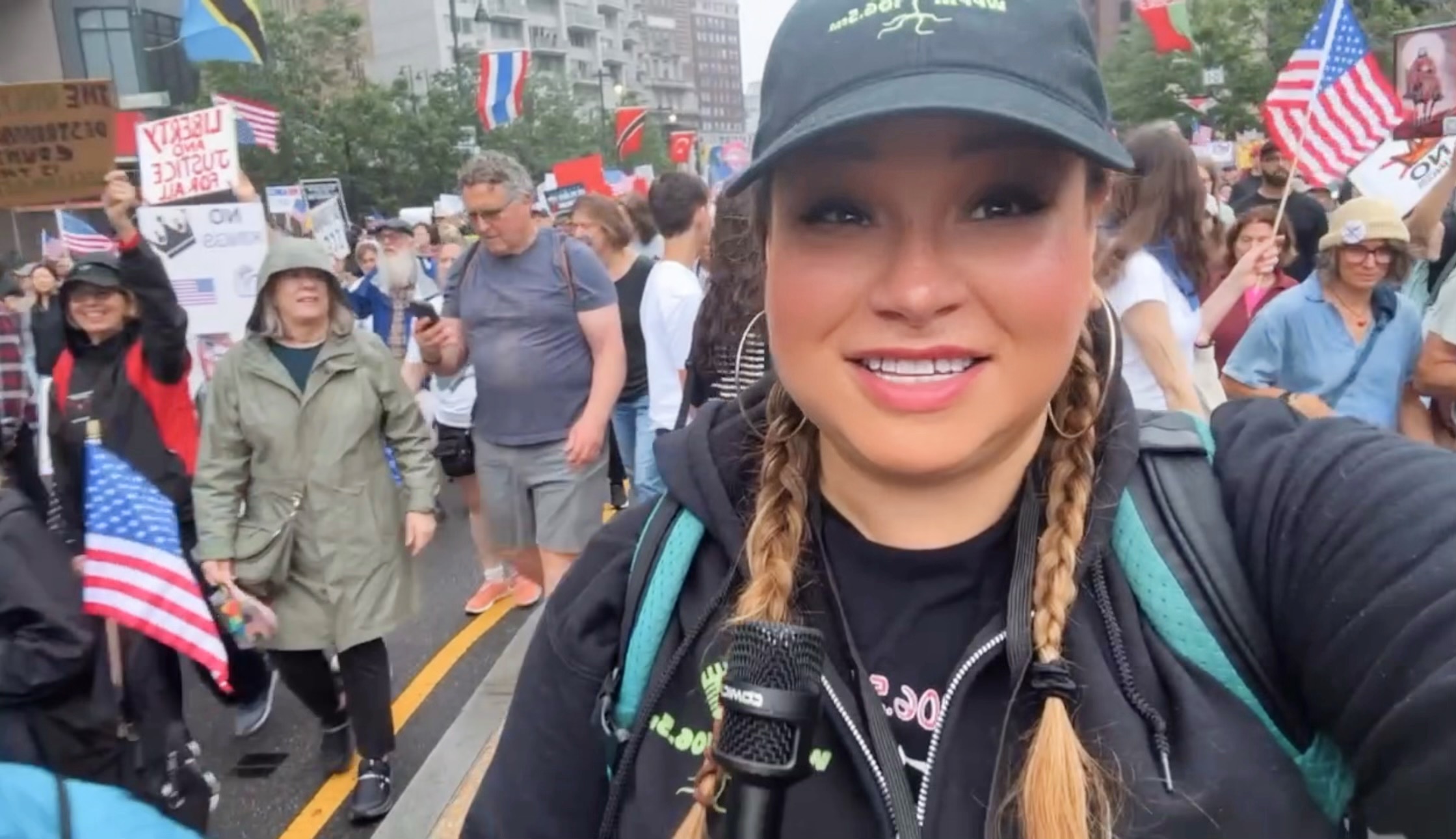
In syndication. The Atlanta Journal-Constitution republished Nora Benavidez’s Pressing Issues piece about Donald Trump’s White House press ban. Thank you to the opinion section of AJC.com for syndicating our work. The link below is a gift link for Pressing Issues readers to access.
 Nora Benavidez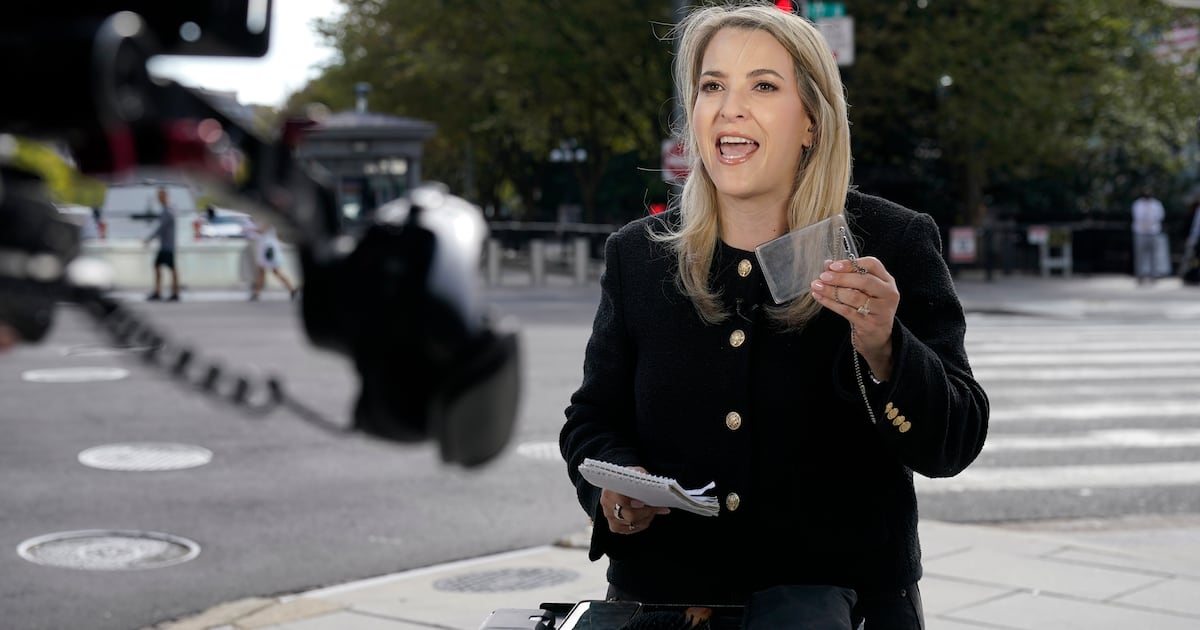
The kicker
“It’s really important for us to acknowledge that a long time ago, these white nationalists and racial capitalists explicitly created a whites-only immigration system, and to date, we’ve amended it, but we’ve never abolished it. And we have a lot of work to do to go back and root out the white supremacy that’s laced into so many different components of the machine.”—Dr. Kelly Lytle Hernández