What the Flock? Exposing Big Tech’s Surveillance State
As spying becomes big business, more people are mobilizing to resist mass surveillance

For many, Labor Day signifies a time of transition, the end of summer and the return to business as usual, whether it be school or work. But the holiday weekend was born out of a more radical past, and at a place charged with a history of protest and free expression.
On Sept. 5, 1882, more than 10,000 workers sacrificed a day’s pay to march on Union Square and demand an eight-hour workday and an end to child labor. The success of their protest paved the way for Labor Day to become a federal holiday in 1894.
Initially a fenced-in enclave for New York’s wealthiest, architects Frederick Law Olmsted and Calvert Vaux redesigned Union Square in 1872 as an open plaza for public assembly and patriotic demonstration.
By the beginning of the 20th century, Union Square became the epicenter of radical American politics, a setting for protests by anarchists and socialists. Noted activist Emma Goldman frequently used the public plaza to challenge government censorship and advocate for women’s reproductive rights and free speech.
Fenced in by surveillance technology
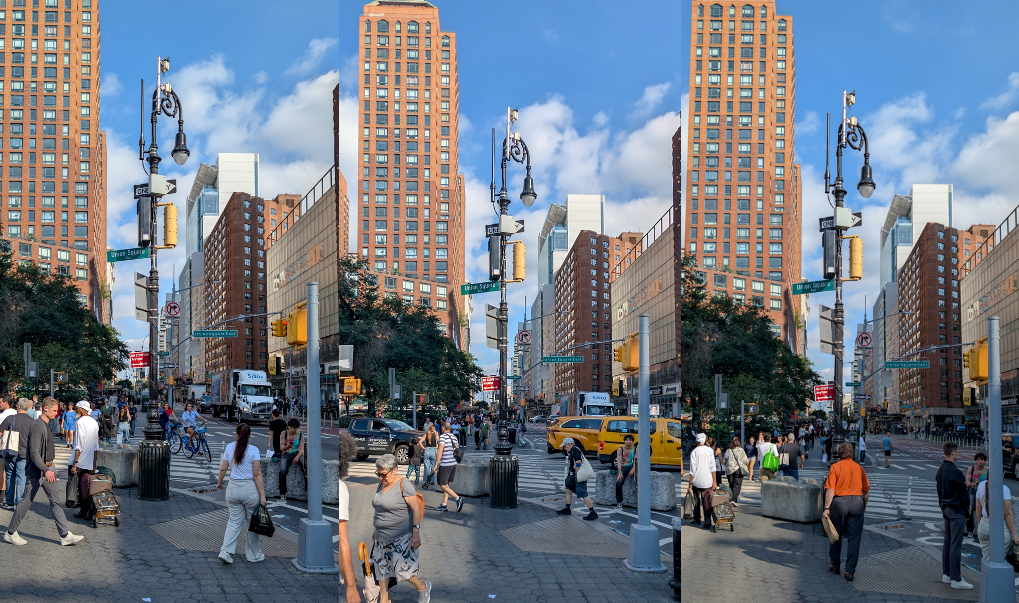
Today, however, Union Square has been fenced in by a barricade of a different sort. Ringing the plaza is a spiky array of cameras, installed on streetlights by a New York Police Department seeking to surveil New Yorkers and anyone else who happens by the square.
The cameras include automatic license-plate recognition technology, which captures data on every car that passes the square down Broadway or across busy 14th Street.
Such setups are so ubiquitous to cities and major intersections that they’re easy to dismiss as normal features of a busy streetscape. But that’s changing.
The company that produces many of these surveillance cameras — Flock Group Inc. — has become a focus of concern among activists, advocates and people of every political stripe who don’t want law enforcement documenting and archiving their every activity.
Spying on the haystack
But Flock is not alone. Surveilling everyday Americans is now a multibillion-dollar business that’s growing fast.
Flock has struck license-plate reading camera contracts with 7,000 law-enforcement agencies, accounting for 40 percent of all such departments nationwide. There are more than 130,000 of these cameras deployed across 49 states, likely at a busy intersection or gathering point near you.
Whether you’re driving to the grocery store for a quart of milk or attending a local No Kings protest, odds are that law enforcement has recorded, processed and archived your activities for future reference.
The philosophy behind such mass surveillance is that authorities need to capture data on everyone’s movements to identify those few who step out of line. It’s as though you need to know the habits of every blade of grass in the haystack to cull out the one wayward needle.
If that’s not disturbing enough, there have also been extensive reports of abuse, including local police officers deploying department surveillance technology to stalk romantic interests — including strangers — while innocent people have been thrown in jail based on a misread license plate or an inaccurate biometric scan.
 Lauren Yu and Nathan Freed Wessler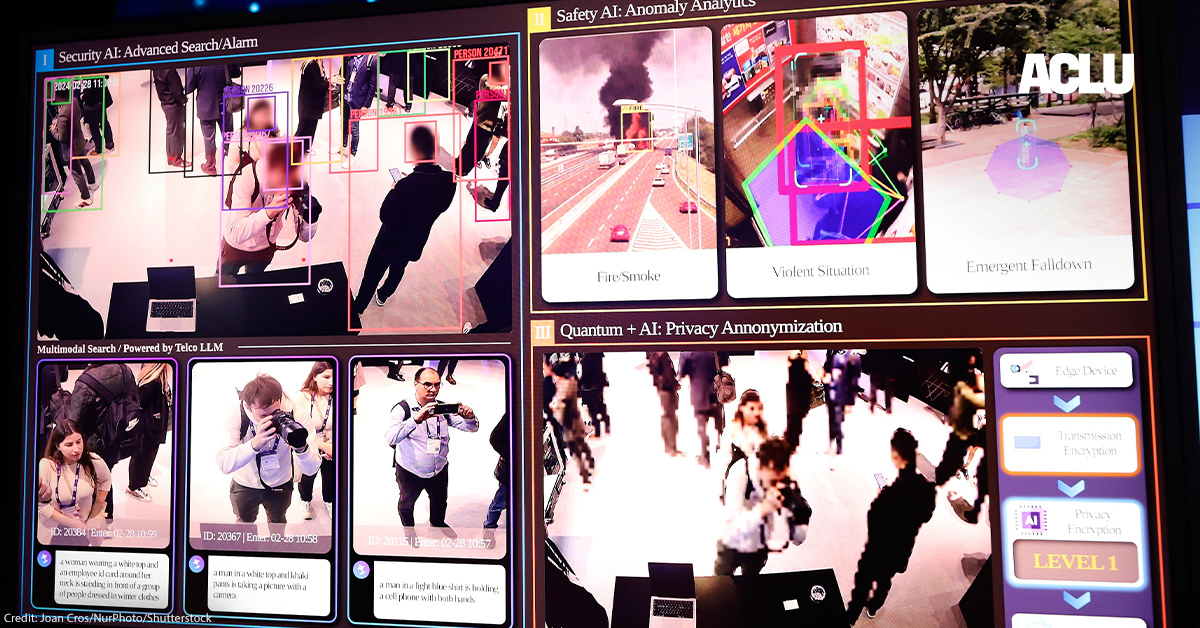
“The constant and ongoing surveillance of people in public places raises serious First and Fourth Amendment concerns,” says Jenna Ruddock, Free Press’ advocacy director. “Even decisions about where to install these cameras map onto well-established practices of racist policing, aside from the fact that facial-detection technology has an alarming track record when attempting to identify people of color.”
Mass surveillance is big business
Still, more major tech companies are getting in on the expanding surveillance business. Powerful artificial-intelligence companies are marketing AI-enabled video analytics with facial-recognition capacities for real-time threat detection (think Minority Report).
And while Meta doesn’t directly market its Ray-Ban smart glasses to law enforcement, local police departments and immigration agencies have been buying them in bulk via Amazon.
For its part, Amazon is chasing multimillion-dollar contracts to provide law enforcement with cloud infrastructure for data storage, analytics and biometric systems, including more than $250 million from the Department of Homeland Security to host many of the databases and systems used to track, monitor and deport immigrants.
 Timothy Karr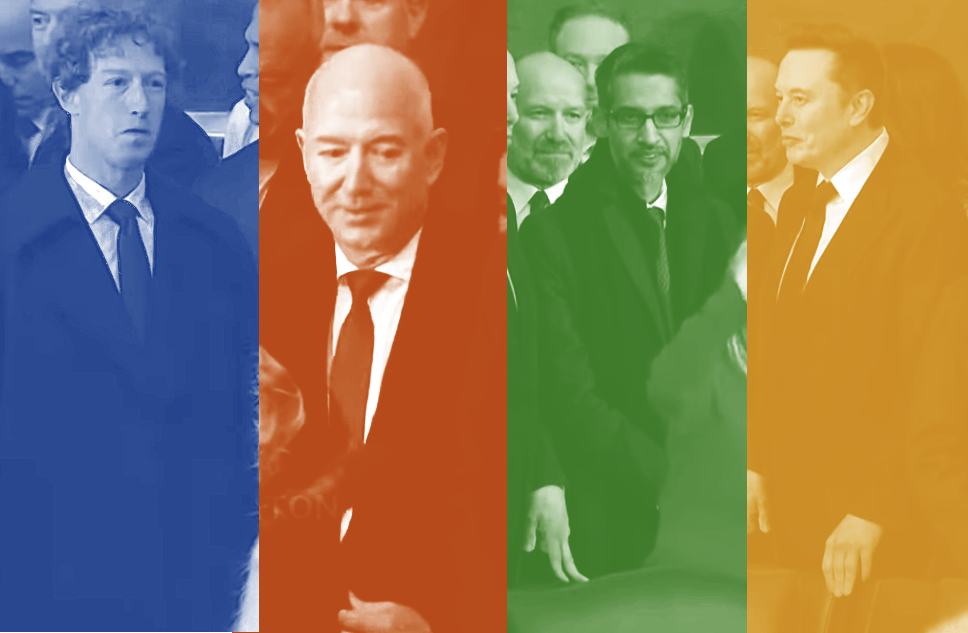
Though he once promised that he wouldn’t allow anyone to use company technology to harm people, Google CEO Sundar Pichai is now seeking to profit from mass surveillance. The company is already doing business with ICE while vying with Amazon and other tech giants for government cloud-computing contracts. Google is also under contract to provide the tech at the center of federal projects to upgrade the “virtual wall” that surveils U.S. borders.
Lost to the surveillance state
As more cameras sprout up in more locations, the movement to oppose such government spying is spreading. Dozens of cities across the country have cut ties with Flock over their residents’ data-privacy concerns. People have flocked to public hearings and city-council meetings to pressure local elected officials to turn the cameras off. Some have taken matters into their own hands, covering nearby Flock and other surveillance cameras with trash bags — or even cutting down camera-attached light poles with electric saws.
DeFlock, an anti-surveillance activist group, has been mapping locations of Flock and other cameras nationwide. (This author used this tool to identify the many non-Flock surveillance cameras surrounding Union Square).

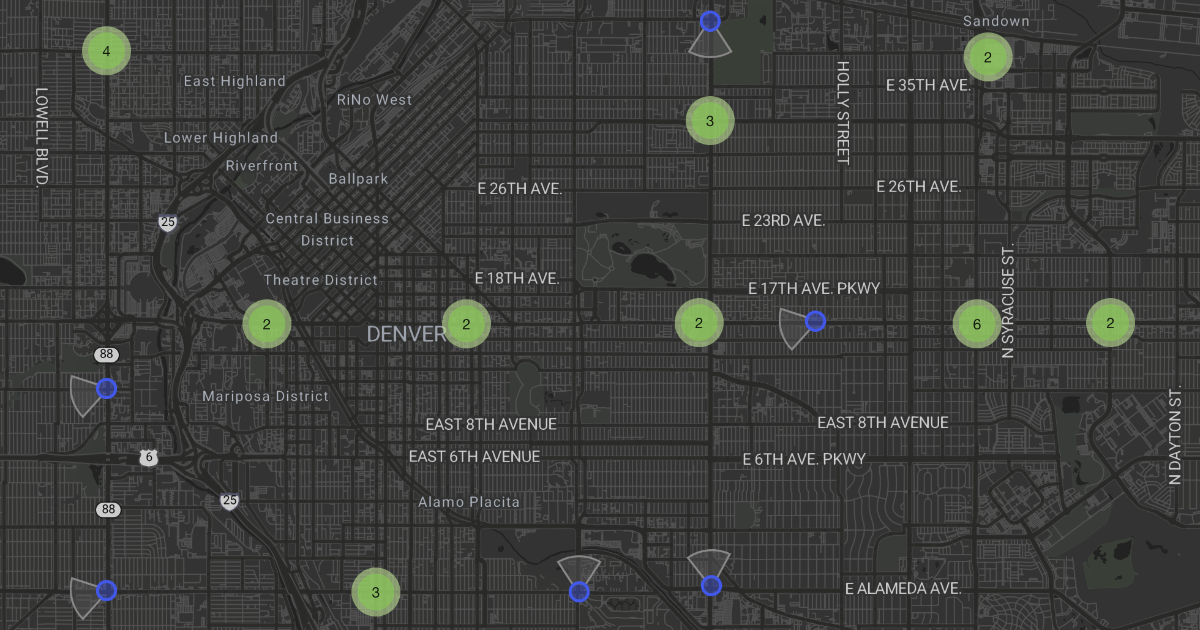
Aug. 16 marked day one of the DeFlock National Week of Action, which will feature a series of protests, town halls and informational events to oppose automated license-plate readers and other mass surveillance technology.

The pushback against local surveillance cameras is occurring alongside the fast-spreading movement to stop the unchecked construction of data centers. There’s a common culprit in both popular uprisings: The unholy alliances struck between Big Tech and government. Others are rightfully suspicious of the billionaire class pushing the rapid, reckless development of advanced AI and surveillance tools without first seeking the consent of surrounding communities.
In Union Square on a recent Monday, I asked local busker Lawrence Kidwell whether he knew what all of the nearby police cameras were about. “The NYPD just wants to listen to my music,” he said.
Perhaps. But the cameras are also in place to discourage other forms of expression and muzzle voices of dissent. Something that Union Square has long welcomed may become lost to the new deprivations of the surveillance state.
Teamwork
Dumping data centers. Free Press summer fellow Angela Chen covers the growing and nonpartisan movement against data centers, writing that people engagement in community protests “helps keep democratic participation alive, which we need to counter widespread disillusionment in our systems and institutions.”
 Angela Chen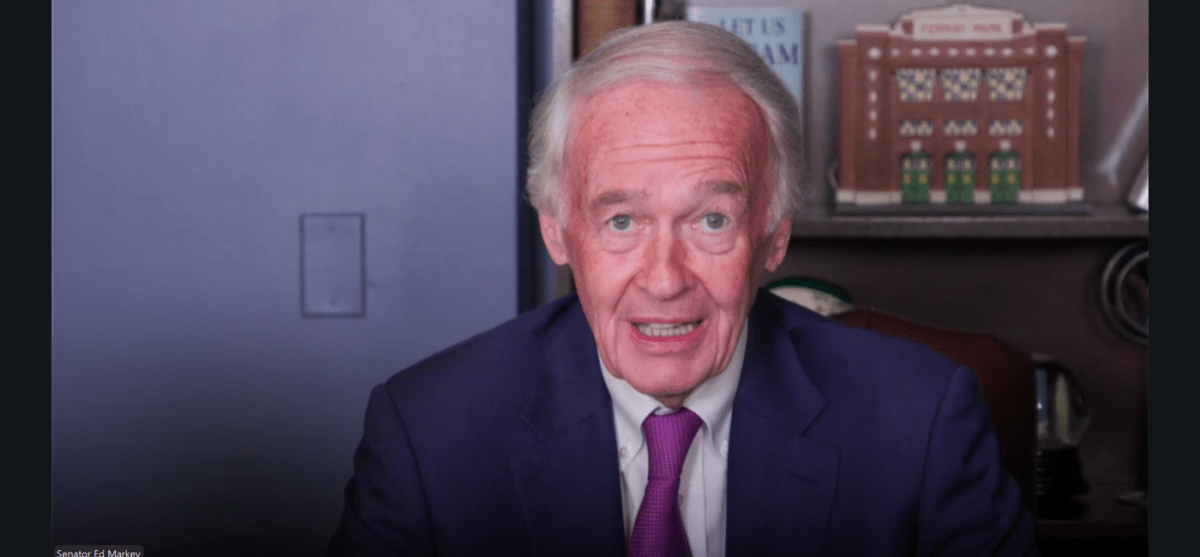
Uplifting local news. Free Press’ Arin Anderson writes about the community harms resulting from the disappearance of local news across Wisconsin, and describes her work with state residents to craft policy solutions to help invigorate local journalism.
 Arin Anderson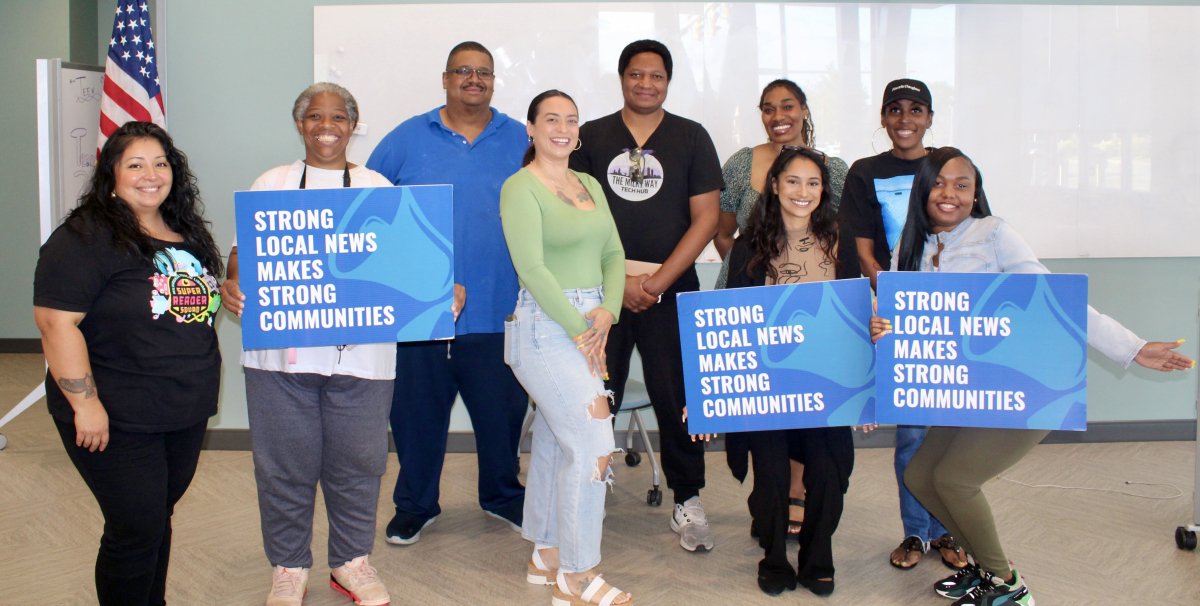
The kicker
“The pressure exerted by the Administration’s mounting campaign of retaliation against ABC has been deeply felt throughout the company. The campaign is also calculated to operate in terrorem upon the rest of the industry: ABC is the visible target and suffers the most immediate harm, but the message is addressed to every broadcaster in the country, and the ultimate cost is borne by the press as a whole.”—ABC’s lawsuit filed in federal court Tuesday against the Trump FCC’s censorial campaign against the television network.
About the author
Timothy Karr is the senior director of strategy and communications at Free Press. He’s worked as a photojournalist, foreign correspondent and editor for major news outlets. His commentary on the media has appeared in dozens of magazines and newspapers worldwide. Follow him on Bluesky.