Workers and the Public Will Pay for David Ellison’s ‘Shiny New Toy’
A Pressing Issues conversation with Free Press’ S. Derek Turner about what comes next after the Paramount-WBD mega-merger

On Tuesday, Paramount Skydance closed its $111 billion takeover of Warner Bros. Discovery. The combined company, now called Skydance, gives Trump-friendly billionaire David Ellison control of media properties including CBS, CNN, HBO Max, Paramount+ and two of Hollywood’s largest movie studios. The company also starts out with around $79 billion in debt.
Free Press spent much of 2026 fighting to block this merger. The deal went through after a coalition of state attorneys general that had sued to stop it settled instead. Free Press and other core partners in the Block the Merger coalition filed an amicus brief urging the court to reject the settlement. A federal judge approved it anyway on Sept. 30. “Dangerous mega-mergers like this demonstrate the urgent need to enforce the antitrust laws instead of caving in,” Free Press Co-CEO Jessica J. González said after the ruling.
On the merger's closing day, employees received a memo announcing layoffs, and Ellison told a company town hall that CNN and CBS News would retain their editorial independence.
 Todd Spangler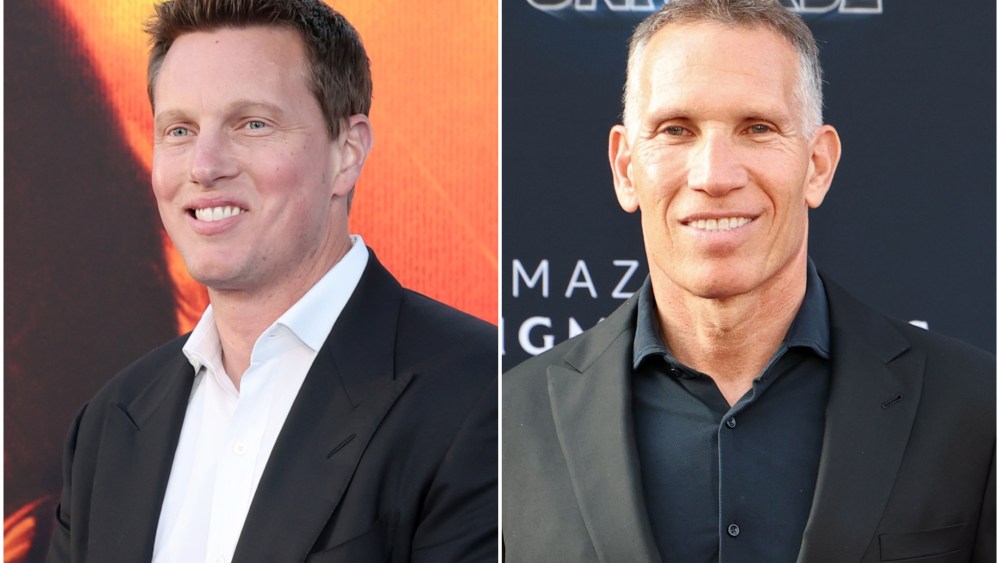
I spoke with S. Derek Turner, Free Press’ senior economic and policy advisor, at the end of the merger’s first week. We discussed what the debt means, why layoffs and price hikes are coming — and what the public can do now.
This conversation has been edited for length and clarity.
Julio Ricardo Varela: When will we start seeing the consumer harms from this merger?
S. Derek Turner: Skydance is looking at what they’ve bought, and it’ll take them a minute to figure out what to do with it.
One of the first things you’ll see in terms of customer impact is in the streaming arena. Skydance now owns a very popular platform that can charge a lot of money, HBO Max, and a less-popular platform that can charge less money, but is pretty sticky with those who subscribe to it, which is Paramount+, for things like South Park and Yellowstone.
If we go off history here, what Disney did as soon as they acquired all of Hulu was jack up the price of standalone Disney+ and standalone Hulu, so that customers were like, “Damn, I guess we should pay a little bit more to get the bundle,” because they didn’t jack up the price on the newly formed bundle. They forced people out of the cheaper standalone products into a more expensive bundle that’ll generate more cash over time.
That’s exactly what I expect Skydance to do pretty quickly — jack up the price of Paramount+ and HBO Max, then bundle them at a price people probably won’t want to pay.
JRV: This new company, Skydance, has a lot of debt. What does that tell us?
SDT: These numbers are so unfathomably large that it’s hard for people to grasp. It’s $79 billion in debt. That’s a staggering number. It’s not necessarily problematic if they have a growing business and generate a ton of money. Rich people’s mortgages are much higher than mine, but they also have much more cash coming in.
But credit-rating agencies are now downgrading the new company’s creditworthiness, which means that when they issue bonds, they have to pay a lot more interest than they normally would. They’re doing that because the newly formed business isn’t growing at all. To pay down that staggering $79 billion in debt, Skydance will probably have to cut costs dramatically.
It’s a vicious cycle. They’ll have to cut because, if they don’t, interest payments will swamp what they can return to shareholders. The pressure to return money to shareholders won’t go away. With all this debt and the environment we’re in, it’s just going to be a spiral of cuts and more cuts. So yes, this debt load is huge. But they won't go bankrupt anytime soon because they’re too big to fail, and there’s too much money behind them to fail. This debt means workers and the public are paying the price for the Ellisons — for David Ellison in particular — to have the shiny new toy to play with.
JRV: What about what’s behind the debt, the foreign money?
SDT: I don’t necessarily buy the notion that American citizen billionaires are any more benevolent than overseas billionaires in terms of whether or not they want to turn journalism into propaganda.
However, we’re not just talking about foreign-born billionaires who fronted much of the money for this purchase. We’re talking about sovereign wealth funds of dictatorships and autocracies. They’re not supposed to control the company beyond owning an equity stake.
But you wouldn’t invest that much money unless you expected something in return. It’s an investment, not a gift.
Often, this kind of influence doesn’t show up as direct propaganda. It shows up in what they don’t talk about. I fully expect to see fewer stories about human-rights abuses and other shady things happening in some of the countries that have a stake in this transaction.
JRV: And then Skydance sent out a memo on Tuesday to essentially say that layoffs will be happening.
SDT: David Ellison has already tried to soften the blow of the impending layoffs with flowery language, but it is a certainty that his team is poring over the books right now to do exactly what they did a year ago.
Last year, Skydance, with about 600 employees, bought the much-larger Paramount Global, with about 21,000 employees. They immediately announced they would lay off 10 percent of the company. Usually, companies wait a bit and try to do so more quietly. The public knows mergers equal layoffs. There aren’t many historical counterexamples. Just consider the companies on one side of this merger. CBS re-merged with Viacom in 2019 to form Paramount Global. Five years later, that combination had already shed 20 percent of its workforce. Now, to service all that debt and keep those profits flowing, I expect massive, massive layoffs over the next year.
JRV: There are fewer choices. There’s less programming. Everything’s more expensive. You have to pay the debt. That just seems to be the historical pattern, right?
SDT: It’s what makes the AGs coming out of the gate with such a strong case, saying all the right things, and then completely caving just hard to fathom.
Not many people understand that the combined Skydance generates about 70 to 80 percent of its earnings from the legacy linear-TV business: cable channels and CBS. That customer base is very sticky, and they can treat it like an ATM.
What they’re particularly banking on — and what the AGs completely overlooked in the settlement — is exploiting CBS’ NFL rights to force cable and satellite companies to pay even more for the cable channels. Skydance now owns half of the top-50 most-watched channels. I fully expect that Skydance will go to cable distributors like Comcast or Dish Network and say, “If you want the NFL and CBS, you’re going to have to pay a lot more for all these cable channels.” The AGs’ settlement specifically permits Skydance to do this.
So I fully expect consumers of any form of entertainment to pay much more. And that’s before we even get to the impact this will have on news and information.
JRV: At the town hall, Ellison said there’ll be editorial independence at CNN and CBS News. And everyone’s just supposed to nod their head and forget what happened less than a year ago, with Stephen Colbert and 60 Minutes.
SDT: Would the Ellisons characterize what they did to CBS as editorial independence? Does David Ellison consider it to be editorial independence when he appoints someone who’s tasked by him with what he calls balancing coverage and rooting out what he sees as ideology, when in fact it’s just straight reporting?
Even taking him at his word, which I don’t, the AG editorial-independence condition lasts only five years. And what’s going to happen then?
Even Anderson Cooper asked at the town hall, “Are you eventually going to merge these two assets?” And Ellison totally ignored the question, saying, “Well, today’s day one.” So of course they’re going to merge the assets. That’s why they merge companies.
JRV: So what can people do now that it’s a done deal?
SDT: If you are a consumer of media, entertainment and news, know who owns the entertainment you consume, and question whether or not you can get the quality of information and entertainment from different sources. A lot of great journalism on the internet isn’t produced by CNN or CBS. And there are certainly alternatives to Paramount+ and HBO Max. Or if you love a series on one of those, just subscribe, binge it and unsubscribe as quickly as you can.
The market has never worked for us, and it really isn’t working for the public now. That means the public has to seek out alternatives and, with the power of the purse strings, use them.
If you’re outraged about this, keep signing petitions and try to oppose mergers. Think about public policy and ways to design systems where we’re not so under the thumb of these giant corporations.
Our job is not over now that this merger is done. Part of making the case against the next merger is documenting how past mergers didn’t work as promised.
Our job at Free Press will be diving through the financial records, diving through their statements and noting what happens in the aftermath of this merger so that when the next one inevitably comes along, we will have even more evidence showing the harms of media consolidation. Hopefully, in the future, there will be regulators in place who will actually want to protect the public and know better than to just rubber-stamp another one of these things.
Open tabs
About that local-news bill. Over at the Pivot Fund, Tracie Powell provides an excellent breakdown on what California’s newly passed Community NEWS Act (AB 2222) is and isn’t.
“This is a journalism jobs program. It does not address a community’s civic news and information needs,” Powell writes.
“That is welcome support,” Powell adds later. “But many of the emerging and small publishers we have identified in our ecosystem assessments won’t qualify because there is a catch: publishers need money before they can receive the money.”
 Tracie Powell
The kicker
“The downgrade reflects materially higher leverage after the acquisition and significant execution and integration risks. It also reflects uncertainty about the company’s ability to achieve its stated synergies, which are material to its deleveraging target. The combined company faces structural pressure on linear revenues, streaming competition and hit-driven content risk.” —Fitch Ratings report about Paramount-WBD merger
About the author
Julio Ricardo Varela is the senior producer and strategist at Free Press. He is also a working journalist, columnist and nonprofit-media leader. He is a massive Red Sox, Knicks and Arsenal fan (what a combo). Follow him on Bluesky.
The next edition of Pressing Issues will appear on Oct. 16.