A DEI Disconnect in a Post-Merger Hollywood
Producer Peter Murrieta on Skydance’s next moves — and why we all need to stay vigilant

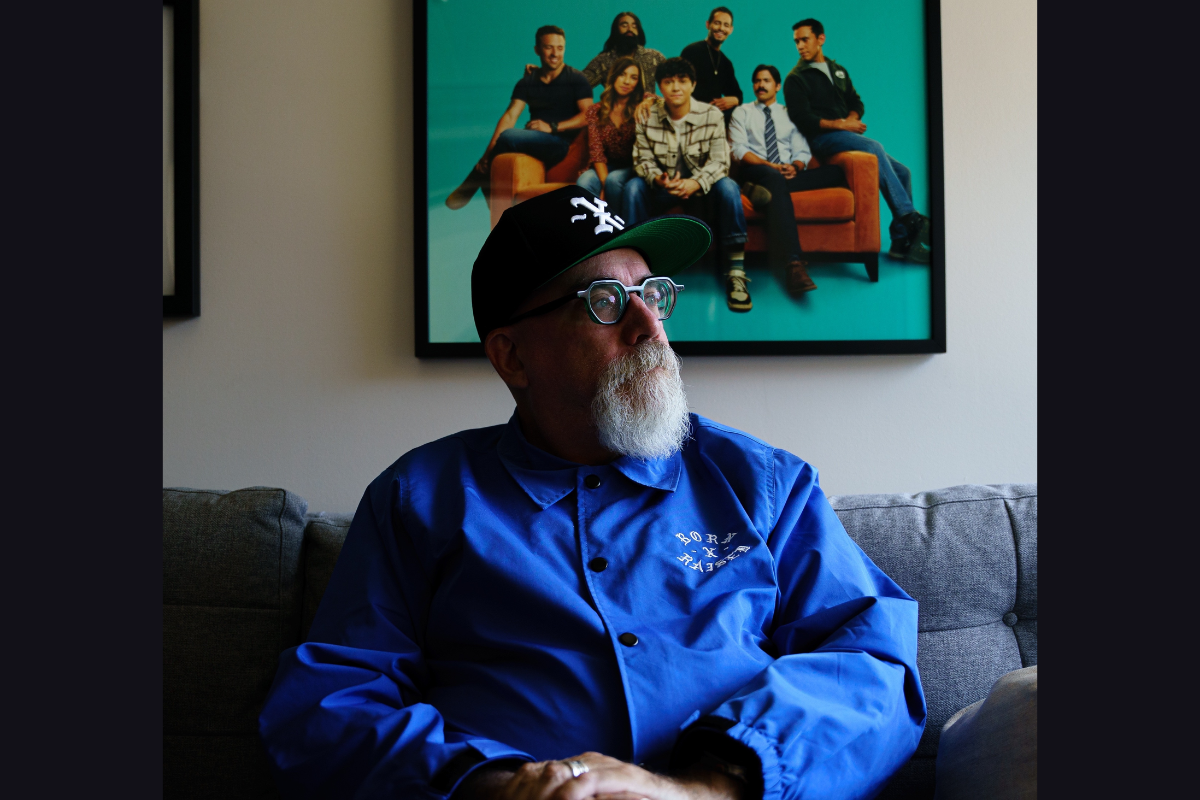
The results of the midterm elections sent a clear message: The U.S. public wants diverse representation. And multiple Emmy Award-winning producer Peter Murrieta, who is secretary-treasurer of the Writers Guild of America West, hopes this outcome will also have a meaningful impact on diverse representation in Hollywood.
Murrieta is known for producing acclaimed series such as Disney’s Wizards of Waverly Place, which launched the career of global superstar Selena Gomez. His projects have contributed to the careers of other Latino stars, including Lupe Ontiveros, George Lopez and Cristela Alonzo. Look for his comic book, Rafael Garcia: Henchman, and Teq, his upcoming five-issue detective story set in an Aztec-noir future, and his Substack, Muy American Productions.
When it comes to DEI in U.S. media, the disconnect between decision-makers and the public at large is clear. While the representation of women and people of color declined in 2025, audiences embraced diversity. Films with casts of between 41–50 percent people of color earned the highest median box office of any group, and the 2026 Oscar nominees demonstrate that diversity wins in terms of both popularity and profits.
This disconnect was also on full display when Trump officials approved the MAGA-aligned Skydance merger. An anti-DEI framework constructed this conglomerate, and it’s clear that it will harm labor and audiences. In fact, the day that the mega-merger closed, Skydance CEO David Ellison announced the elimination of jobs. Next came news of price hikes, the merger of Warner Bros. TV and Paramount TV studios and the public embrace of Elon Musk as a major investor.
I met Peter in the early 2000s when we both had Latino-forward shows on the air. He was the creator and executive producer of Greetings from Tucson, and I starred in Resurrection Blvd. I sat down with Peter to talk about what the Skydance merger means for Latino writers, how we keep moving forward despite the lack of opportunities, and how he hopes the Agentic-Self AI course he co-teaches with will.I.am at Arizona State University will help shape the next generation of industry professionals. (Except where noted, Peter spoke to me in his personal capacity, not as a representative of the WGA.)
This conversation has been edited for length and clarity.
Ruth Livier: How will this mega-merger impact writers, specifically Latino storytellers?
Peter Murrieta: I’m the secretary-treasurer of the WGA, so I’m an officer in the union, and we are opposed to mergers. We settled, but in our settlement statement, we divulge that we continue to be against mergers. It wasn’t that we thought the merger was fine. It’s not going to be better for creatives. It’s already worse. There’s already data on diverse representation on screens, movies and TV that speaks to that. And behind the camera, there’s a dearth of it. It’s going to get worse, and we are duty-bound to continue.
One thing — and I’m sure every group probably feels the same, so I want to give love to that — but as a Mexican American, somebody asked me about our current president and the current situation, and I said, “Oh, people have been trying to get rid of Mexican Americans for a long time, and guess what? Here we are. So keep trying. Here we are.”
RL: What was the context for getting Latino projects greenlit when you created and executive-produced Greetings from Tucson in 2002?
PM: At that time, there was a “we need programming” environment. Because when a business expands, they look for product. Fox debuted in the ’90s, then WB, UPN and cable were starting to explode with original work. Those of us who were already in the system got opportunities because of the expansion.
What didn’t happen was “continuation.” In other words, those shows were canceled. I think the biggest reason back then was the pressure that each of those shows had to be perfect. Each show was expected to be everything to everybody, both inside our community and out. And it had to succeed or else there were no other opportunities for anybody else.
Yet, at the same time, a remake of Dallas, if that failed, they weren’t gonna roll up the carpets and go, “Well, we don’t need any more family dramas about white people.” But for us, there was this pressure that each time you went to work, you had to represent everybody.
RL: Where does that pressure on Latino projects come from?
PM: Hollywood is a risk-averse business. And it is getting more risk-averse. There was a recent article in The Ankler that said if your name is not Tina Fey, Mike Schur, Bill Lawrence or Seth Rogen, good luck trying to get a comedy on the air.
And we’re not there with “narrative plenitude.” Professor Frederick Luis Aldama, my friend and co-author of our book, Two Vatos Talk Pop Cultura, uses that term to describe a situation where there is sufficient representation that you no longer need to be perfect in every instance. We’re not there, so we get that pressure.
RL: Is David Ellison’s Skydance going to take a so-called risk on diverse voices?
PM: I don’t think they will. We have to do it. We have to be masters of our own destiny, and we have to show up for each other, in big and small ways.
There are some challenges. Here’s one: I have plenty of friends who have independent movies. They’re trying to finance independent movies. They go get a tax incentive somewhere. They go to financiers. Financiers say,
Which star can you attach that’s going to get you the okay, appease their risk aversion to give you the money? And then you go, “Well, who are our stars?”
Who are the stars that the financiers and the banks go to? And where do they come from? And how old are they? The business hasn’t allowed Latinos to have series that run more than two seasons in order to create someone with a name that could elevate and make a banker feel less risk-averse.
That’s on the industry: How do they make stars? The thing that we can do on our side is elevate each other.
RL: You’ve been at the forefront of finding an alternate way via changing technologies. You were there with web series, taking me under your wing when I produced Ylse, and now you’re there again with AI. Can you tell me about this Agentic-Self AI course you teach in collaboration with will.i.am?
PM: I’m super excited about this because the premise of technology changing the way we do business has existed prior to us even being aware of AI. Now we’ve got this new tool that is supposedly going to upend everything, and we’ve got another chance to protect ourselves: You need to control your data. You need to own it, not give it away, and you need to understand how these tools work.
A lot of this class is about ethics and philosophy, sociology, and letting you understand how everything works, so you can make educated decisions yourself.
RL: As your students become the next generation of industry professionals, how do you hope your class will inform their trajectory?
PM: I think the WGA fought hard to have writing defined as being a human activity. When we read the stories every day, the Disney layoffs, for example, and you read the article, and in there it talks about AI tools replacing workers. Hence, the fear. At the Writers Guild, we define writing as a human activity, which means that nobody can use AI and print out a first draft and hand it to me to write a second draft at reduced rates because second drafts are cheaper. Can’t happen. So what I want is for students to understand how AI works. I want them to understand both the dangers and the possibilities.
RL: Do you think David Ellison and Skydance will respect the WGA’s AI guardrails?
PM: Personally, not representing the union, I don’t think I can trust someone who threatened to move out of California, and then said they are very deeply committed to California within a week or two. I guess we’re gonna have to wait and see with our eyes focused and our ears open.
David Ellison is promising to release 30 movies per year. Are those 30 movies that are made? Or are we going to count re-releases as a movie? And if the federal tax-incentive bill passes, then their investment in local production goes up by a percent based on their commitments at the end of the lawsuits. Do they do that? We have to know these things and read those bills. We have to listen and we have to watch.
About the author
Ruth Livier, Ph.D., is a campaign manager at Free Press. Ruth has more than 20 years’ experience in the entertainment industry, which drives her commitment to fight for media equity. Follow Ruth on Bluesky.
Open tabs
Broken promises. Capital B News notes that “Majority-Black communities are more than two times more likely to host a data center than majority-white ones and far less likely to receive the chance to hear about the projects before they’re approved or offer their opinion through public comment.”
 Adam Mahoney
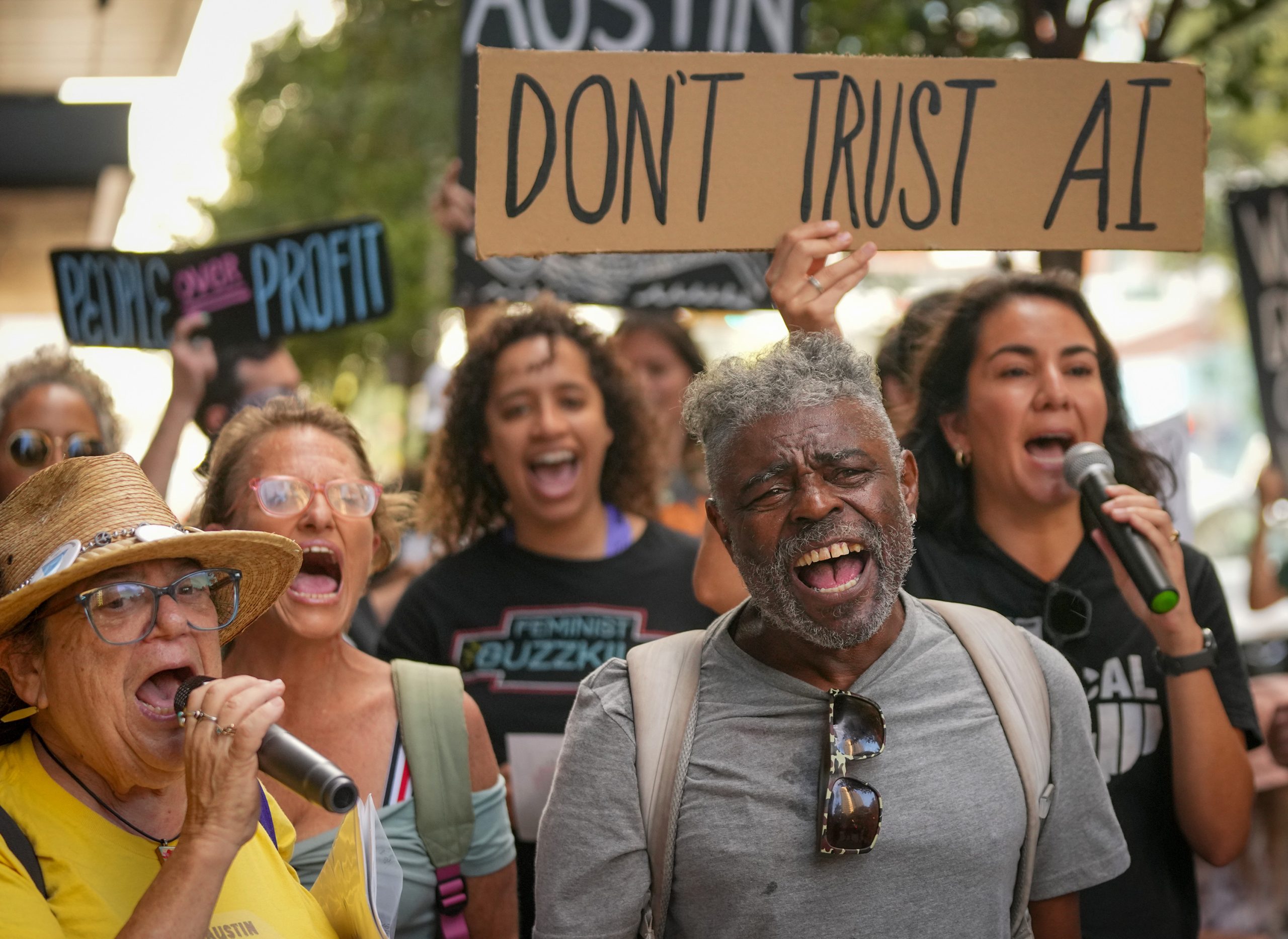
As part of its investigative series on data centers in Black communities, the outlet reported on a data center going up in Eatonville, Florida, a historic all-Black town north of Orlando. The developer, HostDime, has backed off on offering free home Wi-FI for residents. It’s also unclear whether promised scholarships and STEM training will ever materialize. According to the story, there is no binding agreement obligating the company to fulfill its commitments.
“We don’t have anybody to stand for us,” one resident said at a recent local meeting.
 Aallyah Wright, Adam Mahoney

The kicker
“I try to stay positive by saying, ‘Look at all the shows that we [Latinos] have made. All those people that have gotten jobs, and are able to create a show and tell a story.’ And we have to keep finding ways to create — write a play, a novel, a comic book, indie movies, self-finance. We have to continue to do it.” —Peter Murrieta
The next edition of Pressing Issues will appear on Dec. 1.