Amy Goodman and the ‘Silenced Majority’
A Pressing Issues interview with the Democracy Now! host and the filmmakers behind Steal This Story, Please!

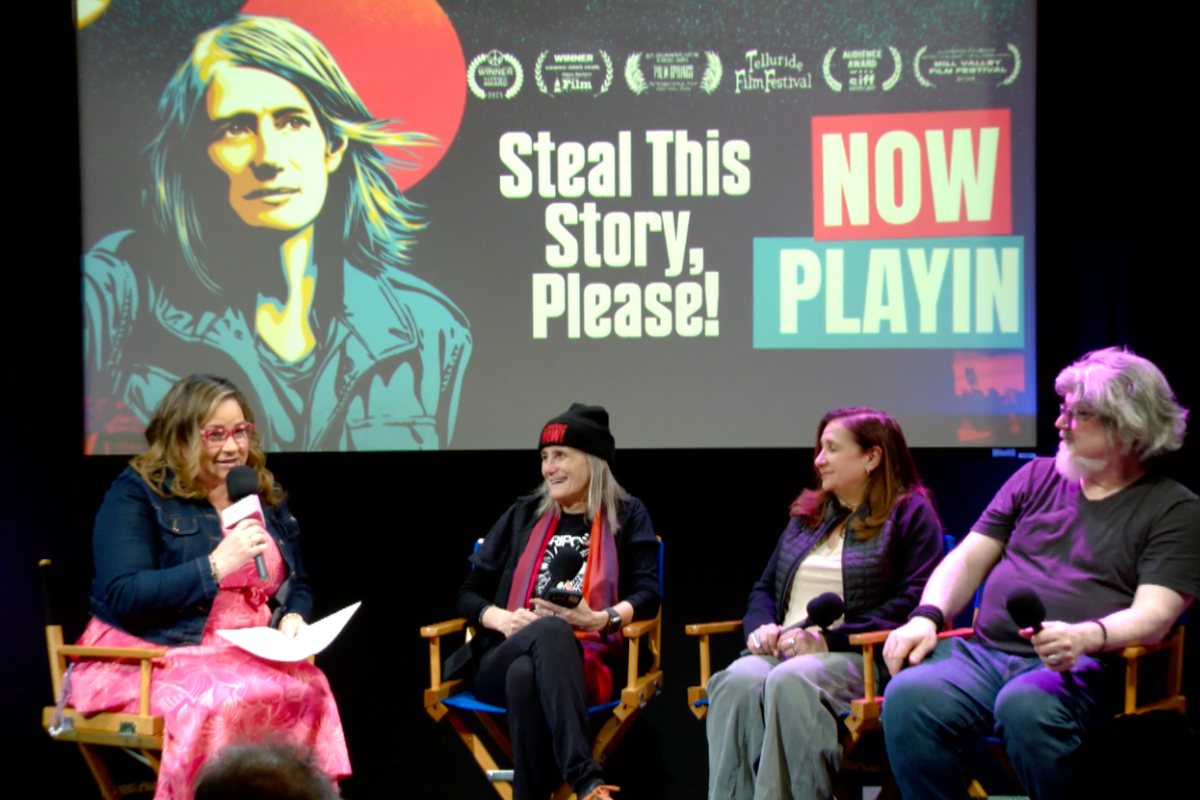
Fiercely independent journalist Amy Goodman has spent three decades holding the powerful to account, building the Democracy Now! newsroom into an indispensable source for groundbreaking news and reporting on war zones, protests and movements the mainstream media too often ignore. In the new documentary Steal This Story, Please!, filmmakers Carl Deal and Tia Lessin craft a riveting portrait of journalism’s power — and peril — in an era of corporate control and political attacks on the truth.
The film screened in Philadelphia on World Press Freedom Day, and I had the opportunity to interview Goodman and the Oscar-nominated directors for a TV special produced for PhillyCAM, Philadelphia’s community-media center. We discussed free speech, media consolidation and the role of independent media in liberation movements. Goodman, Deal and Lessin touring local screenings of the film, which documents Goodman’s storied career in independent media and follows some of her most impactful reporting.
This conversation was edited for length and clarity.
Vanessa Maria Graber: This film underscores the importance of independent media, amplifying the voices of the most underrepresented and holding the most powerful people to account at a time when freedom of expression and press freedom are under attack. At the same time, we’ve seen the dismantling of the Corporation for Public Broadcasting, increased media consolidation, the worsening of the local-news crisis, and increased surveillance and attacks on the press. How do we begin to solve these problems?
Amy Goodman: For anyone who loses hope right now and says, “What are we going to do?” — you’re doing it. You are. The beginning is right here. Local media is so important because you are closest to the story, and you have a good sense of whether something is true or not when you hear it covered. It’s harder when you’re hearing something in Portugal, South Africa or East Timor, and you’re not sure what to make of it, but you do know about Philadelphia, and I really think it all starts here with local media and young people and old.
I think we have to consider how things are done. Older people are getting into media who have been through other careers, and young people who are so fed up with the lies and the lack of authenticity, who have the least invested in the system as we know it and the most invested in making this world a better place for you and us all, are working together at public-access centers like PhillyCAM at a time when the media is consolidating at such a rapid pace. This is where we have to start.
Tia Lessin: We were just in Sacramento, California, where they’re threatening to cut Public Access Sacramento’s budget. This is happening all over the country, and what I learned is that the public-access movement came out of the Civil Rights Movement, when Black and Brown communities were insisting on representation of their stories and having the people in front of the cameras and behind the cameras represent the communities. That’s in part how public access originated, and we need to keep that going.
Amy Goodman on Democracy Now! and Juan González have been sounding the alarm about media consolidation for decades — even before the Telecommunications Act of 1996 was passed. When you see the film, you’ll hear about that. The first casualty of the big consolidation of media was local media, where newspapers, radio stations and broadcasters were becoming conglomerated.
VMG: With increased media consolidation, how difficult is it for independent filmmakers to distribute films like these?
TL: We are excited about this film because we are taking it out independently. Right now, this huge merger looms between Warner Bros. Discovery and Paramount, and it is a threat to the free press because Paramount now owns CBS, and Warner Bros. Discovery owns CNN, and the prospect of all those broadcasters being under one division is chilling.
Trump has been gunning for CNN for years, and if we don’t see it entirely eliminated, we are certainly going to see a rightward shift, as we have seen with CBS. The same thing is happening in film distribution: Paramount Pictures and Warner Bros. Studios, two of the biggest film distributors, have seen a narrowing of the kinds of films they finance and produce.
We no longer see many low- or mid-budget films, or documentaries, and we’re also seeing a narrowing of the kinds of stories that get told. We had no illusions that this film, about this moment — which had many topics that might be objectionable to the Trump administration — would be purchased by a commercial broadcaster or a film studio.
We are taking this film out ourselves, and we have booked 125 theaters. We’re hoping to double that by the end of the run, and it’s been remarkable being on the road with this film. This is our Philadelphia opening weekend at the PFS Bourse, and we are thrilled to be supporting local media and the Philadelphia Film Society, a Philadelphia arthouse. And we’re doing that everywhere we go with this film.
Carl Deal: The reason that we’re doing that with success is because of you. It’s because of the audiences that are coming out. You can actually count the people who come to see it. People are watching this, and we are sending a message to the traditional gatekeepers for independent media. We consider ourselves a part of the independent-media movement and have been for a while.
VMG: What concerns you about some of these threats to free speech?
TL: We were in Amsterdam in the wake of Trump’s threats to sue the BBC after the BBC aired a documentary that he thought had unfairly characterized his role around January 6. He was threatening a billion-dollar lawsuit, and this was having a chilling effect not only on the BBC but on public broadcasting across Europe. I was told anecdotally that they were scrubbing their slates. The broadcasters were rethinking some of the content because they were so afraid of litigation. And if that’s happening overseas, you can only imagine what’s happening here.
AG: We were at a commercial television station called CTV, which is Canadian television, and we learned that in Canada they can no longer stream news on Facebook or Instagram. Remember, these are private platforms and are not regulated. They can decide they don’t want your voice on it, so your voice will never be on it. And this is not yet regulated in a way that makes it meaningful. The tech-billionaire broadcasters or the tech brotherhood that stood behind Trump at his inauguration are paying to prevent any kind of regulation. This is very serious right now.
VMG: What’s your vision for the future of independent media? What inspires you and keeps you going?
TL: Amy Goodman and her team at Democracy Now! really inspire me. We watched her show grow over 30 years, from a small radio broadcast that at times operated out of an attic in Chinatown, serving about nine community stations around the country, to now, where it serves 1,500 NPR, PBS, community-radio and television stations. It’s also on the internet, so global audiences can see it and hear it. It’s been a training ground for legions of journalists, and you’ll see some of them in the film. You watch them learn from the master, then go out and start their own independent broadcast, or infiltrate the mainstream. And that’s also subversive.
So I find that inspiring, because with fewer resources than commercial networks, she has done far more, and this is without corporate advertising, without government funding; it’s all from audiences like you. So I hope that Democracy Now! keeps on doing what it’s doing well into the future.
CD: Let’s not forget that Democracy Now! isn’t just leading the independent-media movement; it’s also setting an example for the corporate and commercial media. And we take the name of the film from this idea of trickle-up journalism that Amy advocates for, which is to “Steal this story, please.” As in, “please, take this story,” and you’ll see examples when you see the film of stories that penetrated into the mainstream and broad issues related to liberation movements and change movements into the mainstream or into the commercial media.
AG: Those who care about war and peace, those who care about the climate catastrophe, those who care about equality, racial and economic justice, those who care about LGBTQ issues, those who care about reproductive rights, are not a fringe minority, not even a silent majority, but the “silenced” majority, silenced by the corporate media. It is no longer mainstream. I think these views are the mainstream views of this country, and they have to start being amplified.
About the author
Vanessa Maria Graber is the senior director of journalism and media education at Free Press. She creates resources for newsrooms and trains journalists about civic-journalism best practices, community engagement and meeting community-information needs. Follow Vanessa Maria on Instagram @newsjawn.
Progress report
Compiled by Pressing Issues editors
Block party. The opposition to the Paramount Skydance–Warner Bros. Discovery merger is getting louder and breaking through. On Thursday, actor Mark Ruffalo and antitrust advocate Matt Stoller published a must-read piece in The New York Times. They highlight the Block the Merger letter that more than 5,000 people in the film and television industries have signed.
“The most revealing thing about that letter wasn’t the people who signed. It was the people who didn’t. Not because they disagreed — because they were afraid,” Ruffalo and Stoller write. “There are many reasons to block this deal, but we now believe the most fundamental one is what we encountered when asking artists to use their voices: fear. A deep, ugly and pervasive fear of speaking out.”

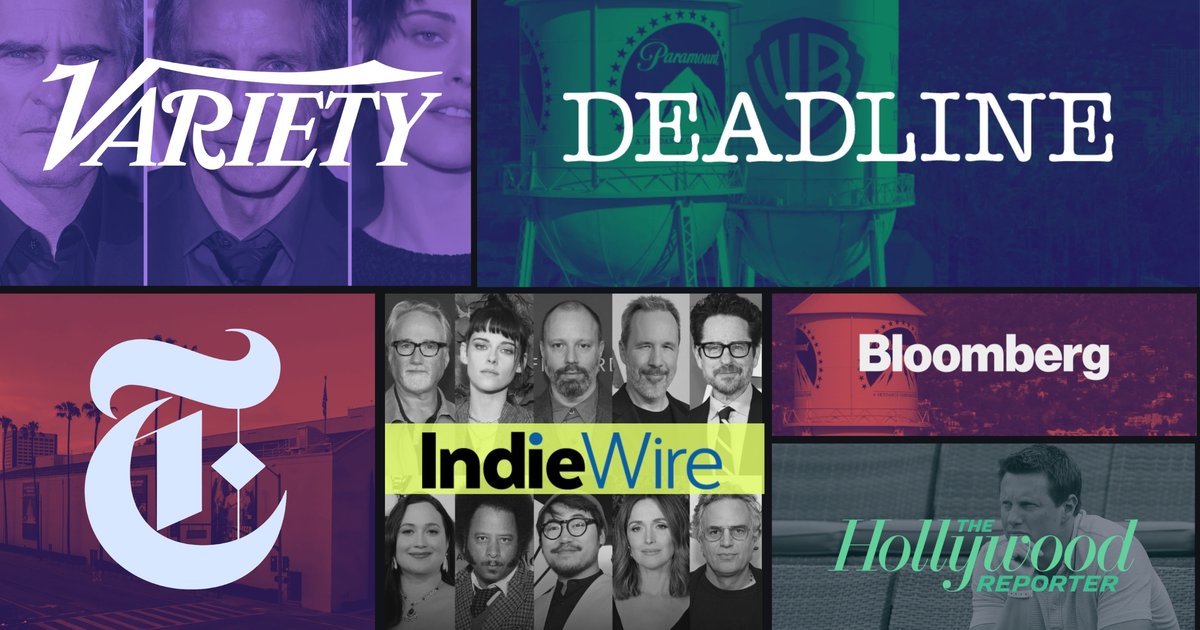
In another positive sign that we can stop this merger, members of Congress are becoming more vocal. Thirty-four members of Congress from California, led by Rep. Laura Friedman from Burbank, wrote to California Attorney General Rob Bonta this week, urging his office to step in where the Trump regime won’t.
“Given that we cannot have confidence that the Trump Administration review of the merger will be conducted according to the law,” they wrote, “and with the best interests of American workers and consumers in mind, it is even more vital that you conduct a thorough, independent review.”
Gene Maddaus
The kicker
“We really have to stop calling corporate media ‘mainstream media.’ It doesn’t reflect the mainstream.” —Amy Goodman