Comunicadores Keep Their Communities Safer
Why the work of Spanish-speaking journalists is so essential, especially now
Spanish-speaking journalists, media workers and communicators are on the frontlines of the racist attacks from the Trump administration.
They are often the first ones alerted when ICE is present in a community, and when agents are detaining people and taking them away from their families. They are a trusted and invaluable resource, with community members asking them where to find detained immigrants, where to find legal support and what to do when someone has disappeared.
This underground information network of comunicadores — “the communicators” — keeps people safe in places like Philadelphia, where I live. It’s time for this country to understand why this work is so essential — and why it needs to be fully supported and funded.
These networks are where these community-information stewards and journalists collaborate to verify information, identify reliable sources, locate disappeared people and change immigration policies. Most of this work happens in chat groups and back-channels.
In Philadelphia, the Board of Education voted to close 17 schools, mostly in Black and Latiné neighborhoods. Our public-transit service is proposing service cuts in working-class communities. The utility companies are proposing new rate hikes. Additional taxes the mayor has proposed for rideshare services and hotels will disproportionately affect Latiné workers.
To defend against these attacks, comunicadores are educating the community by reporting on critical news and civic information — and explaining which levers of power people need to pressure to create change.
When our communities are under attack, accurate information is currency.
Filling the void
According to the latest U.S. Census, almost 45 million people in the United States, as well as an additional 3 million people in Puerto Rico, speak Spanish at home. As that number continues to rise, more communities need access to culturally relevant local news and civic information in Spanish. Comunicadores across the country — whether traditional or nontraditional journalists — are filling that void.
Yet there is little institutional support for comunicadores from journalism organizations, funders or universities. The most prominent journalism organizations and collaboratives operate primarily in English, which can make participation more difficult for Spanish-speaking journalists and media organizations. As a result, Spanish-language media outlets often find themselves underrepresented in mainstream journalism groups, limiting their ability to influence industry policies and shape advocacy efforts. Some mainstream journalism organizations may not fully recognize or prioritize the unique challenges Spanish-language media face, leading to a lack of tailored support.
That’s why I’m advocating for more language access, more culturally competent support and more empathy for communities disproportionately affected by racism, persecution and threats to their safety.
The information gap
As a bilingual journalist and former president of the National Association of Hispanic Journalists (NAHJ) Philadelphia chapter, I’ve seen firsthand how a lack of access to resources can impact my Spanish-speaking colleagues and friends. When ICE detentions escalated and immigration policy rapidly changed, many comunicadores struggled to get information out. Fear spread as journalists like Mario Guevara and Estefany Rodríguez were arrested, detained and, in Guevara’s case, deported.
Even though I was seeing these conversations in local chat groups, I wasn’t sure how widespread the information gap was. I reached out to Spanish-speaking journalists and media workers across the United States and Puerto Rico to better understand the challenges they faced.
Here’s what I found:
- Spanish-speaking journalists experience increased risks to their safety and freedom of speech as they combat online disinformation and deal with the mental-health impacts of covering violent law-enforcement operations.
- Spanish-speaking newsroom leaders had little support despite the heightened risks and unique threats they were facing. They also had a need for more conversation, more training and more legal support for their organizations.
- Everyone talked about the limited funding for ethnic media and the need to become sustainable.
Uniting Philly’s ‘Comunicadores’
With these takeaways in mind, I returned home to Philadelphia with the goal of bringing together local Spanish-speaking newsroom leaders, Latiné journalists, content creators and producers. I met with allies at PhillyCAM, El Centro Integral de la Mujer Madre Tierra and Temple University’s Center for Community-Engaged Media to unite this local community of comunicadores.
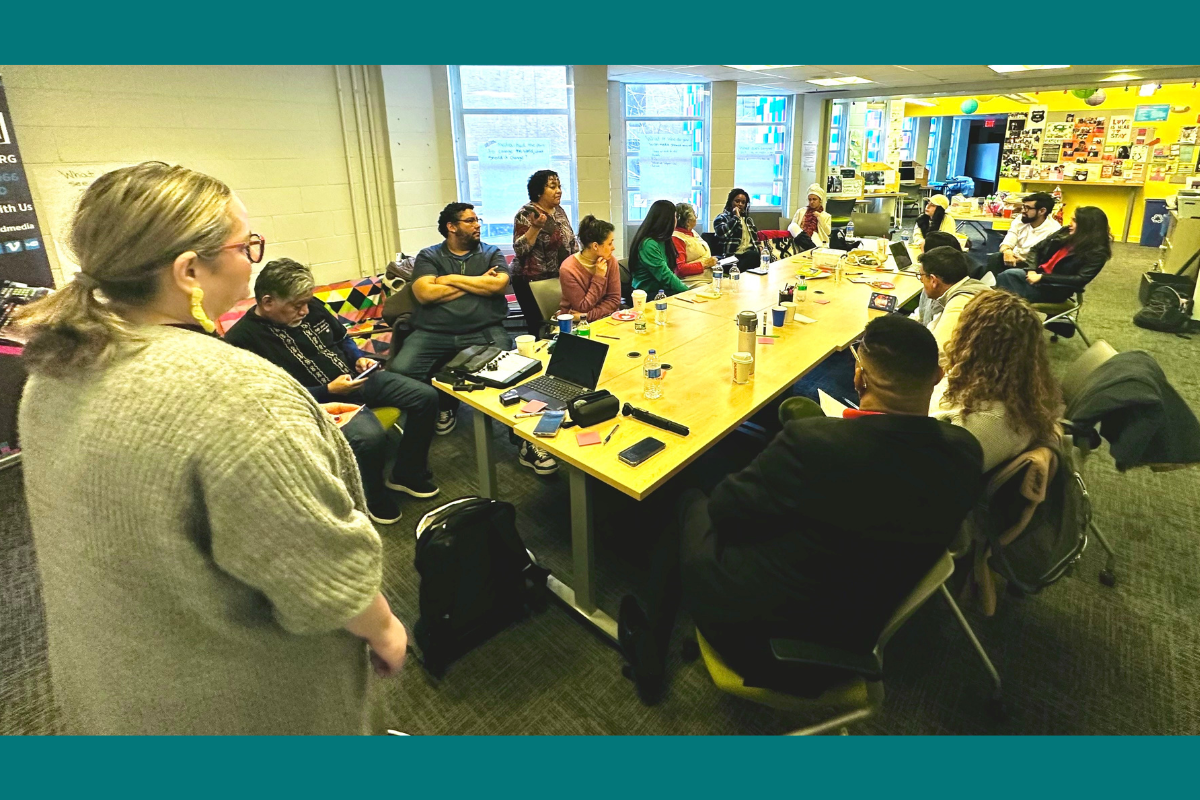
With support from the People’s Media Fund, Free Press began piloting the Philly Comunicadores initiative in July 2025. I’ve been working with our partners to assess needs, develop educational resources and build a supportive infrastructure for Spanish-speaking journalists and media-makers. More than 30 people signed up, representing every Latiné news outlet in the surrounding area. We meet monthly and are collaborating to create a peer-led support mechanism for journalists who might experience arrests or legal threats.
We pooled our resources to support journalists’ professional development and build infrastructure for mutual aid. Where local Spanish-speaking journalists and creators were previously going at it alone, they now have access to a network of peers. They’re learning and organizing together in a Spanish-first environment that prioritizes their communities’ information needs.
Particularly as it relates to challenges with immigration enforcement and First Amendment protections, Spanish-speaking journalists from small publications expressed great relief at having a trusted community to ask questions, find resources and share information.
There’s a desire to join forces and build solidarity to discuss the issues that most impact their communities. They want more opportunities to share ideas and connect with one another. They recognize there’s safety in numbers. By creating a mutual-aid group that can respond to threats, they are more likely to receive support and care from their peers.
Some uncomfortable truths
These same leaders are demanding a seat at the table in conversations about private and public funding for local news. Latiné newsroom leaders in Philadelphia believe there is a lack of equity, access and representation in philanthropy. Grant applications are in English, and there’s often a fundamental misunderstanding of how Spanish-language media function in local communities.
Producing journalism in Spanish must be part of guaranteeing the right to information in the United States. This is a point that philanthropic, academic and technological institutions can no longer ignore.
On Saturday, May 9, the Philly Communicadores will be holding their next gathering. We’re looking forward to talking more about the kind of collaborative we want to create and identifying projects we can work on together. But more importantly, we have a lot of information to share with one another.
By staying informed and united, we grow stronger.
About the author
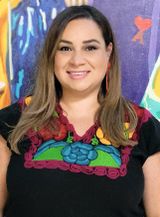
Vanessa Maria Graber is the senior director of journalism and media education at Free Press. She creates resources for newsrooms and trains journalists about civic-journalism best practices, community engagement and meeting community-information needs. Follow Vanessa Maria on Instagram @newsjawn.
Open tabs
Compiled by Pressing Issues editors
World suppress freedom day. The Trump administration has gone international with its attacks on press freedom, revoking the visas of several board members of La Nación, Costa Rica’s top watchdog newspaper, the New York Times reports. The newspaper has been a critic of President Rodrigo Chaves, who also happens to be a Trump ally and claims that La Nación is out to get him.
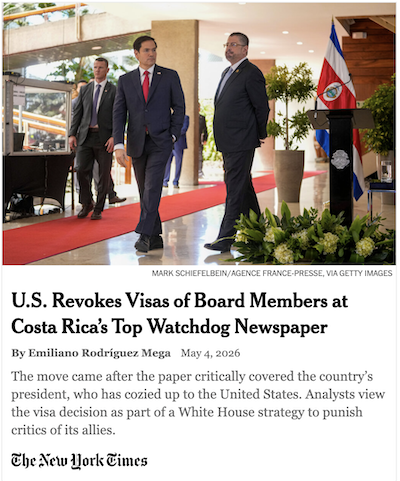
Over at Bluesky, Free Press’ Nora Benavidez called the move “very bad for First Amendment freedoms of the press.” The visa revocation, which came with no official explanation from the Trump administration, “fits alongside the attacks on Mahmoud Khalil, Rümeysa Öztürk and tech researchers for their free speech,” Benavidez said.
Ain’t that rich. The Hollywood Reporter’s new story about CEO compensation in the entertainment industry only confirms that the proposed WarnerMount merger has made and will continue to make Warner Bros. Discovery CEO David Zaslav a lot of money. In an industry where the employee-to-CEO pay ratio can be as high as 805-to-1, Zaslav tops the list with a 2025 salary of $165 million — and the potential to get a golden parachute package anywhere between $550 and $887 million (even as WBD shareholders rejected the package in a recent non-binding vote).
 Georg Szalai
The kicker
“Es importante que haya muchas voces de la comunidad. Muchas veces tratamos de contar nuestra historia en inglés, pero creo que debemos contarla en español. Mucha gente no sabe cómo hablar con latinos. Tenemos que resolver cómo comunicar mejor nuestras historias a ellos también. Quiero que la gente sienta que pertenece aquí”.
“It’s important that there are many voices from the community. A lot of times, we try to tell our stories in English, but I think we should tell them in Spanish. Many people do not know how to talk to Latinos. We need to figure out how to better communicate our stories to them as well. I want people to feel like they belong here.” —Edgar Ramirez, director of Philatinos Media, and member of the Philly Comunicadores group