This World Press Freedom Day, Fight for Truth-Tellers Everywhere Challenging Corrupt Dictators
Rising authoritarianism worldwide means journalism and dissent matter more than ever


This World Press Freedom Day, systematic obstruction of reporters and erosion of press freedom have reached a 25-year high. According to Reporters Without Borders, “Authoritarian states, complicit or incompetent political powers, predatory economic actors and under-regulated online platforms are directly and overwhelmingly responsible for the global decline in press freedom. Given this context, inaction is a form of endorsement.”
The United Nations conceived of World Press Freedom Day in 1993 to commemorate every May 3 the essential role a free press plays in healthy democracies — supporting public trust, democratic engagement and institutions free from government influence. Today, all of these pillars of healthy democracies are under threat.
Rising authoritarianism worldwide means we must protect truth-tellers of all sorts — absolutely, the reporters and editors, and also the people who film police, organizers staging protests, the artists expressing dissent and the students who keep speaking out under threat of repression. To reverse the global decline in press freedom, we must fight for truth-tellers everywhere who challenge corruption, abuse and authoritarianism.
Assaults on free speech and press freedom
Democratic backsliding is on the rise worldwide. As of 2025, Freedom House found that “global freedom declined for the 20th consecutive year,” marked by deterioration of political rights and civil liberties in 54 countries.
The United States has fallen precipitously in its press-freedom, rule-of-law and democratic-governance rankings from groups like Reporters Without Borders and the International Institute for Democracy and Electoral Assistance (IDEA) named specific attacks on the First Amendment as uniquely concerning, including “efforts to restrict academic freedom, criminalize protest activity … selectively restrict media access to the executive and circumvent normal due process.”
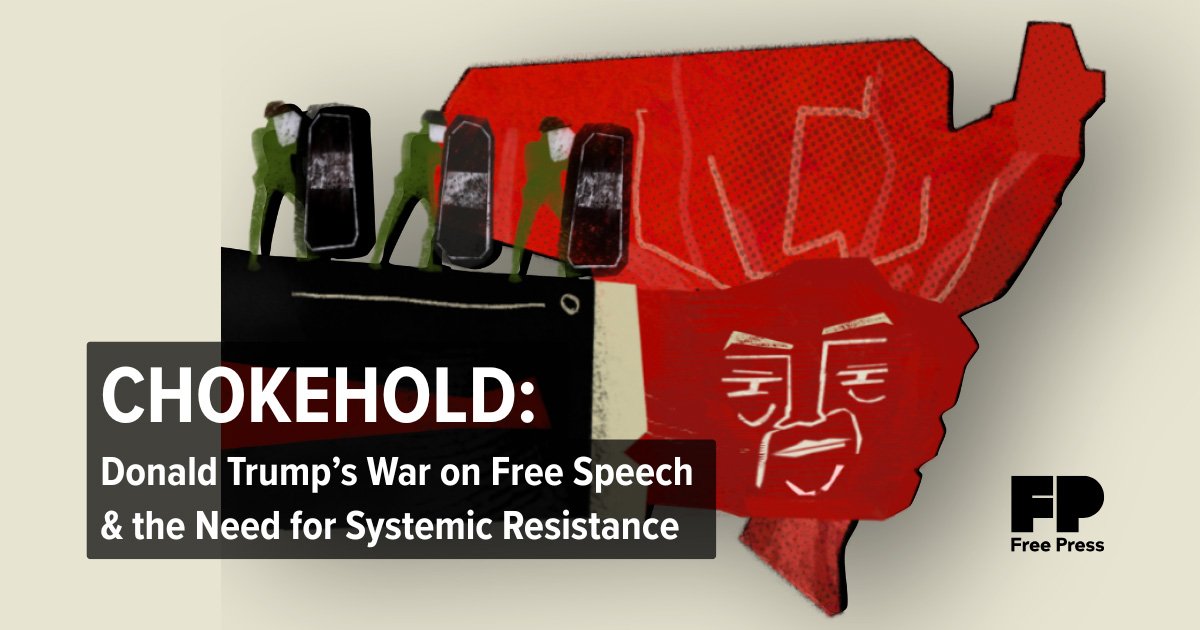
Trump’s second term has brought with it the largest, longest and most fervent attacks on free speech and press freedom. Stories about White House attacks on First Amendment freedoms have come in seemingly daily barrages, as I documented in the Free Press report: CHOKEHOLD: Donald Trump’s War on Free Speech & the Need for Systemic Resistance. My research found that the administration is waging an unrelenting assault on free speech and dissent, collaborating with the most powerful and wealthy people to weaken our most basic freedoms.

The high cost of exposing corruption
The media in particular have been bombarded at a scale and pace no other sector has experienced. In his second term, Trump has threatened individual reporters, telling domestic journalists that he will report them to the Department of Justice and foreign journalists to their home governments. The administration has limited visas for journalists, and the Defense Department has kicked out reporters who won’t pledge to follow official narratives. The FBI raided journalist Hannah Natanson’s home this winter, given her work exposing government corruption.
Trump has sued news outlets, alleging millions of dollars in damages for their editorial decisions — and his regulators have held up mergers until after he received his payoffs. He has leveraged the FCC to bully broadcast networks, with attack-dog Brendan Carr now threatening ABC’s licenses after previously pressuring broadcasters to pull Jimmy Kimmel off the air for jokes that displeased the president.
In the United States, the attacks on the press aren’t just coming from Trump and his henchmen regulators. Federal law enforcement has consistently attacked journalists covering protests in 2025. When protests broke out in opposition to ICE tactics in Los Angeles in June, law enforcement targeted reporters on the ground, shooting them with teargas, rubber bullets and pepper balls. Student Rümeysa Öztürk was targeted and detained for months simply for writing an opinion piece for her college newspaper urging accountability and protections for Palestinian rights on campus.
More often than not, it has been the most vulnerable voices and communities — especially immigrant reporters and writers of color — subject to the harshest penalties and attacks for speaking truth to power. During a June 2025 No Kings rally in Atlanta, local police targeted Mario Guevara, an immigrant journalist who was streaming law enforcement. After months in detention without charges, he was deported to El Salvador, where he previously faced dangerous attacks.
In Nashville, ICE targeted and detained another Latina reporter, Estefany Rodríguez shortly after she aired investigative pieces about ICE practices. Reporters Don Lemon and Georgia Fort were arrested and charged with federal crimes for covering a church protest.
Resisting the authoritarian playbook
Attacking media independence is page one of the authoritarian playbook. Brutalization of dissent, and the press in particular, is common in antidemocratic regimes like Georgia, Serbia, the Philippines, Hungary, Iran and Turkey. Whether through outright repression of dissenting voices or more insidious forms of co-optation and expropriation of media institutions, constraining journalists allows would-be authoritarians to act with relative impunity — and with less public awareness of their abuses.
But it’s not just reporters. The dangerous and fatal attacks on protesters and civilians — including the brutal murders by ICE of Renee Good and Alex Pretti in Minnesota — became visible through civilian footage. Just as Darnella Frazier filmed police murdering George Floyd in 2020, these very disturbing videos are engines of accountability.
As my colleague Timothy Karr has written, they tell a truthful story of what happened, “countering the deceitful account the White House is peddling to news media and anyone else who will listen.” Bystander videos can debunk government lies and expose corrupt authoritarian practices, making everyday civilians a critical stopgap in fighting tyrannical regimes and the muzzling of dissent.
Timothy Karr
As we approach World Press Freedom Day, we know that a free press is essential for public trust, access to information and the ability for people to hold our leaders accountable. As journalist and Nobel Peace Prize laureate Maria Ressa says: “If you want to rip the heart out of a democracy, you go after the facts.”
Against the backdrop of this global rise in authoritarianism, resistance in all forms is essential. In the United States, coordinated resistance is a meaningful — and urgent — tool to safeguard dissent and press freedom globally.
About the author
Nora Benavidez leads Free Press’ democracy, free speech and tech initiatives, including its policy, legal and campaign efforts to curb disinformation, hate and other manipulation online while protecting digital civil rights, privacy and free expression. Follow Nora on Bluesky.
Teamwork
Compiled by Pressing Issues editors
No way, Brendan. At the FCC monthly meeting yesterday, Chairman Brendan Carr tried to pretend his threats to ABC’s broadcast licenses had nothing to do with Donald Trump’s vendetta against Jimmy Kimmel. Nobody’s buying it. Over at the Free Press blog, Jessica J. González breaks down just how extraordinary and unconstitutional Carr’s move is, asking the important question: “How many more times will we let Carr get away with violating his oath to uphold the Constitution?”
Jessica J. González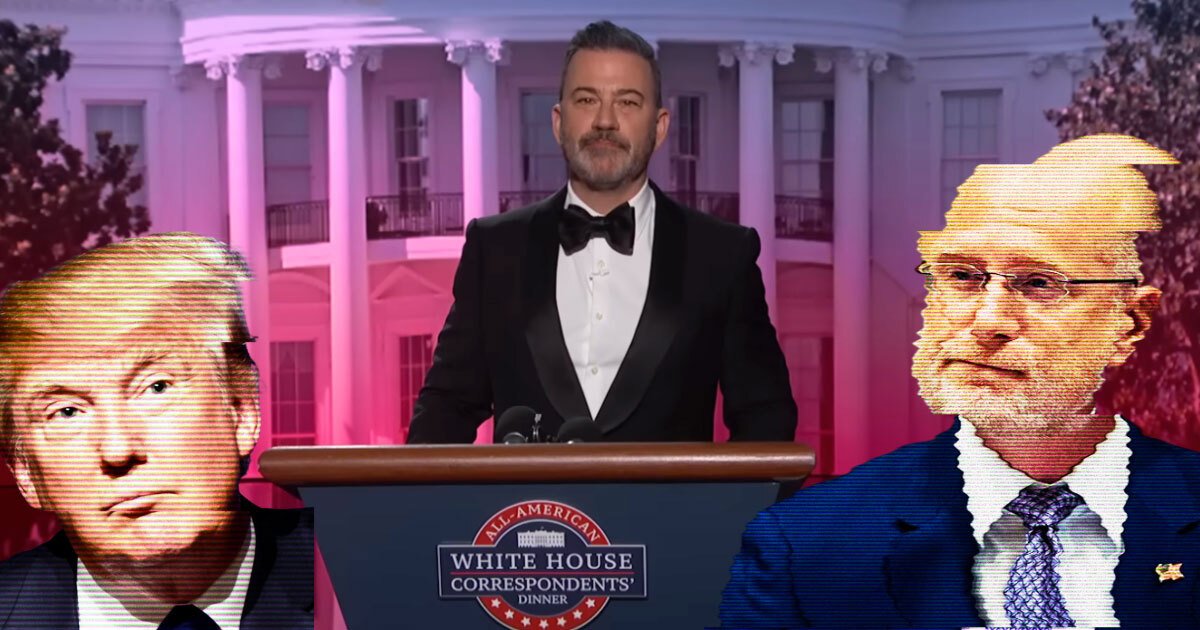
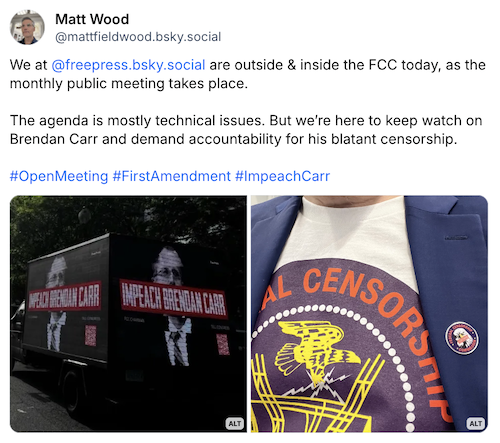
Free Press was at the FCC meeting yesterday with an answer and a billboard truck parked out front to deliver the message: Enough already. It’s time to impeach Brendan Carr.
The kicker
“The ball is in the court of democracies and their citizens. It is up to them to stand in the way of those who seek to silence the press. The spread of authoritarianism isn’t inevitable.” —Anne Bocandé, Reporters Without Borders