Why Anti-Muslim Bigotry Pervades Our Political Discourse
A Pressing Issues conversation with author Rozina Ali

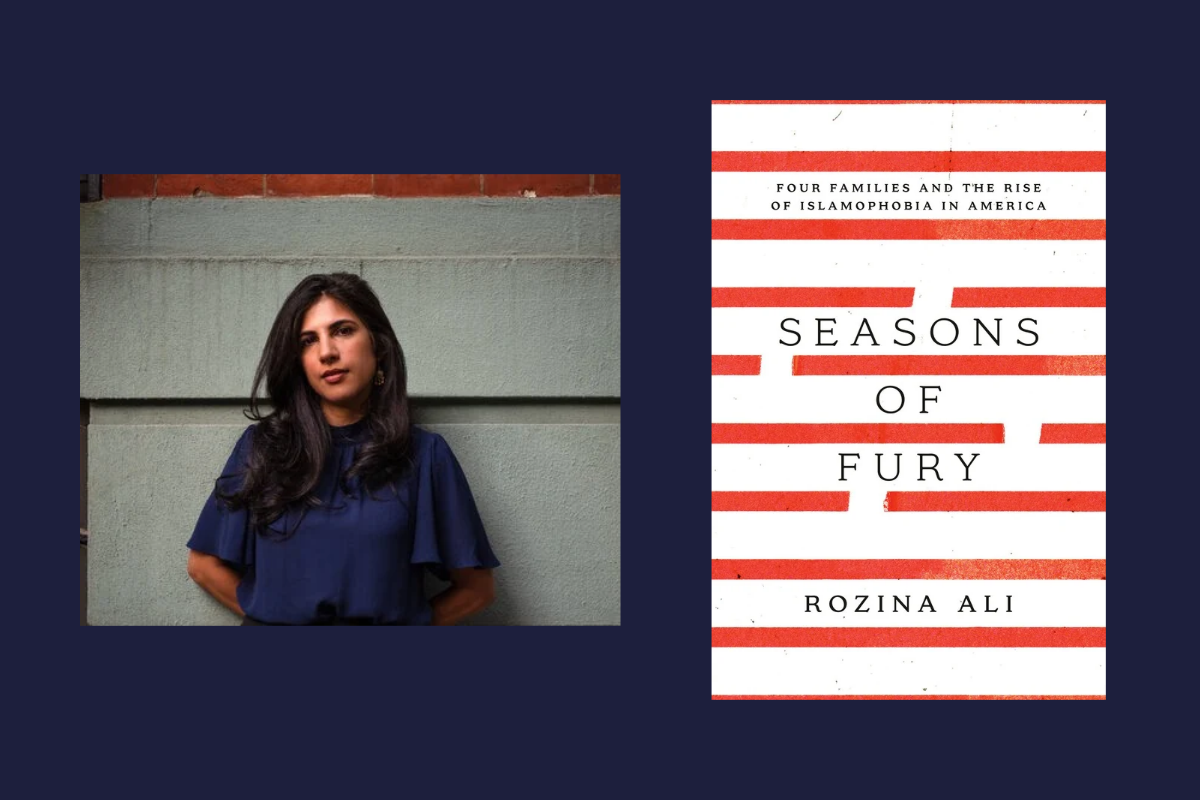
Rozina Ali is a journalist and contributing writer at The New York Times Magazine who covers the war on terror, Islamophobia, the Middle East, South Asia and literature. Her new book Seasons of Fury: Four Families and the Rise of Islamophobia in America investigates the roots of anti-Muslim bigotry and why it remains so prevalent. Twenty-five years after the 9/11 attacks, anti-Muslim rhetoric pervades our political discourse as the country heads into next week’s midterm elections.
The government began surveilling Arab and Muslim communities long before the war on terror. As Ali uncovers, the roots of such bigotry go back far deeper than the 9/11 attacks — to the issue of Palestine and organizing in Arab communities in the United States after the 1967 Arab-Israeli War.
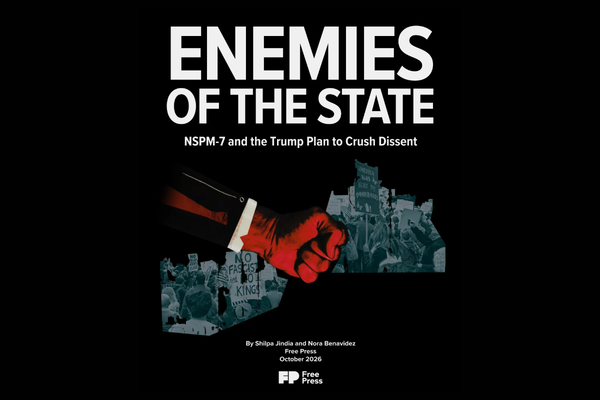
Ali’s book arrived as my colleague Nora Benavidez and I were working on our report Enemies of the State: NSPM-7 and the Trump Plan to Crush Dissent, which we published last week. Already, this presidential memorandum has resulted in the prosecution of anti-ICE activists who protested outside the Prairieland Detention Center in Texas last summer, leading to staggering prison sentences between 30–100 years using the material support for terrorism statutes developed in response to Palestinian political organizing.
Civil-liberties advocates have cautioned against the surveillance powers our government sanctioned in the name of security, with bipartisan support as long as they were used against fringe or disfavored groups. Ali’s masterful history, anchored through the lives of four families, charts how the urge to stamp out pro-Palestinian expression over the decades laid the groundwork for the authoritarian moment we find ourselves in today.
This interview was edited for length and clarity.
Shilpa Jindia: Can you tell me when you first decided to write the book, and how you chose the four families whose lives you decided to chronicle?
Rozina Ali: It was in 2015, and I had come back after spending a couple of years in Egypt. I had focused so much on how conflict abroad — especially U.S. foreign policy abroad — was shaping communities there. But I was also paying attention to what was happening at home. There was such intense anti-Muslim rhetoric and rising violence against Muslims. As 2016 and 2017 rolled onward, what really frustrated me was that so much of the commentary about anti-Muslim discrimination was focused on Trump as the most Islamophobic administration in U.S. history. He’s certainly more open about his disdain for Muslims than others, but I thought that very conveniently dismissed the history that a lot of Muslims had been living under for a very long time.
I ended up following four families. The first is Abdeen Jabara, an Arab American who was born and raised in a small town in Michigan. He became very political after the 1967 Arab-Israeli War and became a really big pro-Palestine activist. He was the first U.S. citizen to be openly surveilled by the NSA.
The second is Muhammad Ali Chaudhry, an affluent, staunch Republican and ambitious politician who settled in a wealthy town in New Jersey. Through his story, I wanted to show how a community that had once welcomed him turned against him when he wanted to open a mosque.
The third family is the Siraj family, who came here in the late 1990s, and whose son was swept up in the entrapment cases of a lot of Muslims that we saw after 9/11. His family was targeted by ICE.
Then finally, the last family, the pseudonymous Omar family, who were terrorized by their neighbor for years and years. Through their story, I show how Muslims weren’t just facing this backlash from strangers, but also from community members or neighbors. I show how law enforcement failed to protect the family over and over. Each of these four families represented what I consider a pillar of how Islamophobia is manifested today.
SJ: Could you say more about the post-9/11 counterterrorism techniques that were justified to target and criminalize Muslim communities?
RA: We saw a massive paradigm shift by the U.S. government where the main mode of fighting terrorism became prevention, which was very well-intentioned. There were efforts to find nefarious elements, potential sleeper cells or potential terrorists in our midst before they committed an act of violence.
Before 9/11, law enforcement had been thinking about Islamic terrorism, but they did not have a lot of ties to the Muslim community in the United States, which is very small. It’s still like 1.5 percent of the U.S. population as a whole.
After 9/11, the FBI and police departments recruited a lot of Muslims to serve as undercover informants, which isn’t unusual. Law enforcement has used such tactics in the past, but often when they’ve used an informant — for example, in gang cases or mafia cases or drug cases — that informant had some tie to that group. But oftentimes, informants sent to scour certain neighborhoods did not necessarily have ties to a terrorist group. It was more that they were just Muslim. They were looking for people who might say disparaging things about the U.S. In that way, a lot of people were swept up in this mass dragnet.
The U.S. government was able to build a case by charging someone with material support for terrorism, for basically conspiring to commit an act of terrorism. It could mean they had translated a magazine or witnessed a loan passed from an alleged terrorist group. Prosecutors did not have to prove a specific tie to a terrorist group in order to successfully convict someone of terrorism.
How does that relate to Islamophobia? This reinforced the narrative that there are terrorists in our midst who come from Muslim communities and there are a lot of radical elements among Muslims.
SJ: You discovered that the roots of Islamophobia go much deeper than pro-Palestinian activism. Can you walk us through how your research changed the conception of your book?
RA: I wasn’t necessarily investigating the history of Islamophobia in the U.S., but the rise of Islamophobia. The subtitle of the book is deliberate because I really wanted to understand why anti-Muslim bigotry is so prevalent and accepted. I thought that the post-9/11 landscape explained so much of it. But the more I dug in, the more I realized Islamophobia and anti-Muslim discrimination are rooted in this notion that Muslims are a threat to the nation and the Western way of life. The more I pulled at that thread, the more I realized that comes from how the U.S. has considered pro-Palestine activism in this country a national-security threat. The government started surveilling Muslim communities long before 9/11 — it really started happening in the late 1960s and early 1970s because of the Arab-Israeli War.
It was a really catastrophic war. Israel was able to take so much more of Palestinian territory, and it was a shock to so many people living here. So there were many organizing efforts on the ground. There were groups built specifically to influence and help change American public opinion about Palestine and hopefully to influence U.S. foreign policy toward a more balanced approach. After the Munich Olympic killings in 1972, in which a Palestinian militant group kidnapped and killed nine Israeli athletes, the Nixon administration said we’re going to surveil Arabs living in the United States to look for any potential connections to Fatah or Palestinian militant groups. Despite what they said, it was a program that actually also ended up surveilling a lot of U.S. citizens of Arab heritage, and they weren’t just asking, “Oh, do you have ties to Fatah?” They were also asking, “What do you think about Israel?”
SJ: How did your research or your experience writing the book shape or reframe your understanding of the term terrorism, or how we understand it and talk about it here?
RA: There was an understanding, even among the U.S. government, that terrorism as a tactic, as objectionable as it was, was rooted in political grievances. I was actually very surprised to learn how there was a deliberate effort to extricate that political dynamic over the decades from the definition and concept of terrorism. And by 9/11, it really took hold. It has stunted any sort of nuanced political conversation when it comes to Israel/Palestine.
SJ: Do you have hope that rising political figures like Zohran Mamdani and Abdul El-Sayed can challenge the roots of Islamophobia, or do you see this continuing to be an entrenched battleground?
RA: I certainly think that Abdul El-Sayed and Zohran Mamdani are different from a lot of the Muslim politicians that emerged before and immediately after 9/11, and they certainly follow Ilhan Omar and Rashida Tlaib in the sense that they’re quite progressive and also very vocally critical of U.S. foreign policy. That said, I don’t think that they’re going to be able to challenge the prevalent anti-Muslim bigotry that we see today. I also don’t think it’s incumbent upon them to do so.
I do have hope, but changing the narrative about Muslims is going to require so many things. It’s going to require a shift in how we think about Israel/Palestine and how we think about terrorism. And it’s going to require policymakers and senior officials across the board to actually push back against such rhetoric. And we’re seeing some of that, but it’s not enough.
About the author
Shilpa Jindia supports Free Press’ legal and policy work across issue areas, with a focus on free speech, media consolidation and journalism policy. She is a journalist-turned-lawyer who has worked with a range of outlets and civil-society actors in the United States and abroad.
Teamwork
Compiled by Pressing Issues editors
Naming the crackdown. In written commentary at the Daily Kos, Thom Hartmann spotlights Free Press’ new report, Enemies of the State: NSPM-7 and the Trump Plan to Crush Dissent, by Shilpa Jindia and Nora Benavidez.
NSPM-7 “treats speaking out, protesting and civic-engagement activities as ‘evidence of terrorism,’” Hartmann quotes the co-authors.
 Thom Hartmann

“Rampant” AI disinformation during midterms. With one week until Election Day, The Guardian reports that “an unprecedented flood of AI-driven disinformation” is hitting social-media feeds, according to experts monitoring campaigns. This comes at a time when social-media companies have increasingly reduced voter protections against false information that could influence election results.
“Trump has made clear that he intends to interfere in the elections,” Benavidez told The Guardian, adding that his administration “has leveraged agencies across the federal government, whether it’s the U.S. Postal Service or DHS — you name it.”
 George Chidi
The kicker
“I think what’s so unique about anti-Muslim bigotry in the U.S. today is that it is not just ignorance or fear of Muslims. It is active suspicion but also active disparaging of Islam, religion and Muslims as a people.”—Rozina Ali