How I Found Hope and Humanity at a Journalism Conference in New Orleans
Reflections from a harrowing and inspiring long weekend with the National Association of Hispanic Journalists
NEW ORLEANS — I was at Daisy Dukes, next to the CVS on Canal and Carondelet, catching up with one of my journalist besties over late-night snacks of gumbo and oyster po’ boys, when we heard the gunshots.
It was around 11:30 pm on Saturday, the last night of the National Association of Hispanic Journalists (NAHJ) conference, and for the first few seconds after the gunshots, the part of me that’s spent three decades in journalism wanted to start reporting so I could post on my phone and let people know what was happening.
And part of me, the larger part in that moment, was terrified.
The restaurant’s manager, a lovely older woman who held her perch by the entrance on the sidewalk, didn’t hesitate like I did. She calmly ordered about 15 of us into the back kitchen and kept us there until it was safe to come out.
Minutes later, the police showed up and set up the crime-scene tape. I was trying to get details at that moment, but soon enough we found out that two men had exchanged gunfire during an argument on the street, and that a woman nearby, someone with nothing to do with either of them, had been shot as well.
As NOPD cleared us to leave, the manager told my friend and me that all her trauma was resurfacing from the New Year’s Day 2025 attack on Bourbon Street, when a man drove a rented pickup around a police barricade and into the crowd, killing 14 people before officers shot him dead.
I hugged her before we left. She thanked me and wished me peace.
I left with my friend. We headed back to the conference hotel, still a bit shaken. As journalists, we are taught to distance ourselves from our humanity in our work, but there are moments when we don’t.
Why I was there
I have been coming to the NAHJ conference for close to 15 years, around the time I founded Latino Rebels, out of a conviction that very few were covering U.S. Latino communities the way we deserved to be.
NAHJ was the first professional journalism organization to embrace my work as a digital and social media journalist. In 2015, I stood on a stage in Orlando and accepted NAHJ’s inaugural ¡Dale! Award (you have to pronounce it like Pitbull) with my father in the audience.
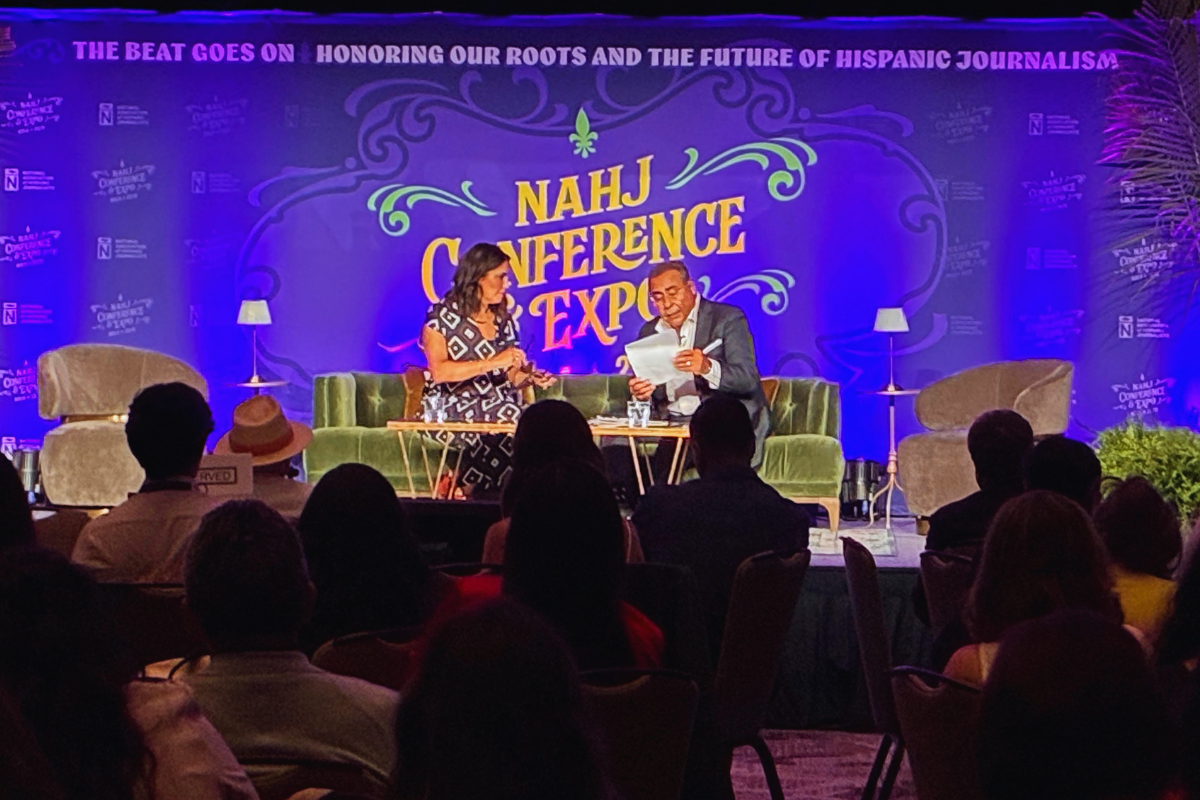
One of the first things I did at this year’s NAHJ was attend a fireside chat with 60 Minutes correspondent Cecilia Vega and John Quiñones of ABC News. Ever since CBS News fired Vega earlier this year, many in the NAHJ community have been angry. Vega was the first Latina correspondent in the history of 60 Minutes, and, in front of a packed ballroom, Quiñones reminded her what it meant to watch her appear in front of that ticking clock for the first time, back in 2023.
“It took me a few months to think on this and figure out what I wanted to say and why I wanted to say it,” Vega told the conference, “but I knew that I wanted to do it here.” She said the messages and support she’d gotten from this community had kept her standing through the hardest weeks of her career, and that walking the halls of the conference reminded her this group is family.
Vega’s words, in her first public appearance since her firing, made national headlines — but what those news accounts missed was the feeling of solidarity and empathy permeating throughout the room.
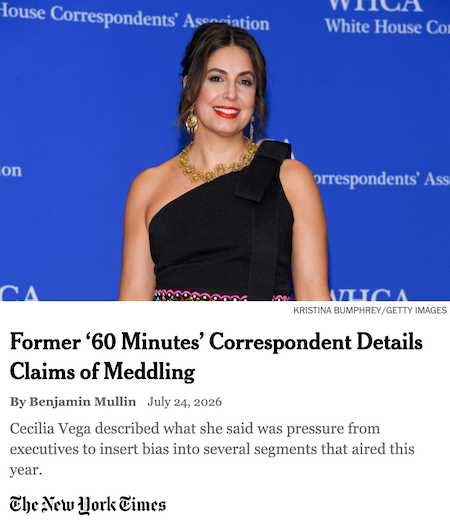
Vega opened up about losing the best job she’d ever had and about CBS News Editor-in-Chief Bari Weiss never once speaking with her directly. For those of us who watched Vega, the moment felt more like community self-care and healing.
In community
That is what I seek whenever I am at NAHJ — those words or moments that can, at times, uplift and give me hope. During Saturday’s gala, honoring the Hall of Fame class and other award winners, more of those words hit.
Ricardo Sandoval-Palos, inducted that night after an illustrious career as a leader and mentor, named the thing this whole business is trying to solve right now.
“Every day, I get hundreds of emails that challenge the level of trust people have in the media,” he said about his current role as public editor at PBS. “It’s my mission to recapture that trust, and the best way to do it is with quality, powerful journalism that doesn’t forget we are the Fourth Estate. We hold power to account. We have to continue to do that.”
José Cancela, the longtime Spanish-language media executive and current Telemundo president, put it simply during his acceptance speech after walking all of us through six decades of U.S. history: “We need you more than ever. Do not hold back.”
Not holding back means being honest about this organization, too. NAHJ told its members that this year’s conference will bring in roughly $300,000 less than last year’s in Chicago.
 Ivan Saravia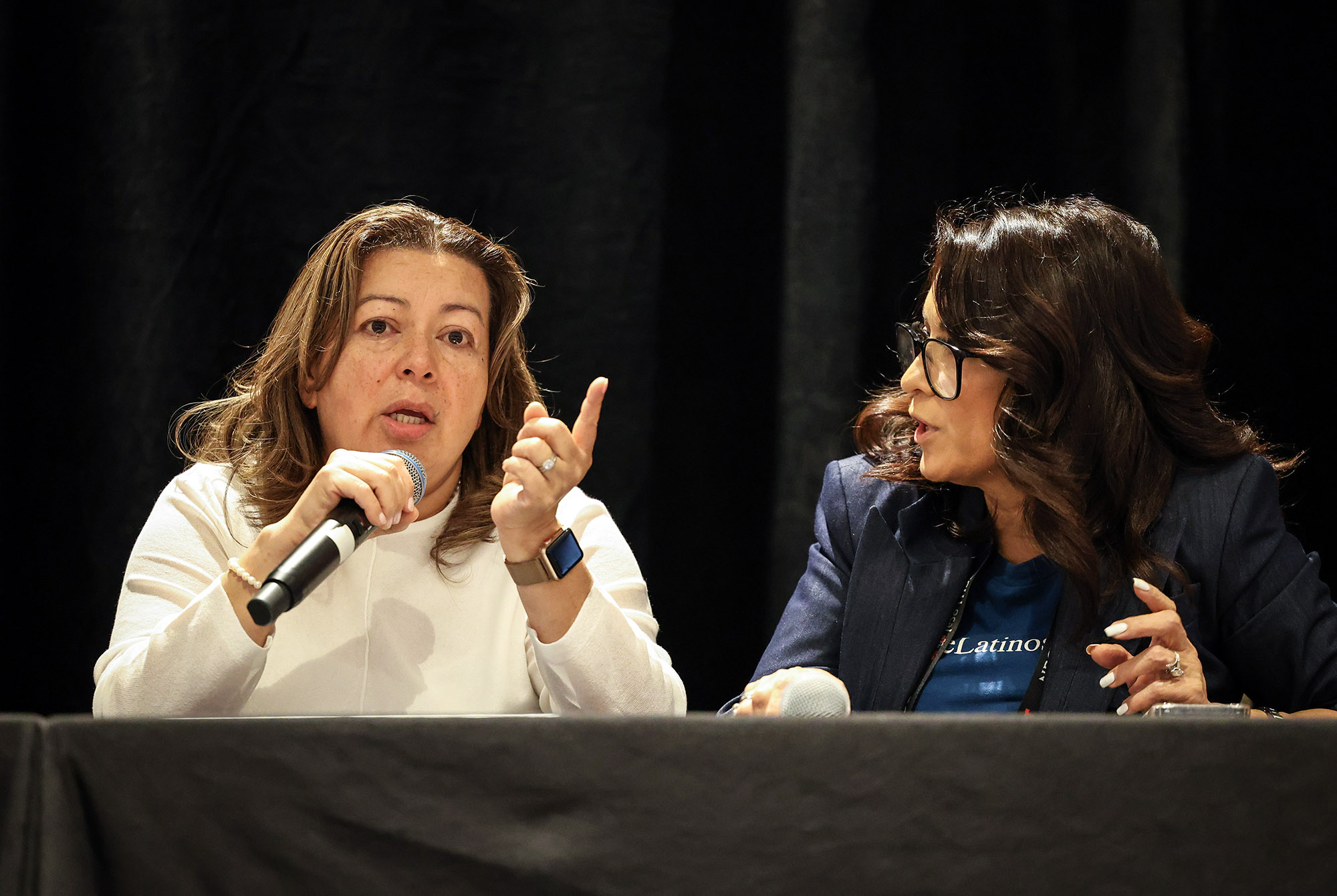
“It’s still one of our main pillars,” financial officer of NAHJ’s Board of Directors Carlos Rodríguez said about corporate sponsorship, “but the media industry has changed, and some companies are no longer able to support us at the same level they have in the past.”
NAHJ Wisconsin president Ricardo Torres told the Latino Reporter, the student-journalist newsroom that covers the conference for NAHJ, that he spent $1,300 on a five-night hotel stay to attend.
“Newsrooms are pulling back on reporters from going to these kinds of things, so it’s a financial burden on attendees,” NAHJ president Dunia Elvir added in that same story.
NAHJ is increasingly dependent on corporate money each year, even as the industry that helps fund it keeps contracting and laying off the very people the association exists to serve.
Still, there’s hope
Despite that critique, I found real reasons for positivity because NAHJ’s core mission is still critical, especially for all the early-career journalists who were attending the conference for the first time and the student journalists who filed news about the conference for the Latino Reporter, which has been going on since 1987.
This community was what I needed during my first NAHJ conferences, and it is what I try to infuse into The Latino Newsletter. Now that I am no longer that younger journalist, I seek out as many younger journalists as I can, even formally becoming a mentor for NAHJ’s Adelante Academy.
Being in the room to connect with veterans — as grizzled as we might be during these times — is invaluable, too. While I worry about the industry and work to create a world where independent journalism thrives, we need spaces like these where journalists feel safe and supported.
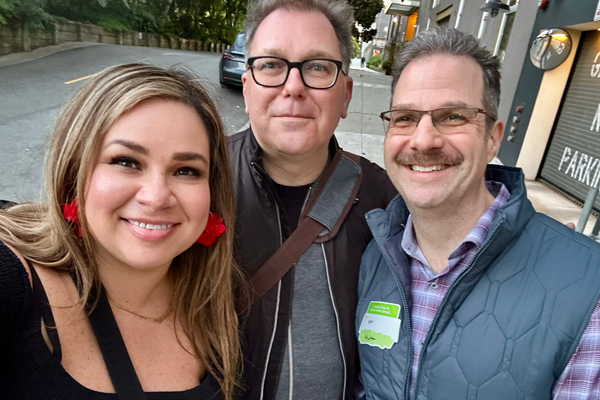
So here’s to those moments, like when I saw so many local-news Latino outlets at the center of this year’s conference conversations rather than on the sidelines. Or at my Free Press colleague Vanessa Maria Graber’s panel on the informal networks comunicadores have built to keep Spanish-speaking communities informed and safe. It was there that a Latina news director spoke through her tears about the time someone fired gunshots at her workplace — and even though the conference didn’t formally acknowledge the incident, she told the small group of us that she felt safe enough to share it all with us in that room.
And in the hallways between sessions, I kept running into Latino public media leaders I’d never met in person before. Back in February, I wrote that rebuilding public media after the collapse of the Corporation for Public Broadcasting requires a coalition “as broad and as honest as the problem is large.” At NAHJ, I met people who must be part of that coalition, and I came home more optimistic.
I still don’t know how to hold all of it at once — the fear, the grief, the criticism, the hope. I am still processing what happened that late Saturday night. But this past week in New Orleans, I never distanced my humanity from any of it, perhaps the best lesson NAHJ has taught me.
About the author
Julio Ricardo Varela is the senior producer and strategist at Free Press. He is also a working journalist, columnist and nonprofit-media leader. He is a massive Red Sox, Knicks and Arsenal fan (what a combo). Follow him on Bluesky.
Open tabs
Compiled by Pressing Issues editors
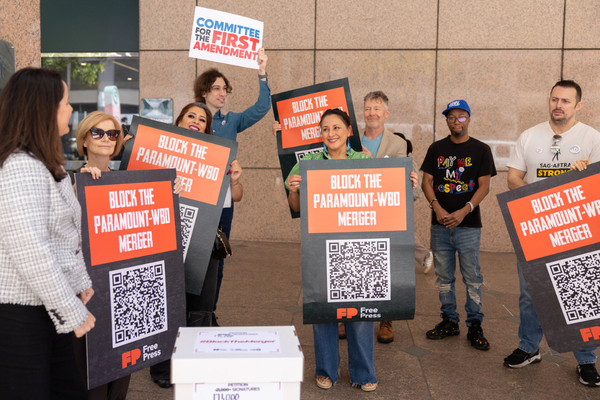
No mystery how bad this merger is, Sherlock. Prominent UK actors Benedict Cumberbatch, Alan Cuming and Benedict Wong pushed British regulators to oppose the Paramount-Warner Bros. merger in The Guardian. “We have watched, with growing alarm, what consolidation does to the breadth and depth of the work we produce,” they wrote. Huzzah!
 Benedict Cumberbatch and Alan Cumming and Benedict Wong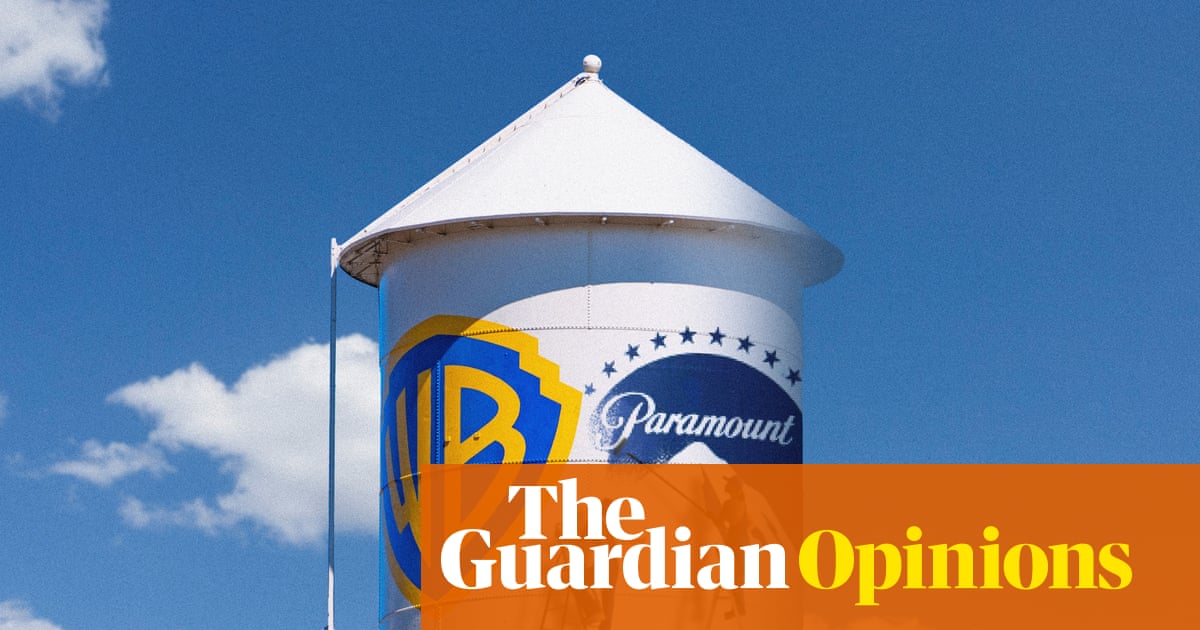
Bad blood in the Garden. New York Knicks owner James Dolan is coming under increasing scrutiny for spying on his own customers. But while activists like Fight for the Future’s Evan Greer have been targeted by MSG, as Wired exposed in a series of investigative stories, Dolan turned off the cameras for Taylor Swift’s wedding at the venue.
“This ‘privacy for me, surveillance for thee’ attitude,” Greer writes in an Op-Ed for MS NOW, “feels like a perfect encapsulation of the future we’re already living in: one where wealthy elites can afford privacy, while the rest of us are forced to live in a corporate surveillance panopticon.”
 Evan Greer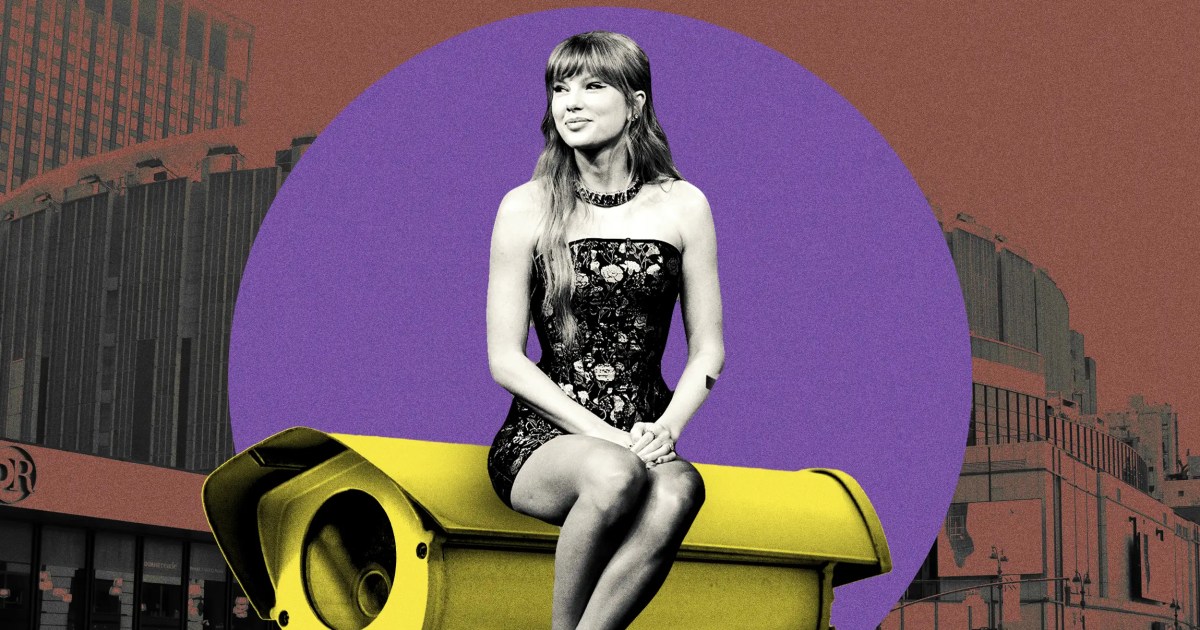
The kicker
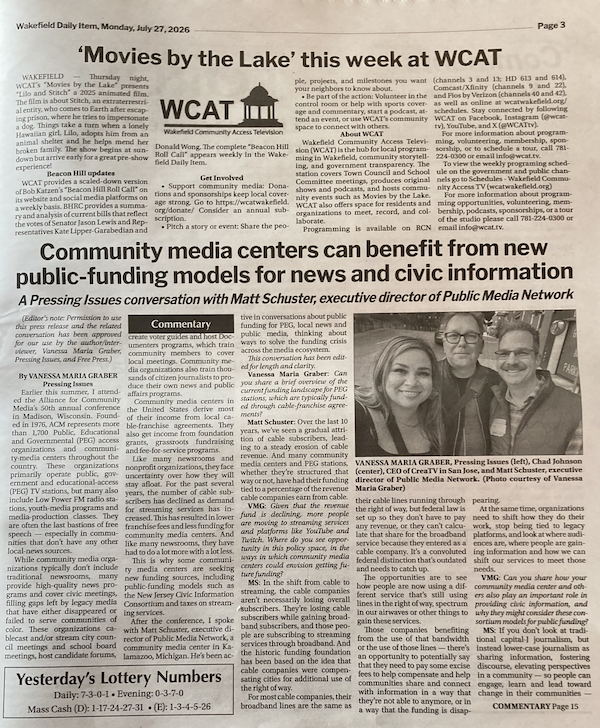
Pressing Issues graced the pages of several local Massachusetts newspapers this week.