Media Consolidation Threatens to Lock Away Our Shared History
The Archival Producers Alliance is working to save our audiovisual heritage before it disappears


Archival producers might be the unsung heroes of your favorite documentaries. They’re the ones who research, track down and license images and clips for nonfiction projects that revisit, rethink and reinterpret our history.
They also have a unique vantage point on the dangers of runaway media consolidation, which threatens to limit not only who gets a media platform in the future but whether storytellers will be able to access the materials that show us our past.
The warning signs are everywhere: exorbitant licensing fees that put footage out of reach for independent filmmakers, decades of local-TV footage that’s lost or neglected when ownership changes hands, and AI companies swooping in to raid archival materials. Most recently, CNN laid off all but one of its in-house licensing team, jettisoning decades of institutional and historical knowledge.
In response, archival producers are speaking out and getting organized. I spoke recently with Stephanie Jenkins and Rachel Antell, two of the co-founders and co-directors of the Archival Producers Alliance. Their mission is “to promote the value, use, protection, and preservation of authentic archival materials; and to elevate and amplify the role of archival producers within nonfiction media.”


(Full disclosure: I have been an unpaid adviser to the APA’s local TV-news initiative.)
Jenkins is a producer and researcher with famed documentarian Ken Burns, working on projects about the Central Park Five, Jackie Robinson and Muhammad Ali. She’s currently working on an eight-hour series about Reconstruction called Emancipation to Exodus.
Antell runs Sub-Basement Archival alongside Jennifer Petrucelli, the APA’s third co-founder. They work as producers and researchers with a wide variety of filmmakers on projects including the Oscar-nominated Crip Camp and ESPN’s four-part Title IX series, 37 Words, which was nominated for a documentary-research Emmy.
I recently spoke with them about their work. Our conversation has been edited for length and clarity.
Craig Aaron: Why did you start the Archival Producers Alliance?
Rachel Antell: Jen Petrucelli and I were working on a film where they had asked us to look for a photo from the early 1900s of this woman who had started these activist riots. People coming over the border in the early 1900s were always required to take kerosene baths — which was obviously incredibly toxic — and one woman started something called the Bath Riots that pushed back against this. The filmmakers wanted a photo of this woman. We could not find one. We looked and looked and looked. We were quite sure that it just didn't exist.
And then one day, we were looking at a rough cut of the film, and we saw a photo of her, and we said, “Oh my God, we were very confident that this didn’t exist. Where did you find it?”
They said: “We didn’t. We generated it.” And this was 2023, when ChatGPT was just coming into the public consciousness, and we had no idea this was even possible.
So we reached out to Steph to say, “Are you seeing this? What should we do?” And she had a strong network of other archival producers, so we rallied the troops.
We ended up writing a set of best practices and guidelines for the use of generative AI within documentary film. We launched the Archival Producers Alliance because we realized we needed to all be in contact with each other in a way that we hadn't been.
 Rachel Antell, Stephanie Jenkins and Jennifer Petrucelli
The conversations that started there really broadened out. We were all facing many similar issues, including the lack of access — especially for independent filmmakers — to our nation’s audiovisual history.
CA: How are archives connected to media consolidation?
RA: Television news serves as the first draft of history, and it covers events that are important for public understanding and civic participation. Historical documentary filmmaking relies on those first drafts to create deeper narratives and provide social commentary. As ownership consolidates, we’re moving toward private-archive monopolies.
And the fewer archives that own the content, the more restrictions they may put on usage — and the higher the pricing they can demand. Some of the conglomerates are asking for tens of thousands of dollars for a minute of footage, which is out of range for most documentary filmmakers. The cost alone makes certain stories unfeasible to tell.
It’s not that we see these things politicized all the time, but we have seen it. In this current political moment, we’re a lot more vulnerable to this becoming more common, where corporate owners can decide to deny access based on the political views of the filmmakers.
One of our colleagues had used some old war footage in a previous film he had made. Several years later, he was going to use the exact same footage in a different film, and the network denied him use because America was at war and the footage he was going to license showed American soldiers in a bad light. All of a sudden, footage that had already been used in a documentary could not be used in a new historical documentary because of the political moment we were going through. This story shows how vulnerable we are to the whims of the corporate owners.
CA: What are some of the obstacles that archival producers face?
Stephanie Jenkins: I was working on a documentary about Muhammad Ali, where I spent about a year and a half calling a local station, WHAS-TV in Louisville, which is an ABC affiliate owned by Tegna. Because Ali grew up in Louisville, I wanted to get into their archive, which I eventually found out was sitting in their basement. When I convinced someone to let me in, I was able to spend weeks in the archive.
This is not a normal occurrence. I’m working for one of America’s favorite documentarians — and my team prioritized the budget that I asked for to find this material. And sure enough, sitting in this basement in Louisville, even after a portion of their archive had been lost to floods, was what I believe is the earliest moving-image material of Muhammad Ali. He was 12, signing up for an amateur boxing tournament. The only reason I had access was because of who I was working with.
And then from there, Tegna, who owns it, suggested a rate of over $20,000 per minute for an in-perpetuity license. For reference, I usually budget one quarter of that. I was able to negotiate, but there are just so many barriers to get to treasures like this. It’s getting in, it’s the travel, it’s digitizing, it’s sending a researcher in and then it’s this licensing cost from a media-ownership group that may not work with the archive day to day. That story really excited the people at the station, and then they ended up using this material in other stories.
But that experience really encapsulates some of the issues of access — and the tension between local stewardship and national ownership.
Muhammad Ali is one of our most important American heroes. What’s also sitting in that archive are local heroes, someone’s grandmother who was in a baking contest. It’s a high-school basketball game that changed their life. These are the stories that are owned by these media-ownership groups that might not have monetary value in the same way that early footage of Muhammad Ali would.
Something we talk about a lot is the difference between assets and artifacts. And sometimes, if people high up in a boardroom see their archives as assets to be traded, what gets lost is the fact that these are essential historical artifacts.
 Kristen Hare
CA: What’s happening at CNN right now?
SJ: Much of the licensing staff from CNN was recently fired. These are people that we’ve worked with for many years. In the case of one person who was fired, he had been with CNN for almost two decades. We’ve worked with this staff for a long time, and they know the collection like the back of their hands. They know Atlanta history, American history, all of these things that enhance the ability to use the collection. We can’t say for sure, but the timing does seem suspicious given the pending merger.
RA: They won’t say where the archive collection is going. The people who work with it are not interchangeable. And they were let go before they had a chance to even train their replacements. So that knowledge of the collection is gone. That means that the CNN news recorded for these past 45 years could be beyond reach for most filmmakers for the foreseeable future. And the filmmakers who currently have films in progress could have a much harder time getting and licensing that footage.
SJ: There’s a false conception that archives are just sitting there and waiting for you to open up the doors. That could not be further from the truth. They are living, breathing things. Archives need stewardship. When one collection goes to another place without the stewards, a lot of information is lost and a lot of relationships are lost. Sure, maybe on a bottom-line spreadsheet somewhere, it seemed OK to fire these seven people who had been with the company for a collective 100 years. But to the people actually experiencing the collection, it is a major loss.
And this is before another possible merger. We could have CBS, which is one of America’s major news archives, and CNN, which is another one, under the same roof. We don’t know how filmmakers or researchers or anyone will be allowed to access this material. We just don’t know if you’re making a film about the history of abortion, if you’re making a film that’s critical of Donald Trump, if you’re making a film that’s critical of Elon Musk — or of the Iran War — who knows what sort of leverage they can have on this material that has gone out over the public airwaves? We just don’t know, and it’s worrisome.
CA: So that’s motivated you to get engaged and involved in opposition to this proposed merger?
SJ: Our mission is to advocate for the preservation of American audiovisual heritage, but we are also a membership organization. We represent 650 people who do what we do from around the world. What we’re concerned with is the historic record and access to our invaluable cultural resources. So we decided to support the Block the Merger effort.
CA: What do we risk losing if all this material disappears or is made inaccessible to those outside of these giant corporations?
RA: I think we lose independent voices who are able to synthesize stories in a different way than the majority opinion or the position of the people in power. If only certain people have access to the historical facts, then we only learn it one way.
You know, history is told by the victors, and access to information is one of the few things that can combat that. Documentary films have historically been a powerful voice for bringing new views and new understandings of what our history actually is. And we’ve managed to change it over the last decades — we’ve seen a new perspective on history that hadn’t been there prior. There’s a real risk of that being lost, because documentary evidence is how we understand our past.
About the author
Craig Aaron is the co-CEO of Free Press and Free Press Action and a guy with two first names. Follow him on Bluesky.
Open tabs
Meta-morphosis. Quartz reports on the massive layoffs expected this week at Meta as the once-social-network attempts to reinvent itself as AI-centric. The company is sending a shocking 7,000 pink slips while 7,000 other people will be moved to AI-related jobs.
As if that wasn’t bad enough, Reuters notes that “More than 1,000 employees have signed a petition decrying the installation of mouse-tracking software for use in training Meta’s artificial intelligence models to help them replicate how humans interact with computers.”
The AI backlash is real. The New Republic tracks the nationwide grassroots backlash against data centers, cautioning the political class to pay more attention to the significant surge in popular resentment toward AI and its resource-draining infrastructure.
 Monica Potts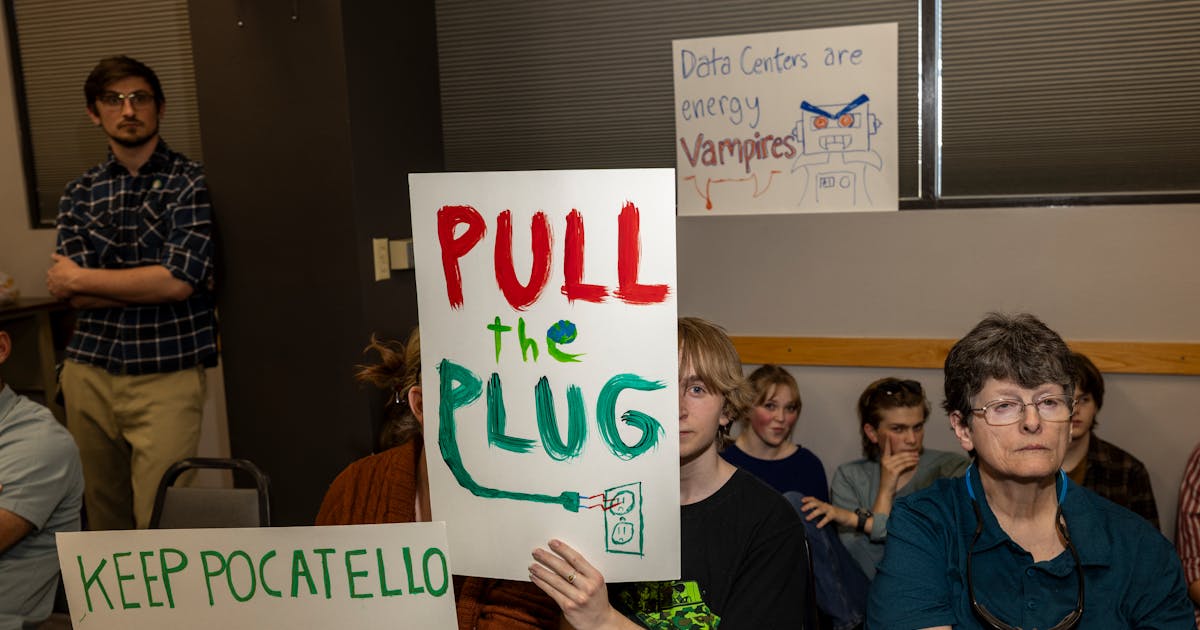
The kicker
“The most offensive trick in FCC Chairman Brendan Carr’s arsenal is the claim that FCC underlings can bless a transaction and let the merger proponents close the deal — yet somehow that decision isn’t final for purposes of appellate-court review.” —Free Press General Counsel Matt Wood on the FCC’s latest attempt to rig the system to push through the Nexstar-Tegna merger