Stephen Colbert vs. The Lying Weasels
It’s too late for the Late Show, but we can still stop the guys who killed it
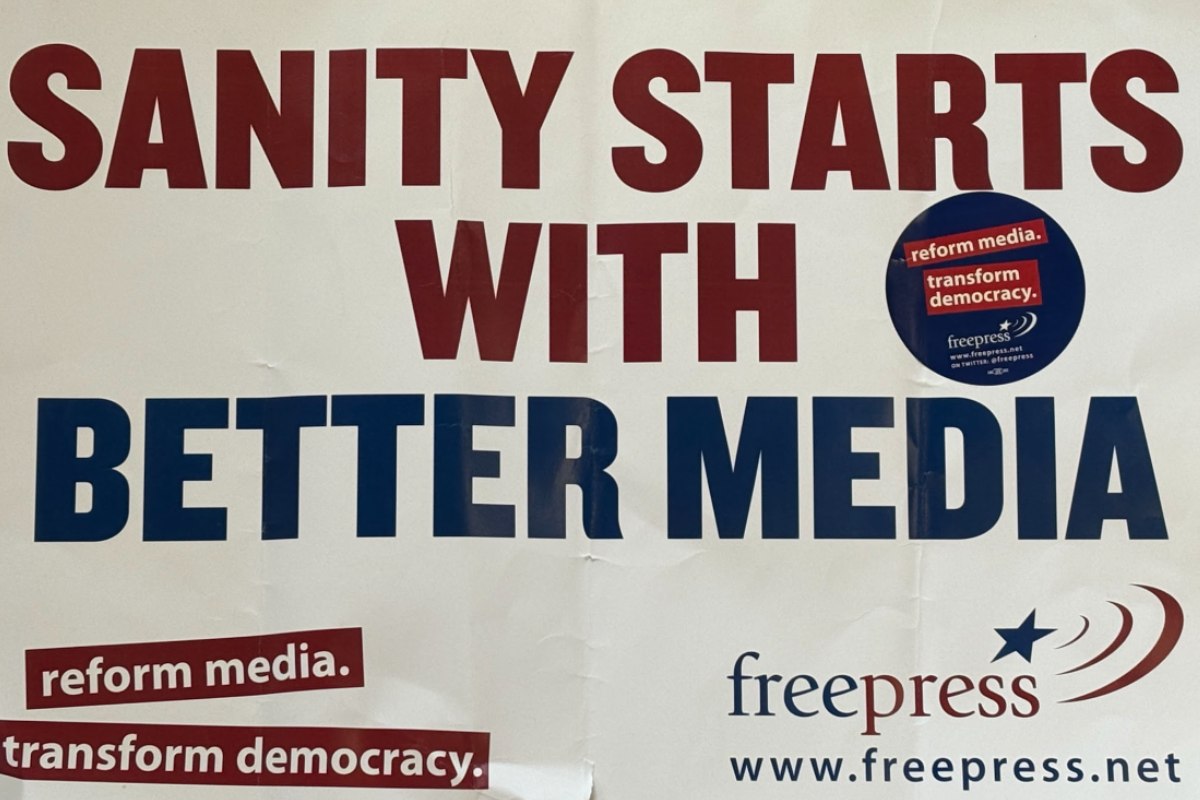
While cleaning up my office yesterday, I discovered a wrinkled placard that had fallen behind my bookshelf. It was a souvenir from the 2010 “Rally to Restore Sanity and/or Fear” — the spoof protest march that Jon Stewart and Stephen Colbert organized, which brought more than 200,000 people out to the National Mall.
My Free Press colleagues and I showed up that day to attract a few new recruits, hoping to seize on the fake protest to build our ranks for the next real one.
The crowd’s outrage at extremism and the disastrous state of our political discourse was very real, but it never went anywhere. The event was ultimately just a bit — a performance of a protest, produced by Paramount. A pre-MAGA Kid Rock was the closing act. How quaint.
Perhaps finding this wrinkled old sign was a sign — a moment of serendipity on the day Colbert’s Late Show was airing its final episode. Or maybe it’s just a reminder that in its long-running battle against sanity, fear is winning in a rout.
The ‘Too Late Show’
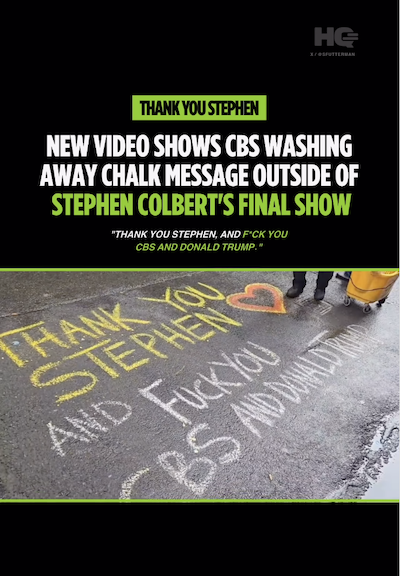
Colbert no longer plays a right-wing blowhard, and now he no longer works for one. He’s the most prominent casualty of CBS’ bosses at Paramount Skydance — and a symbol of their utter capitulation to the Trump regime.
Colbert’s ouster, for those tuning in late, followed Paramount’s decision to pay Trump $16 million to settle a ridiculous lawsuit he filed over 60 Minutes’ standard editing of an interview with then-Vice President Kamala Harris during the 2024 campaign. After the settlement, the Trump administration approved Paramount’s merger with Skydance. Colbert accurately called it “a big fat bribe.”
Three days later, CBS canceled his top-rated show, insisting his ouster was “a purely financial decision.” While gently mocking those claims, Colbert mostly stuck to the high road during his lengthy farewell tour, insisting “it’s their shop, and they can do what they want.”
Though he did tell The Hollywood Reporter:
Causality is not the same thing as correlation, and I understand that — and not just because I learned it from the R.J. Reynolds Tobacco Company, which reminded us that, yes, you smoked and you got cancer, but, you know, correlation is not causality. So maybe my cancellation was just a naturally occurring tumor that just had to be cut out of the corporation. I mean, that’s entirely possible. I would also say — and this is what feels most true to me — that two things can be true. It can be that the broadcast model is collapsing, and, while we’re at it, as long as we’re collapsing here, what if we shove this one out a window first? I mean, this lamb’s got a very cuttable throat.
 Lacey Rose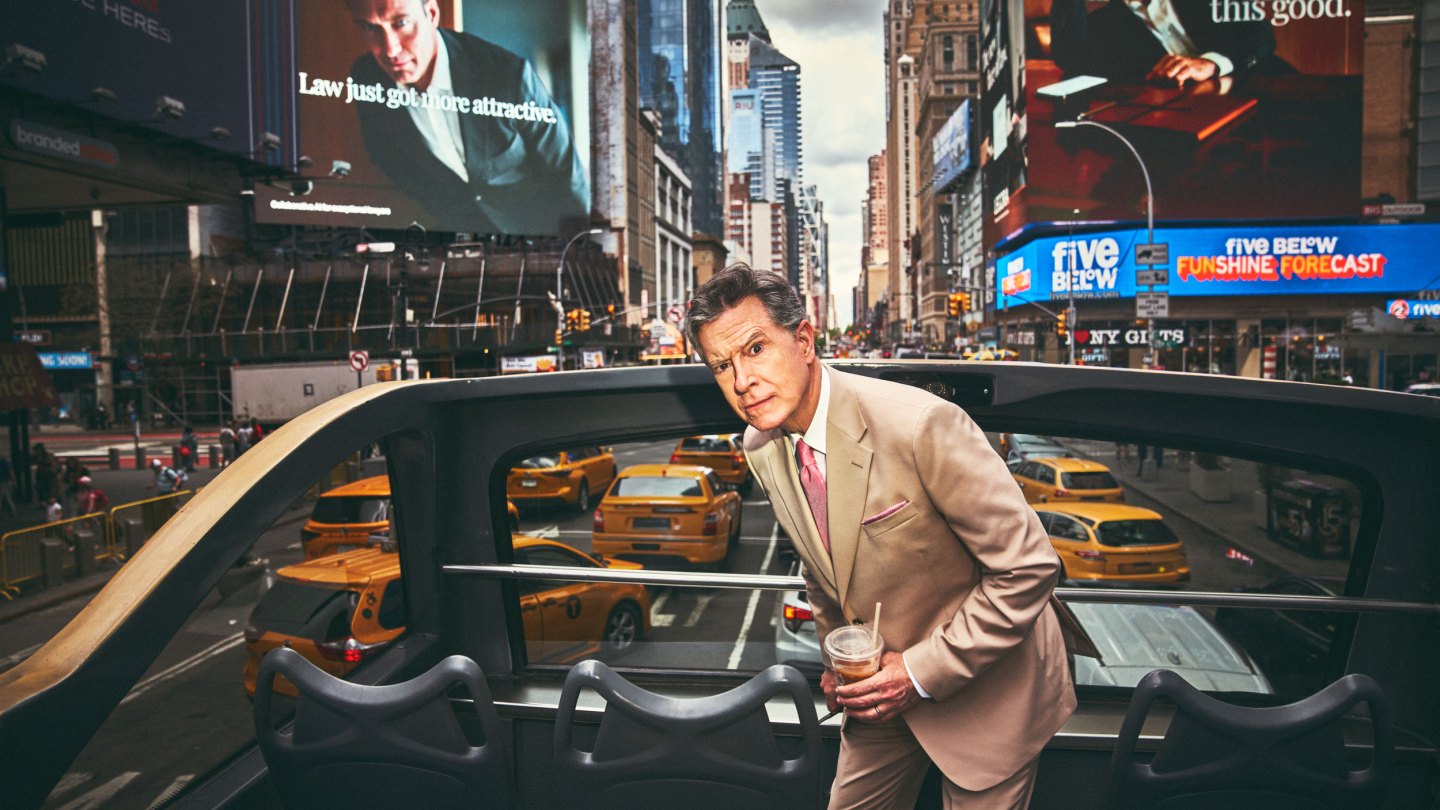
David Letterman, Colbert’s predecessor at CBS, was more blunt in his assessment of the executives: “I’m just going to go on record as saying: They’re lying,” he recently told The New York Times. “They’re lying weasels.”
Unlikely free-speech warriors
I never expected to be writing this much about late-night TV in 2026.
I love a snarky monologue clip as much as the next guy, but if you had asked me a year ago who was going to be on the frontlines of the fight for free speech, I wouldn’t have guessed this bunch of middle-aged white dudes in fancy suits who specialize in couch-side banter.
As NBC’s Seth Meyers joked about Colbert’s departure during a cameo alongside his fellow late-night hosts in the finale: “Where will Americans turn to see a middle-aged white man make jokes about the news?”
As much as I might wish national attention was focused instead on the stories of Mario Guevara, Rümeysa Öztürk, Georgia Fort or even Sharyn Alfonsi, the most highly visible examples of government censorship and abject media surrender have been the attempts to suspend Jimmy Kimmel and cancel Colbert.
“The legacy of this show needs to be that we remember it as the show that was canceled because a presidential administration wanted it off the air,” Northwestern Professor Heather Hendershot told The Associated Press this week. “We haven’t connected every single dot on that, but it’s very clear that this was a political decision. And I think 20, 30, 40 years later, that is going to be strongly remembered about this show — that this was a moment of authoritarian triumph.”
The beginning of the end?
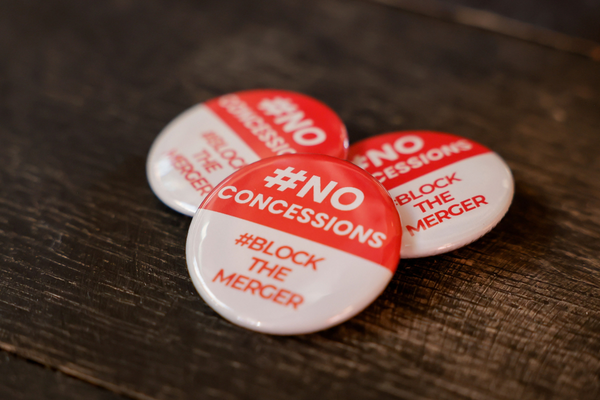
But what if it wasn’t? What if it instead became a moment to break free from billionaire-controlled media? To block the merger with Warner Bros. Discovery that Paramount so desperately wants? To begin reimagining a media system that actually builds democracy rather than tearing it down?
Can we do it? Can we imagine a media that has room for both 17-minute segments about Black liberation (this used to happen!) and Carpool Karaoke? One that is both hard-hitting and playful? One that covers the world in all its problems and its beauty? One where we aren’t just selling Happy Meals and manufacturing consent?
Doing so will require more than the performance of protest. It will take the hard work of organizing and mobilizing to build new structures and tear down some old ones. It will mean no longer handing over news, culture and our democracy to the same cabal of billionaires who created this mess: the Ellisons, the Murdochs, the Musks and all the rest.
It will also mean investing our own money in the media we want to see — yes, with our donations and subscriptions, but, more importantly, with our demands about how public resources should be spent. We need to talk less about which comedian should run for president and more about the organizing it will take to win power and push our leaders to make real and lasting change.
Politics leashed
At 12:54 a.m. ET on Friday, Colbert’s Late Show went dark. Here in Washington, D.C., at least, programming immediately cut to Comics Unleashed — the syndicated show that will soon replace Colbert in the CBS late-night lineup.
It’s hosted by Byron Allen, once the youngest comic ever to appear on Johnny Carson’s Tonight Show. These days, Allen is a media billionaire himself, the owner of two-dozen TV stations and the Weather Channel. “We don’t talk about politics,” Allen told CNN about his show. “We don’t talk about anything that’s topical.”
This approach — and just how cheap the show is to produce — is perfect for Allen’s new partners and the channel-surfing president they serve. But make no mistake: “No politics” is very much a political choice.
I made my own choice: I turned it off.
Open tabs
I’m not the only one around here writing about Colbert. Over on the Free Press blog, Timothy Karr looked at Colbert’s last night and wrote about the “scores of other individuals, organizations and entities of lesser renown who’ve found themselves at the receiving end of Trump-administration efforts to censor their points of view.”
 Timothy Karr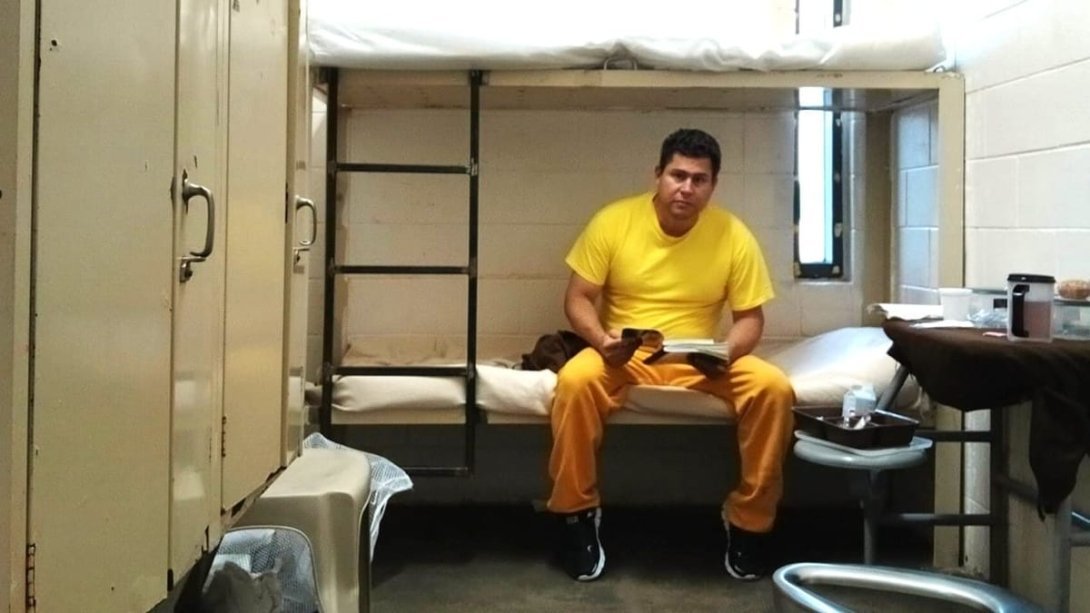
At least he still pays The Roots. Jimmy Fallon is another host who purportedly “doesn’t do politics.” The hardest question the host asked Donald Trump when he came on his Tonight Show was whether he could touch his hair. Note that Trump never says Fallon should be fired.
In a blistering essay for Current Affairs, cultural critic John Greenaway lambastes Fallon’s “desperate plea to ignore the crumbling world outside the studio walls.” Fallon’s “insistence on a radical non-engagement with reality,” he writes, is “a position that, in our current political climate, is itself an aggressively political act.”
 Jon Greenaway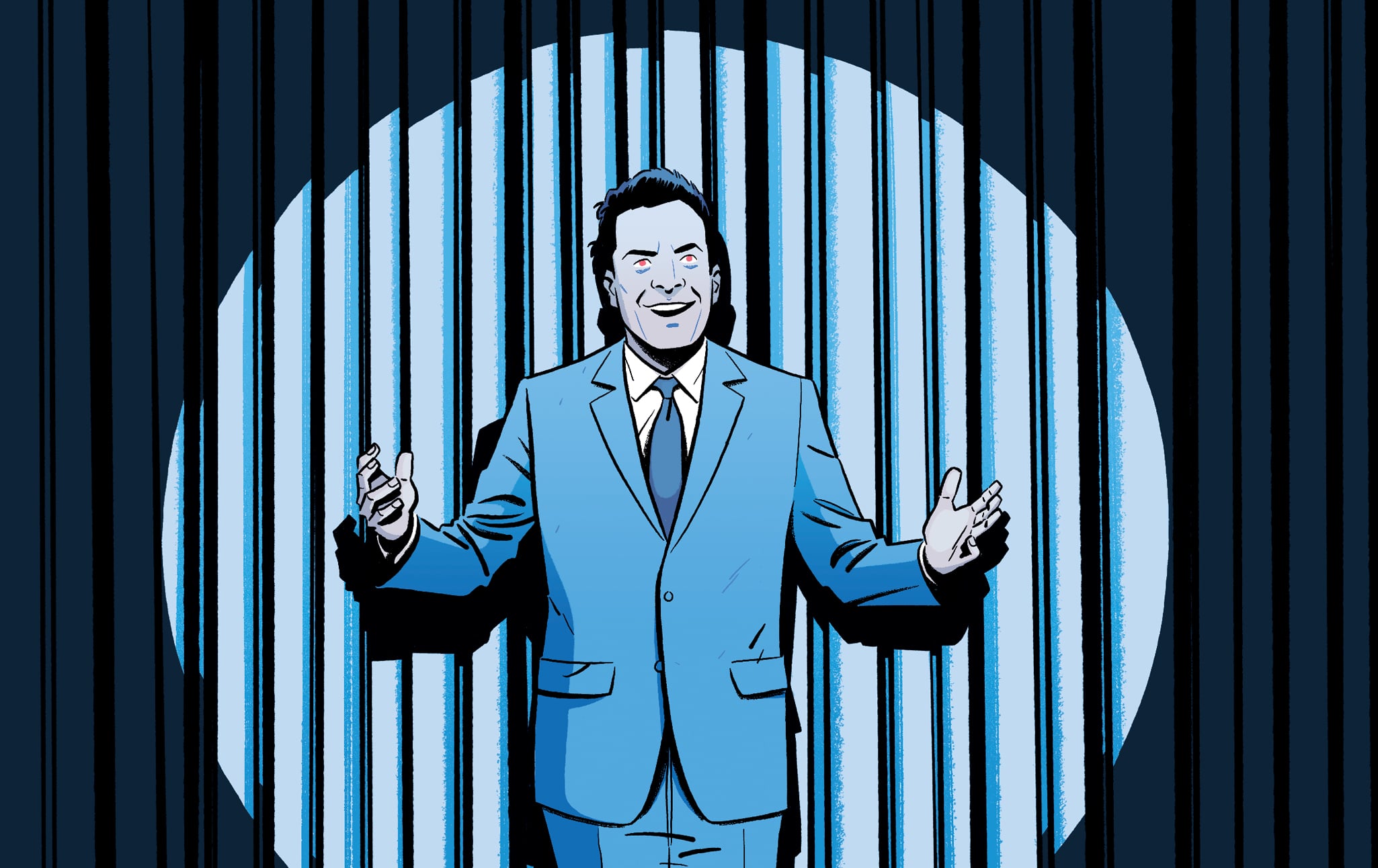
The kicker
Pressing Issues will publish its next edition on Fri., May 29. Enjoy the long weekend!
About the author
Craig Aaron is the co-CEO of Free Press and Free Press Action and a guy with two first names. Follow him on Bluesky.