The Antidote to Surveillance Is Solidarity
Why we’re launching a grassroots campaign to stop government spying


You know the sci-fi plot: An all-powerful state uses overt force and widespread surveillance to stop people from rising up against it. The Big Brother effect induces fear of persecution, torture, imprisonment, deportation and even death. The fear causes alienation, isolation, and withdrawal from like-minded communities to avoid suspicions of wrongdoing.
You’ve seen the movies and read the books. Think of the repressive states from George Orwell’s 1984, Margaret Atwood’s The Handmaid’s Tale, Octavia Butler’s Parable of the Talents, The Matrix, Minority Report, Star Wars or Black Mirror.
In each of these stories, the state weaponizes surveillance as a tool of its brutal authoritarian control, tracking bodies and minds to ensure complete domination with zero defection or dissent.
It’s not just fiction. Regimes like North Korea follow the same pattern. And so do other countries, even the United States. We aren’t resigned to accepting life under authoritarianism, though; we’ve seen what can happen when those of us who have a vision for something better stand in solidarity — we win.
The authoritarian-tech billionaire compact
Sitting beneath the villainy of real-world authoritarianism is the entrenched use of artificial tech tools and surveillance to monitor our every move. Billions of dollars in government contracts have gone to companies like Palantir, Clearview AI and Flock to acquire technology to track and identify individuals, monitor social media activity and purchase data directly from companies like Waymo and data brokers — a draconian practice that was recently confirmed by the director of the FBI.
 Robert Mackey
Agencies like the Department of Homeland Security (DHS) are teaming up with local police departments to buy people’s sensitive data without the use of warrants and create dossiers on activists. In Los Angeles, for example, Flock deploys thousands of license-plate readers and other cameras to track people, sharing that footage with DHS and making it easier for the government to monitor communities and chill protests. In Washington, D.C., the police offer rebates and sometimes free camera installation to residents who share their personal footage with law enforcement. Atlanta has the highest number of cameras per capita of any city in the United States.
 Adam Mahoney and Madeline Thigpen
Name any U.S. town, and you’re most likely to find a vast surveillance apparatus monitoring communities. AI companies market these as crime-prevention and public-safety systems. But in reality, this invasive technology is being used to run roughshod over our constitutional rights.
History on repeat
The U.S. surveillance state is not new. As early as the 1700s, “lantern laws” were enacted to force Black, indigenous, and mixed-race individuals to carry lanterns when walking unaccompanied by a white person after dark. Throughout U.S. history, the government has utilized whatever technology was at its disposal to carry out invasive and illegal surveillance tactics against people, organizations and entire movements that represented a threat to the status quo of white supremacy, capitalism and imperialism.
Conflicts abroad and the interests of national security at home have been used to justify expanding the authorities of government institutions to conduct surveillance without judicial oversight. And once these authorities exist, they don’t go away; they become part of the system, utilized against anyone perceived as a threat by those in power.
We are seeing this play out today. The Trump administration has leveraged artificial intelligence and other surveillance technology to track down immigrant groups, surveil protests and create new legal frameworks to pursue retaliation against even tentatively oppositional activities now labeled as “antifa” and “extremist.”
Recent reporting by WIRED revealed that federal law enforcement agencies are monitoring activists who are organizing against data-center buildouts or expressing concerns about the widespread adoption of AI. They see such opposition to these extractive facilities as an emerging extremist threat. This sounds eerily similar to how national-security interests have been used in the past to justify the surveillance of unions, socialists, racial justice activists, and anti-war activists.
 Daniel Boguslaw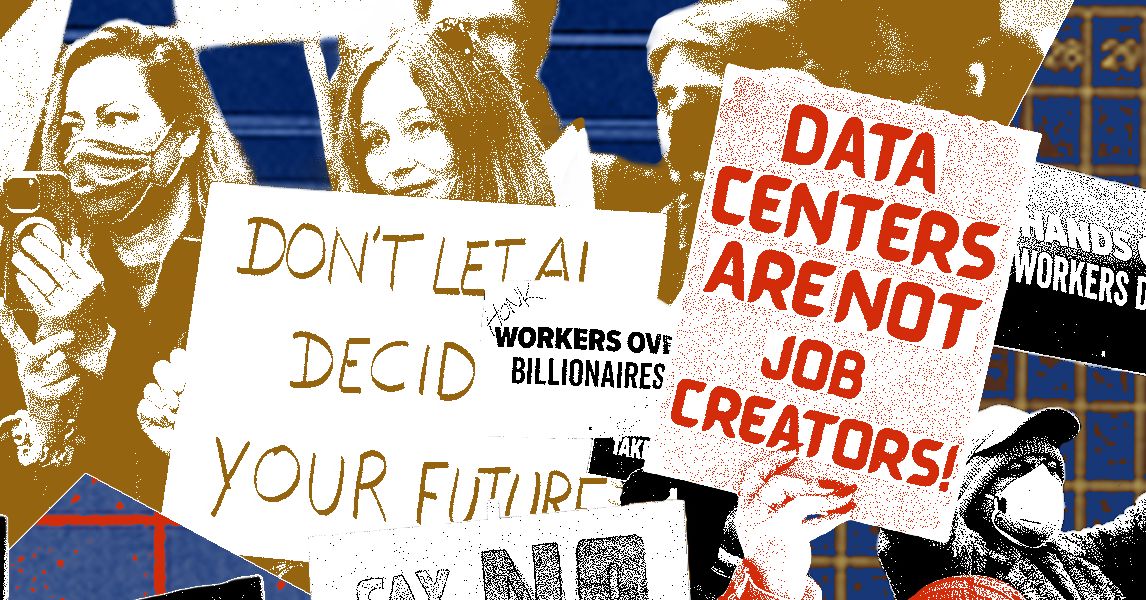
Apocalypse Now?
What’s different now, though, is the breadth of information that is readily available to government agencies. Nearly every minute of every day, we generate data that can reveal an alarmingly detailed picture of who we are. Our cell phones, wearable devices and connected cars can track our movements over time with extreme precision.
Unchecked data collection by commercial entities and the lack of strong federal data privacy legislation have fueled the data broker industry, which was valued at around $250 billion in 2025 and is estimated to be worth nearly $450 billion by 2031. These entities make it their business to collect, analyze and aggregate troves of personal information that they then sell to virtually anyone, including government agencies.
Public outrage over this all-encompassing surveillance state is real and growing. Last spring, Montana enacted legislation to close the “data-broker loophole” — preventing government agencies from buying private data as a way to get around warrant requirements. The Montana law was inspired by congressional efforts to pass what was known as the “Fourth Amendment Is Not for Sale Act,” which passed the full House of Representatives last Congress and which Free Press Action has been fighting to pass for years.


Other efforts to fight government spying and data-sharing are happening at the state and federal levels. Last week, members of the House introduced an amendment to the federal highway bill that would have banned automatic license-plate readers such as Flock cameras. While the amendment failed, it was the first time that Congress has contemplated disrupting the invasive surveillance capabilities of these tools.
We’re still in the middle of a fight for surveillance reform at the federal level, but local communities aren’t waiting for lawmakers on the Hill to act. In Dayton, Ohio, residents have begun covering Flock cameras with trash bags, as regretful city officials are unsure whether they can take them down after learning that Flock has been sharing the cameras’ footage with immigration enforcement officials. In at least 30 localities, including college towns in Arizona, Massachusetts, Oregon and California, grassroots activists have successfully fought local governments to either deactivate Flock cameras or discontinue contracts.
Solidarity over surveillance
To help connect and lift up all these eforts, Free Press and the Disinfo Defense League launched the Solidarity Over Surveillance campaign (#SOS) this week as a way to connect and unite efforts to expose and challenge the expanding surveillance state; protect dissent in an age of AI-powered surveillance; help mobilize local resistance to the construction of data centers and challenge the government’s weaponization of domestic-terrorism powers.
We’re working with dozens of partners across the country — from hyper-local groups like The AjA Project, a youth and immigrant artist collective at the San Diego-Tijuana border, to national legacy civil rights groups like NAACP, Unidos US and Voto Latino. Partners also include Reporters without Borders, GLAAD, Fight for the Future, Freedom of the Press Foundation, the Library Freedom Project, Muslim Advocates, state affiliates of Working Families Power and more groups. Some of our partners may not have surveillance reform as the core of their mission, but there is a shared understanding that it is vital for our work and communities.
As the initiative unfolds, partners throughout the country will convene briefings, webinars and trainings to educate people about stopping surveillance and government data sales in their communities. We’ll pursue policy changes that disrupt the machinery of domestic surveillance by working with lawmakers to pass strong legislation that protects our right to privacy. We’ll demand that they be responsive when technological advances can be weaponized for government spying.
The surveillance apparatus of the United States is a massive complex machine — and it is designed to chill and isolate us. The only antidote is solidarity.
About the authors
Amanda Beckham is Free Press’ government relations director, where she executes the organization’s strategy for engaging lawmakers in D.C. to advance policy that achieves our core goals of promoting equitable access to technology, saving Net Neutrality, and ensuring that media and technology are tools of democracy and not oppression.
Nora Benavidez leads Free Press’ democracy, free speech and tech initiatives, including its policy, legal and campaign efforts to curb disinformation, hate and other manipulation online while protecting digital civil rights, privacy and free expression. Follow Nora on Bluesky.
Teamwork
Compiled by Pressing Issues editors
Warning: more FCC censorship. Late last week, Free Press blasted Brendan Carr’s “morally repugnant” proposal to put warning labels on programming with LGBTQIA+ content, detailing why the effort is both meritless and invalid. As Free Press attorney Shilpa Jindia explains: “The FCC is abusing administrative procedure by acting outside of its statutory authority to further this White House’s abhorrent anti-trans agenda.”

And the award for worst merger goes to … Paramount-Warner Bros., of course. This week, the news and documentary Emmy Awards were handed out in New York. Free Press and our allies were there, too, to protest the pending takeover and the ongoing destruction of independent news at CBS. Many attendees wore #BlockTheMerger pins on their tuxes and gowns inside.
 Free Press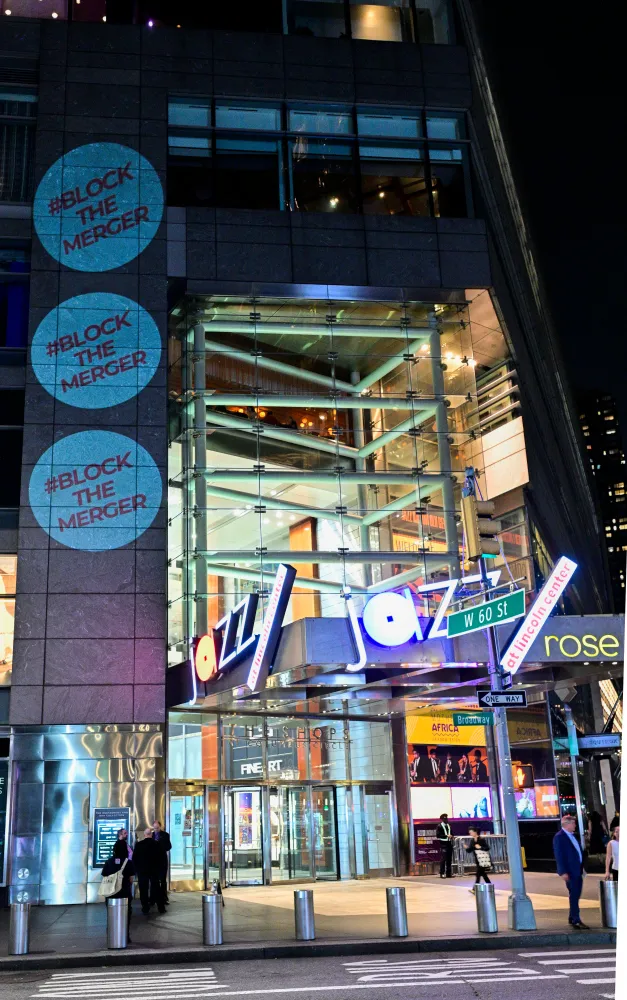
Never ‘waivering’ opposition. We’re continuing to fight in the less-glitzy environs of the FCC as well, challenging Paramount’s request for a waiver to allow the company to take billions in foreign investment from Saudi Arabia and other government-controlled wealth funds to finance the Warner Bros. deal. Paramount needs this special favor because of the TV broadcast licenses they hold — but there’s no legitimate or lawful reason to give it to them. Just more cronyism and corruption.

“Paramount’s Ellison family has already cozied up to President Trump in ways that should shock and sicken anyone who values facts-based journalism,” said Free Press’ Matt Wood. “The Ellisons have promised sweeping changes to the signature news outlets — like CNN — they hope to acquire from this deal, and they’ve already trashed CBS News. This willingness to bow down to government leaders instead of holding them accountable is an incredible danger to democracy. Bringing even more outside money into this already toxic equation will further erode the localism, quality and integrity of these once-proud journalistic institutions.”
The kicker
“Dreaming demands solidarity.” – Zohran Mamdani