A Tale of Two Cities and Public Media’s Future
The path to public media’s revival starts outside and runs through the states


It was the best of times, it was the — I mean, who are we kidding? 2026 has been the worst. Just look at the state of the media.
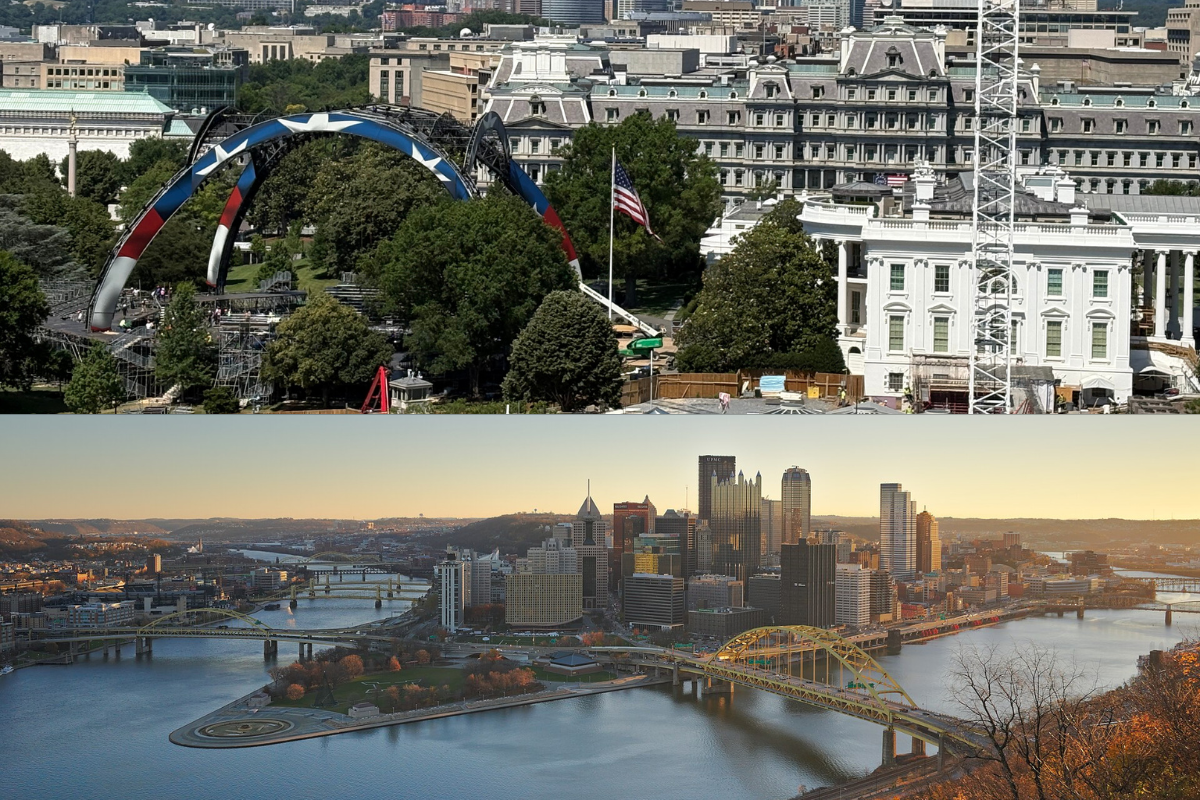
As we write this post, one of us is in Pittsburgh, home of Mister Rogers, for INN Days. The Institute for Nonprofit News’ gathering of nonprofit newsroom leaders talking about how local news can better serve communities, collaborate with one another and advocate for public-interest media policy.
The other is looking out from an office rooftop at the wreckage of the White House after last weekend’s gladiatorial spectacle and amid all the ballroom-building chaos.
We’ve both been working for years to find new ways to support and sustain civic media and local journalism, while thinking — especially when things seem dire — about what it would take to rebuild a public-media system capable of meeting community needs.
Which place do you think is more likely to solve the problems of the media?
The view from Washington
The wreckage at the White House is an apt symbol for the state of our media system — and is also the scene of the crime.
After decades of trying to destroy public media, the Republican Congress and the Trump administration zeroed out funding for the Corporation for Public Broadcasting a year ago, cutting off support for children’s programming, documentary films and emergency services — and pushing numerous smaller and rural stations to the brink.
CPB officially closed its doors in January, a remarkable loss at a time when the need for trustworthy and independent news and information is more urgent than ever. Bruised and battered as it was after years of budget cuts and partisan attacks — and more than a few self-inflicted shortcomings — CPB remained one of the last large-scale expressions of the idea that access to trusted information, educational programming and local storytelling should not be left to the whims of Wall Street and Sun Valley.
 Craig Aaron
While an institution that long defined public media in this country is gone, the ideals that led to its creation remain as relevant as ever. Communities still need trusted sources of local information. People still need access to educational and cultural resources. Democracy still depends on an informed public. And the commercial system still fails to reliably provide these goods.
As we sort through the consequences of CPB’s closure, we have the opportunity — really, the obligation — to rethink the role, function and structure of a public-media system. At a time of rising disinformation, people deserve a system that ensures that trusted news, civic information and community-focused media are accessible and abundant for everyone.
The scene in Pittsburgh
That was a hot topic in Pittsburgh, where this week INN gathered nearly 400 journalists. For the first time since INN Days began nearly 10 years ago, there was a track dedicated to media policy — specifically, new forms of public funding to support nonprofit newsrooms that are filling in the gaps left by disappearing commercial local news.
The event kicked off with INN CEO Karen Rundlet in conversation with Pennsylvania Rep. Chris Rabb, where they discussed the Local News Package he introduced and the importance of journalists getting involved in policy work. This package of bills would create a public-grantmaking body to support news across the commonwealth, and a fellowship program for early- and mid-career journalists to serve communities that need reporters the most.
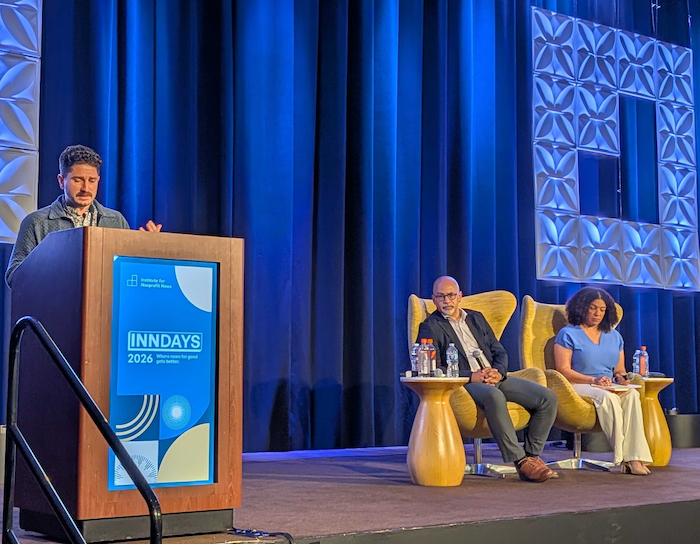
Rabb’s family founded the Baltimore Afro-American newspaper, the longest-running family-owned Black newspaper in the country. He began his career as a blogger in the 2000s, and he encouraged the crowd to tell lawmakers what kinds of support journalism needs. As he put it, “If journalists don’t advocate for themselves and their communities, then who will?”
It was an energizing start to the conference, which featured more discussions about the Pennsylvania Local News Package and actions taking place in other states where lawmakers are considering new forms of public funding for news and community information. The conference also explored the future of public media and how coalition building, shared services and an expanded vision could build a more resilient future for mission-driven news.
What was most striking was that these conversations were happening at all. It wasn’t that long ago that talking about advocacy or policy with journalists was taboo. The starting place in Pittsburgh wasn’t whether newsroom leaders should be involved in policy, but instead how to get involved, how to do so ethically, and how to work in solidarity with people who have suffered due to the lack of local news and information in their communities.
Political winds are shifting
And, of course, this isn’t just happening in Pittsburgh. Alongside public media’s struggles — and the understandable cynicism from years of cuts, layoffs and partisan attacks — a new civic-media field has emerged to show how journalists, civic leaders and community storytellers from a variety of backgrounds and disciplines can collaborate to better inform the public. This includes public-media outlets, but it’s not limited to those holding broadcast licenses.
We’ve seen firsthand how public engagement in media policy can deliver for communities and newsrooms. In New Jersey, the state’s Civic Information Consortium has invested more than $12 million into building a statewide publicly supported independent local-news ecosystem. Now Montclair State University, which has housed the consortium, is poised to lead the state’s entire public-media system.
 Mike Rispoli
While any lasting national vision will require renewed and significantly increased federal funds, we don’t need to wait for political winds to shift in Washington. The work of building the next generation of public-interest media can and must begin now at the state and local levels.
And it’s already starting. New Mexico stepped up to fill in gaps resulting from the public cuts. California recently announced details of its own civic media program. The legislation is moving in Pennsylvania, and advocates, journalists and community media-makers are getting organized everywhere from Massachusetts to Wisconsin.
 Judith Davidoff
Meeting cynicism with solidarity
Public media’s crisis is creating an opening to address the structural flaws that have hindered progress for decades, including a reliance on annual appropriations and a model so heavily focused on legacy broadcast outlets. Doing so will force us to confront some uncomfortable realities — namely, that some of the models and approaches that have long undergirded both public media and journalism are no longer serving communities — and have often harmed them.
Our solutions to this crisis have also been far too limited in scope and imagination. Too often, we enter these debates with a scarcity mindset and way too much turfiness. Public-media institutions stay in their silos and see potential allies as competitors. Journalists are fixated on reinforcing existing media hierarchies and cutting deals with power players, rather than reaching out and building a broad base of support.
When we focus on preserving existing business models and current headcounts, we miss the opportunity to support new models, reach new audiences and lay out a vision that could give people who aren’t part of the industry a reason to get involved.
Building something new will require us to break down silos and engage across different sectors: traditional public media and community broadcasters, journalists and filmmakers. We must create a broader and more inclusive version of public media that invites more people to sit at the table — not just hope they can grab a few scraps.
The answer to all the cynicism surrounding public media’s future is solidarity with other media-makers and, most importantly, with the communities they’re meant to serve. We need to treat the public as stakeholders, not just consumers. When we bring in communities from the start, center the things they need and organize alongside people, previously impossible things can become a reality — in Pittsburgh and in Washington, too.
Thanks to Alex Frandsen for his contributions to this essay.
About the authors
Craig Aaron is the co-CEO of Free Press and Free Press Action and a guy with two first names. Follow him on Bluesky.
Mike Rispoli is the senior director of journalism and civic education at Free Press. He focuses on winning public policies to transform local news and create equitable access to information that promotes civic participation and thriving communities.
Teamwork
Compiled by Pressing Issues editors
New Jersey leading the way. Mike Rispoli spoke to On New Jersey — the “world’s only live TV streaming channel entirely focused on the Garden State” — about the push in Trenton to save funding for the Civic Information Consortium.
“We’re also seeing other states look at New Jersey as a leader in trying to solve this really real problem,” Rispoli said. “This is a national problem and New Jersey was one of the first states to take a really bold step in trying to make sure that residents can just find out what’s going on in their communities.”
 Sean Thrunk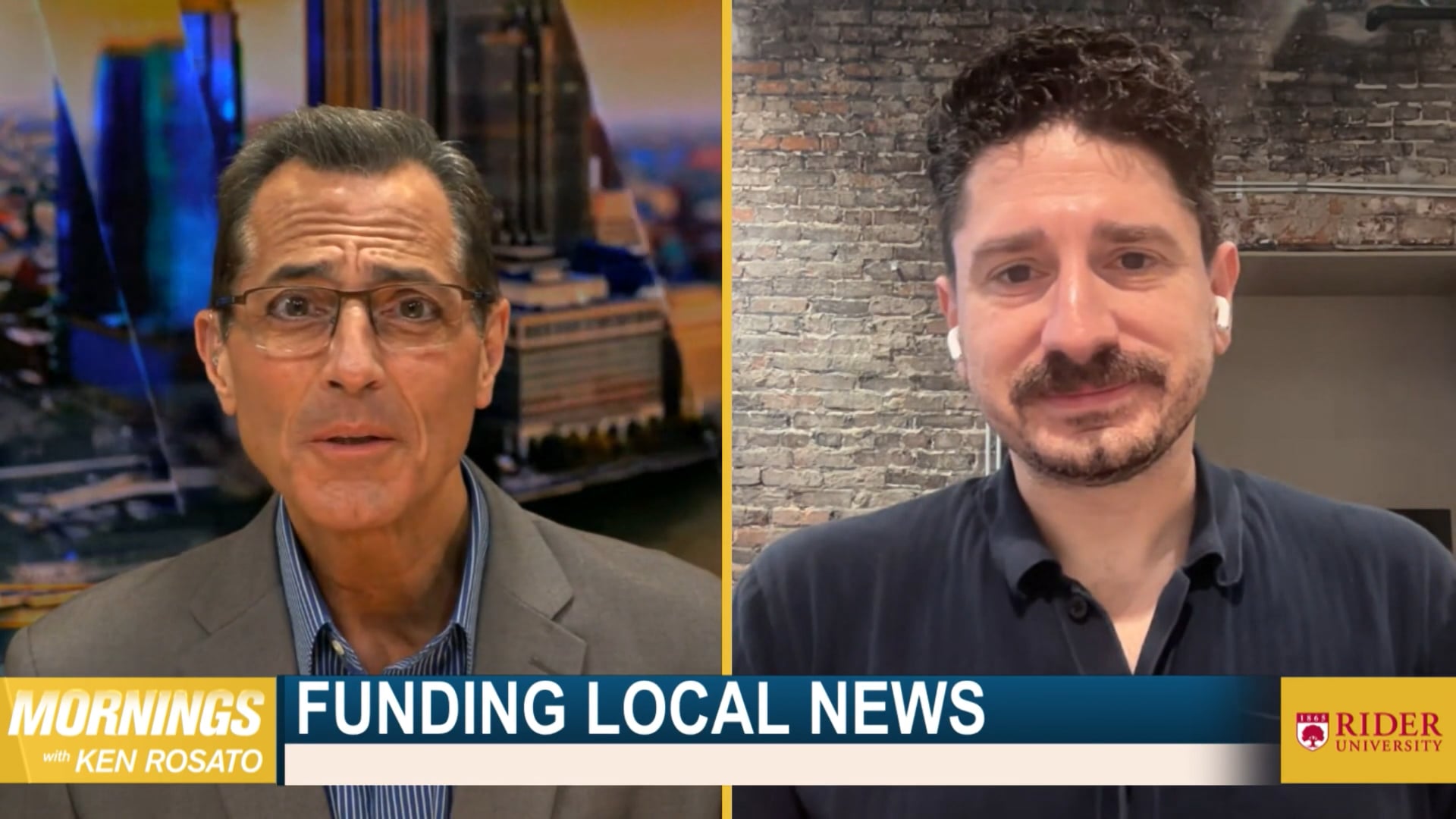
Not done yet. The Trump Justice Department’s rubber-stamp approval of the Paramount-Warner Bros. merger isn’t the last word, because attorneys general in states like California and New York are still investigating the deal.
Craig Aaron told NBC News that the states have “a strong case for blocking this merger, and many brave journalists, filmmakers, and workers in the entertainment industry have spoken out against the dangers of this deal despite threats to their livelihoods.”
“They are warning us what will happen if this deal goes through, and we must listen,” he added.
 Daniel Arkin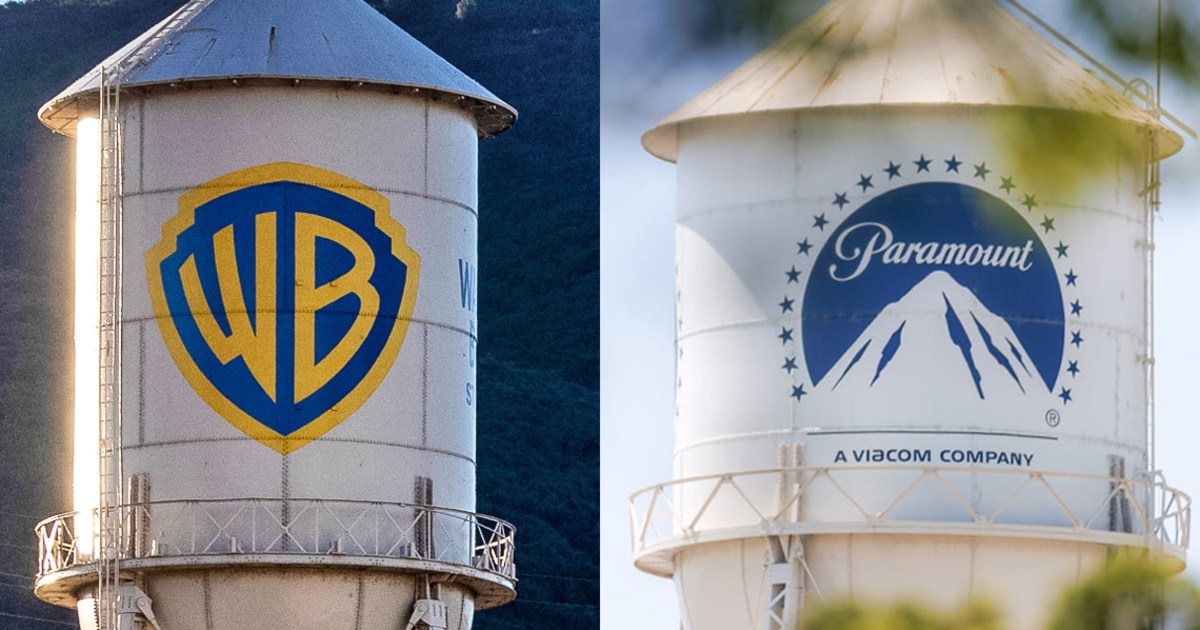
The kicker
“What a future is ours — if we don't confuse the chicken snake for a boa constrictor and commit preventive capitulation, and if we refuse to allow government officials and corporate spokesmen to set our agenda with no scrutiny of their words and deeds and no sifting of the truth from spin.” —Bill Moyers, PBS Annual Meeting, May 18, 2006