Three Words to Fix Government Spying: ‘Get a Warrant’
Why do so many Democrats still want to give Donald Trump unchecked surveillance powers?


Most Americans have probably never heard of Section 702. It’s part of the Foreign Intelligence Surveillance Act (FISA), which broadly authorizes the warrantless surveillance of non-U.S. citizens located outside of the United States.
Except Section 702 has also been used as a “back door” to spy on people inside the United States — from journalists and protesters to sitting members of Congress. Critics from across the political spectrum say the government has long abused the authority to conduct warrantless surveillance, violating our constitutional rights.
Like many national security powers, Section 702 has long been shrouded in secrecy, so it’s a topic most people might ignore — until a week like this one, when both chambers of Congress rejected a short-term extension of the law. Dozens of Democrats who previously backed reauthorization in April flipped to oppose it after President Trump moved to put Federal Housing Finance Agency director Bill Pulte — a political loyalist with no national-security experience but plenty of abuses of power — in charge of the country’s spy agencies.
 Matt Sledge
Late on Thursday, Trump said he would withdraw Pulte as his nominee and name U.S. Attorney Jay Clayton in his place, leaving open the question of where the politics of Section 702 will go next. In 2025, then-Attorney General Pam Bondi chose Clayton in his capacity as U.S. Attorney for the Southern District of New York to lead the Trump-initiated investigation into Jeffrey Epstein’s ties to leading Democrats. He was also in charge of the prosecution of former Venezuelan President Nicolás Maduro. Despite questions about Clayton’s own financial conflicts, which The Lever documented in March, numerous members of Congress pushing for Section 702 — including some leading Democrats — were quick to embrace Clayton as an alternative to Pulte and a new chance to salvage unchecked spying powers.
Even if Section 702 lapses by Friday’s deadline, the spying won’t stop since the FISA court’s existing certifications will let the program keep running until March 2027. But surveillance hawks in Congress, along with Trump and other key members of his administration, are still working to leverage the looming deadline to force through a “clean reauthorization” — an extension of Section 702 surveillance powers without much-needed bipartisan reforms.
A coalition of organizations, including the ACLU, Demand Progress and Free Press Action, are calling on Democrats in Congress to hold the line regardless of whom Trump nominates as director of national intelligence.“It is alarming that, under these conditions in particular, any Democratic members of Congress would vote to extend a warrantless surveillance authority for this administration to wield with no meaningful oversight,” reads a letter these advocates sent Thursday to 42 Democrats who previously voted to reauthorize Section 702 as is. “The case for reforming Section 702 has never been more urgent. It is critical that you protect your constituents from the Trump administration’s mass surveillance agenda.”
For this week, anyway, all but seven Democrats held the line. Numerous Republicans joined them in denying the Trump administration more spying powers. I connected with Kia Hamadanchy, senior federal policy counsel at the ACLU, to learn what’s at stake with this vote and what’s likely to happen next. Hamadanchy previously served as oversight counsel for the House Education and Labor Committee and was a staff member for Senators Tom Harkin and Sherrod Brown. I spoke with Hamadanchy before the news broke about Trump pulling Pulte’s nomination.
This conversation was edited for length and clarity.
Julio Ricardo Varela: Why should we even worry about Section 702 and this idea of a clean reauthorization?
Kia Hamadanchy: This is a program that has been abused by presidents of both parties, and under which the government is collecting a massive, warrantless surveillance program. The government is collecting tons of Americans’ communications. We don’t even know how much. We’ve made repeated bipartisan requests for the number, asking how many Americans are having their communications collected under Section 702. Democrat or Republican, no administration has ever been willing to give that number.
Then they’re going through and searching through people’s communications without a warrant. You’ve seen some really problematic searches of Black Lives Matter protesters. You’ve seen searches of a sitting U.S. senator. You've seen congressional staff. You’ve seen journalists and activists. It’s a program that has been abused time and time again, and it’s operating in violation of the Fourth Amendment, and it’s something we ought to fix.
JRV: There's bipartisan opposition to unwarranted spying, but then there's this bipartisan support for continuing the program as is. Why is this year any different?
KH: I think there’s a lot of fear-mongering when it comes to this program. You’ve seen people say that if this program goes dark, people are going to die. That scares people, right? I think when it comes to questions of national security, there are all these threats thrown around, saying that if you don’t reauthorize this, something bad is going to happen.
The reality is, all we’re asking for is votes on amendments that would restore the constitutional protections that every American has. I think we’re very consistent in saying this program violates the Fourth Amendment, and that all we want is to make the government comply with that. We've got to get away from that mindset of we’ve got to blow through America's constitutional protections to keep us safe, because that’s not true.
JRV: Lawmakers are often scared by intelligence officials into supporting more spying. What’s the message you and other advocates are responding with?
KH: I’m concerned about the Trump administration — Kash Patel, Bill Pulte and Todd Blanche, and the rest of those galleries of rogues — having access to American communications without having to talk to a judge. I’m worried about that. I would hope that a lot of members are worried about that. We have put forward some really thought-out and well-reasoned protections that strike the appropriate balance between protecting people’s rights and protecting people’s security. I don’t think the things that we’re talking about are in any way going to put national security at risk.
JRV: So what would genuine reform look like? How should it all be fixed?
KH: It’s three words: Get a warrant.
It’s not that complicated. It’s been the way of things since the start of the Constitution. There’s never been a national-security exception to the Fourth Amendment. Just get a warrant, because that's what you're required to do. That's pretty clear.
JRV: That’s a very clear answer. So what’s the most important thing someone can do today to take action against government surveillance?
KH: Call your member of Congress and tell them not to reauthorize this program without a warrant. It’s very simple. We want a warrant requirement.
Congress needs to do its job when it comes to these kinds of national-security programs. It’s one of those things where we get to a point like this, where the executive branch runs amok because Congress just keeps handing more and more power to it. Section 702 is just one example. When you hand an authority with this much power to the executive branch, it’s the sort of thing you should do with close, regular oversight of it. It’s not one of those things where you vote about it and forget about it. I think Congress needs to do its job here.
And I also think more broadly that what Congress was voting on, the proposal that was on the table before it all fell apart, was a three-year extension. And the idea that they should give Donald Trump a blank check for the rest of his term in office just seems incredibly problematic to me. If anyone has concerns that he’s going to abuse this authority, you should not give it to him for three years.
About the author
Julio Ricardo Varela is the senior producer and strategist at Free Press. He is also a working journalist, columnist and nonprofit-media leader. He is a massive Red Sox, Knicks and Arsenal fan (what a combo). Follow him on Bluesky.
Teamwork
Compiled by Pressing Issues editors
Saving Civic Info in New Jersey. Earlier this week, Free Press Action and the New Jersey Civic Information Consortium (NJCIC) led a coalition of 95 New Jersey community leaders, media organizations and advocates in calling on the state legislature and New Jersey Governor Mikie Sherrill to restore NJCIC’s $2.5 million in public funding to support local news.
“Local news is critical to ensure the safety, wellbeing, and empowerment of New Jerseyans,” the open letter reads. “It keeps residents informed, guaranteeing their access to the information they need to be educated on the issues that impact their daily lives and meaningfully engage with their communities.”


On Thursday, Free Press Action and its New Jersey allies held a lobby day in Trenton to push lawmakers to keep supporting this landmark program in next year’s budget, which must be finalized by the end of the month.

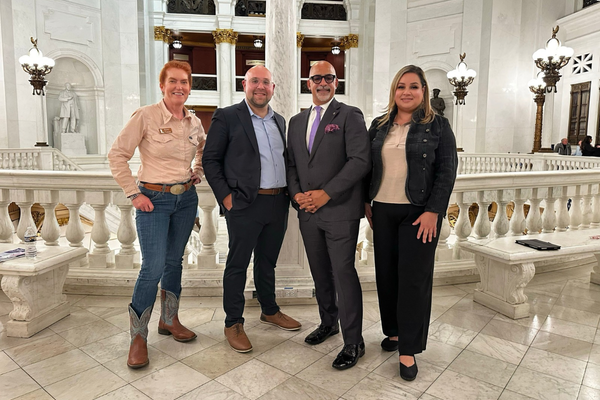
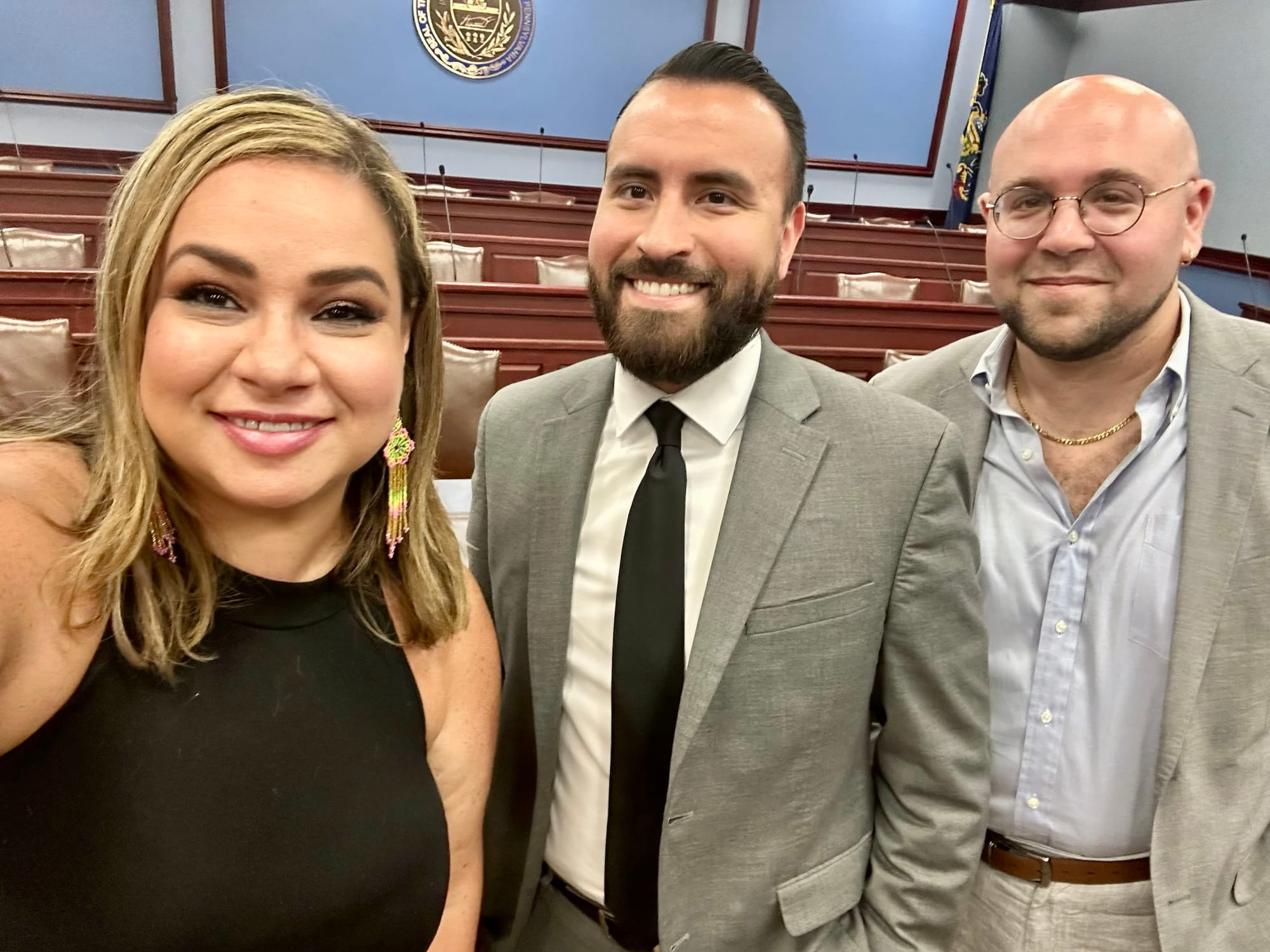
Earlier this week, Free Press Action was also in Harrisburg to meet with Pennsylvania legislators about a package of bills that includes a program modeled on New Jersey’s successful experiment.
The kicker
“The right of the people to be secure in their persons, houses, papers, and effects, against unreasonable searches and seizures, shall not be violated, and no Warrants shall issue, but upon probable cause, supported by Oath or affirmation, and particularly describing the place to be searched, and the persons or things to be seized.” —the Fourth Amendment to the U.S. Constitution